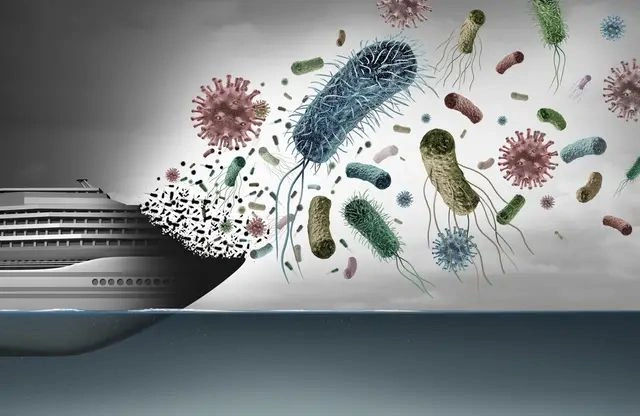
For the passengers who boarded the Dutch‑flagged cruise ship MV Hondius in early April, the voyage was meant to be a long, leisurely crossing from Argentina toward the Canary Islands and beyond. What no one expected was that the ship would become the epicenter of one of the most unusual hantavirus outbreaks in recent memory—and a case study in how global health authorities are now trying to manage rare but potentially deadly infections in the age of mass tourism and cruise travel.
The World Health Organization (WHO) has been quietly but intensively monitoring a cluster of hantavirus cases linked to the ship, with at least nine confirmed or suspected cases, three deaths, and an underlying strain capable of limited human‑to‑human spread. Even as officials stress that the overall risk to the public remains low, the episode raises uncomfortable questions about how prepared the world truly is when a rare rodent‑borne virus slips into confined spaces like cruise vessels and international airports.
What happened on the MV Hondius?
The MV Hondius set sail from Argentina on April 1 on a 33‑day voyage carrying roughly 150 passengers and crew. Within the first weeks, several travelers began falling ill with what would later be diagnosed as hantavirus, a severe respiratory infection that can rapidly progress to shock and respiratory failure.
By early May, WHO had confirmed the outbreak, reporting that at least eight suspected cases were linked to the ship, of which five were laboratory‑confirmed as hantavirus and three individuals had died. Later updates put the number of confirmed cases at seven with two additional suspected infections, mainly involving passengers who had been on the same voyage or had close contact with infected individuals.
Even more unusual, the strain involved is the Andes hantavirus—the only hantavirus species known to show limited person‑to‑person transmission under conditions of close, prolonged contact. That shifts the situation from a typical rodent‑driven outbreak to something that public‑health agencies have far less data on in a floating “city”‑size environment like a cruise ship.
How did the virus get on board?
Hantaviruses are usually picked up when people breathe in aerosolized particles from rodent urine, droppings, or saliva in contaminated environments—think barns, sheds, or poorly sealed rural buildings. Cruises are not classic risk settings, which is why the Hondius cluster has epidemiologists paying close attention.
Initial investigations suggest the likely source was not rodents on the ship itself, but rather exposure during land‑based travel in Argentina and Chile before boarding. Some of the infected passengers had spent weeks or months in rural or semi‑rural areas in those countries, where Andes hantavirus is known to circulate in wild rodent populations.
Once one person became infectious, the virus may then have spread through close contact—shared cabin spaces, caregiving, or prolonged time in the same enclosed social areas. That limited human‑to‑human transmission is still considered rare, but it’s exactly the kind of scenario that makes cruise ships a special concern: confined spaces, shared ventilation, and high passenger density can all amplify the risk.
WHO’s response and the global health alert
WHO’s Director‑General, Dr Tedros Adhanom Ghebreyesus, publicly described the situation as serious but not a pandemic threat. The organization emphasized that the global public‑health risk remains low, but it has nevertheless activated a rapid response around the Hondius and its passengers.
Key actions include:
Deploying an expert directly onto the ship to assess all remaining passengers and crew, gather clinical and exposure data, and help stratify who is at highest risk.
Shipping over 2,500 diagnostic test kits from Argentina to laboratories in five different countries to expand testing capacity for returning travelers.
Developing operational guidance for how to safely disembark, quarantine, and monitor passengers and crew without triggering unnecessary panic or travel chaos.
From the start, WHO’s messaging has been carefully calibrated: acknowledge the severity of the illness and the unusual mode of spread, while stressing that this is not a highly contagious, airborne pandemic virus like influenza or SARS‑CoV‑2.
That distinction matters, especially for travelers. The real worry is not that every passenger on the ship will fall ill, but that a small number of people who were in very close contact with infected individuals could develop severe disease—and that some of them may have already left the ship and returned home.
Tracking passengers and contact tracing challenges
By the time the outbreak was confirmed, a number of passengers had already disembarked in ports as the ship made its way northward. Some of these individuals left without being part of any formal contact‑tracing effort, raising concern that they could be incubating the virus while moving freely through airports and cities.
Health officials in several countries—among them the Netherlands, France, Germany, the United States, and Spain—are now trying to trace anyone who shared cabins, nursing duties, or prolonged proximity with the confirmed cases.
For many, the delay is a central problem. The incubation period for hantavirus can range from roughly one to four weeks, meaning someone exposed on the ship could not show symptoms until days or even weeks after returning home. That creates a window where an infected person might board a flight, attend work, or even visit crowded family gatherings without realizing they are carrying a potentially fatal virus.
How much of that is happening remains unclear. One sobering question lingers: how many mild or early‑stage infections are slipping through the cracks because people dismiss the symptoms as a bad flu or pneumonia until it is too late?
Why this matters for India and global travel
India may not be the epicenter of this outbreak, but it is very much in the orbit of the global travel network that connects cruise ships, international flights, and tourist itineraries. If a passenger from the MV Hondius flew to India after being exposed—or if someone in India recently visited South America and then boarded a cruise—the potential for the virus to move quietly into new regions is real, even if the risk is still considered low.
Public‑health experts in India’s major port cities and at international airports are already on higher alert for any unusual clusters of severe respiratory illness, particularly among travelers with recent exposure to South America or cruises. The hantavirus outbreak is another reminder that “exotic” or rare diseases can travel faster than information, and that a single ship or flight can unintentionally become a bridge between distant ecosystems.
For Indian travelers planning cruises or international trips—especially in regions where hantavirus is known to circulate—this episode underscores the importance of basic precautions: avoiding rodent‑infested rural structures, not disturbing animal nests or droppings, and reporting any unusual respiratory symptoms to a doctor after travel. At the same time, it highlights the need for clearer, more transparent communication from cruise lines and health authorities when infections first appear on board.
The human cost and the limits of control
Behind the numbers are three individuals who have died, and several others fighting for their lives. Among them are a 69‑year‑old Dutch woman, her spouse, and a German woman, all of whom contracted the virus either during or shortly after the voyage.
Their stories are a reminder that hantavirus is not a mild illness. It can begin with fever, muscle aches, and fatigue, then escalate quickly to coughing, shortness of breath, and even shock. In intensive‑care settings, treatment is often supportive—oxygen, fluids, and critical‑care monitoring—because there is no widely available, specific antiviral for hantavirus.
This also raises a difficult question: how much more could have been done if symptoms had been recognized earlier, or if passengers were better informed about the risks before and after disembarking? Cruise‑line policies on medical disclosure, quarantine, and post‑voyage guidance are now under quiet scrutiny, even if they are not yet the subject of public debate.
What this outbreak tells us about the future
The MV Hondius cluster is not the first hantavirus outbreak, but it is one of the first clear examples of such a rare, rodent‑borne virus spreading within a confined, international travel environment. It also stands out as a case where limited human‑to‑human transmission appears to have played a role, forcing epidemiologists to rethink assumptions about how these viruses behave outside of their natural rodent hosts.
For global health, the episode is a test of how quickly and effectively agencies like WHO, national health ministries, and local hospitals can coordinate when a low‑probability but high‑impact pathogen jumps into a mobile human population. The lessons being learned—about rapid diagnostics, contact tracing across borders, and the balance between caution and over‑reaction—could shape how the world responds to similar clusters in the future.
For travelers, it is a moment to reflect on the invisible threads that tie distant ecosystems to our own daily lives. A virus that normally circulates in wild rodents in remote parts of South America can, in a matter of weeks, find its way onto a cruise ship, into an international airport, and potentially into a hospital ward on another continent.
Perhaps the deeper question is not whether events like this can be prevented entirely—they probably cannot—but how much better we can do at catching them early, communicating clearly, and protecting the most vulnerable without grinding global mobility to a halt.
Looking ahead: risk, vigilance, and preparedness
Public‑health officials are clear that this outbreak does not signal the start of a pandemic. The virus is not spreading like measles or COVID‑19, and the conditions that allowed it to move from rodent hosts to humans on a cruise ship remain unusual.
Yet the situation on the MV Hondius is a warning that rare diseases can still become urgent crises when they intersect with travel, tourism, and close human contact. For India and other countries woven into the global travel web, the takeaway is simple: vigilance at borders, better surveillance of severe respiratory cases, and honest communication with travelers are not just “extra” measures—they are now essential parts of the playbook.
As WHO continues to monitor the cruise‑linked cluster and countries track exposed passengers, the world is watching not just for new cases, but for how smoothly the machinery of global health can respond when a quiet virus from a distant forest suddenly shows up on a crowded deck far from home.
WHO Watches Hantavirus Outbreak on Cruise Ship: One of the First Global Human‑to‑Human Clusters and What It Means for Travelers Worldwide