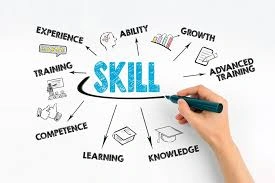
Skill-based education is more crucial than standard degrees for moving forward in your job. The reason for this is that technology and the job market are changing quickly. Nowadays, corporations value skills above degrees, and people with certain capabilities are more likely to get recruited and fit in than people with degrees. This is part of a wider trend where useful abilities are worth something. In other words, giving people skills is good for them and for the economy.
The Decrease in Hiring Based on Degrees
People used to be able to find jobs more easily with a regular degree because it showed that you were responsible and knew the essentials. But this way of thinking is crumbling apart because of how things really are in the market. Many people won’t require fundamental skills anymore because to improvements in AI and automation. That means that many degree programs will be out of date by the time students finish them.
Employers are increasingly viewing degrees as costly substitutes for demonstrating an individual’s potential for success. Big tech corporations don’t look at resumes; they hire people based on how well they do on skills tests. The outcomes are identical to those of individuals who have completed college. Many large corporations no longer demand degrees for many occupations. Instead, they hunt for skills in areas like cloud computing and data analytics.
The needs of academia and industry are not the same, which is why this transformation is happening. The curriculum doesn’t always keep up with new technologies like blockchain or generative AI, thus graduates aren’t always well-educated. There are still a lot of college students in some locations, but not enough trained workers. This illustrates that systems that put a lot of stock in degrees don’t operate very effectively.
The Growth of Learning Platforms Based on Skills
Online platforms have made it easier for everyone to get skill-based education by giving on-demand, modular training that is directly tied to work needs. A lot more people have signed up for fields like cybersecurity and data analytics in the previous several years. People desire to learn things they can apply straight immediately for this reason.
Employers can safely look for micro-credentials like badges or nanodegrees online using these platforms. You can get a professional certification in only a few months and for a lot less money than it would cost to get a four-year degree. You can work at your own pace, get regular updates to stay up to date on the latest tools, it’s cheap, and you can see how well you’re doing by executing real-world tasks that help you build your professional portfolio. These are some of the nicest aspects about it.
Millions of people have learned important skills from government initiatives around the world, such how to use AI, electric automobiles, and semiconductors. Schools are increasingly mixing talent courses with test prep. This helps pupils do well in school and acquire jobs, which makes them well-rounded professionals.
Good for your job and the economy
Skill-based education can help you get ahead in the real world faster than regular degrees. People who finish tough software development programs gain jobs faster, and their starting pay is the same or higher than that of people with bachelor’s degrees. People need to keep learning for the rest of their lives because technical skills only last for a short time. Most degree programs don’t help students do this very successfully.
People who have a lot of certifications in disciplines that are related to their jobs can make a lot more money—usually 20–30% more than their peers who merely have diplomas. People who have gone from doing manual labor to more specialized employment, like piloting drones, have seen their incomes rise quickly. Companies prefer hands-on training than formal schooling, which makes it easier for people to become leaders.
Skill-based models can help economies with a lot of young people looking for work by reducing structural unemployment and predicting substantial GDP growth through broad digital upskilling. Not only does this plan raise people’s pay, but it also makes the country more competitive on the world stage.
Problems with Regular Degrees
Getting a degree takes a lot of time and money, which can lead to long-term debt. A lot of countries are in debt, and a lot of people who owe money can’t find employment that pay enough to cover their payments. Private schools cost too much, and many of their graduates can’t find jobs because they spend all their time memorizing facts instead of learning how to use them in real life.
Schools offer very different levels of education. One reason their employability rankings are low is that a lot of schools don’t work with employers very much. When schools had to convert to online learning because the world changed, it proved that the old way of doing things wasn’t working, as so many kids dropped out. People with degrees may think they can be flexible, which might cause degree inflation when entry-level positions suddenly need higher-level credentials.
This inflation makes the gap between rich and poor even worse, especially for people who are already on the outside and can’t get into the best schools. In the end, the system puts paper diplomas ahead of true talent, which means that credentials are more important than talents.
What Experts in the Field Think and Say: Leaders in education appreciate hybrid systems that value skills over memorized credentials. People who know a lot argue that degrees largely demonstrate how long someone has been in school, whereas abilities show how well someone knows the skills they need. Every year, thousands of people learn about cloud computing and other related technologies through big projects that don’t follow the typical standards for formal education.
Policymakers agree with this idea since they want to focus more on skills than on symbolic scrolls. They are also building vocational training centers all around the country. Students can learn and obtain experience at the same time because these programs start with internships straight immediately. Economists worry that if something isn’t done right away, a lack of skills could cost millions of jobs. They think that the best way to make the workforce stronger is to provide people new skills.
Businesses say that companies that do successfully in industries that change quickly consider continual training as a strategic asset instead of an expense.
Examples from all over the world Countries that were the first to implement dual education systems, which combine academic instruction with apprenticeships, have exceptionally low rates of youth unemployment. People in these countries can make a lot of money by going to vocational schools that give them government-backed lifelong learning vouchers and programs that help them learn new skills. This is fantastic for business.
People without degrees can work from home for companies all around the world and make a lot of money thanks to coding fellowships in underdeveloped countries. This shows that skill-based models could work on a big scale. By altering their curriculum to fit the needs of Industry 4.0, updated training schools are filling significant gaps in industries like logistics and renewable energy.
Problems with Adoption and How to Solve Them
Parents still don’t want them, though, since they want their kids to receive degrees that are acknowledged, there are rules that favor traditional courses, and potential students don’t know enough about them. There are only a few parents who think that skills training is better than going to college.
Tax breaks for skill investments, corporate mentorship programs that link theory and practice, and co-certification programs between platforms and enterprises to boost legitimacy are all viable methods to deal with the issue. Businesses and governments are training tens of millions of people new skills through collaborations between the public and private sectors.
We need to work together on communications and infrastructure to get through these difficulties. We should focus more on long-term results than short-term impressions.