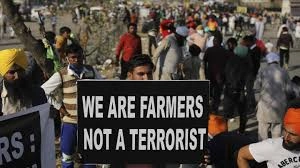
Things are heating up again in northern India as groups of farmers get set for a huge march to Delhi. This is like the protests that transpired in 2020 and 2021 when the rules for farming were modified. There has been a lot of national news about this rise since there have been fights at border crossings and the government is trying to stop them. People are worried about the economy and broken promises, which is why this is happening.
What Went Wrong Again
Reports say that there were roughly 10,000 people there on January 20, 2026, and they tried to break through concrete walls with tractors. This awful picture of farmers in riot gear and turbans has spread quickly on social media, and people all throughout the country are talking about it.People who were there said that the nights were busy, and women and young people made human chains to keep things going.
The protest is bigger than expected, much as the year-long sit-in that made the government change its mind. This time, though, it’s more about repairing the system than getting rid of it. The Swaminathan Commission’s suggestions for how to make farming cheaper are part of the requests. People are worried about a crop failure in the food bowl states since they can’t buy wheat on Punjab’s 1.2 million hectares.
What Happens to Politics When It’s Time to Vote
As state elections grow closer in important farming districts, the protests become a political issue for the ruling alliance. The Congress and the Aam Aadmi Party (AAP) are two groups that are against Prime Minister Narendra Modi’s Bharatiya Janata Party (BJP). They say that since the repeal in 2021, the BJP has let farmers down. The Chief Minister of Punjab, Bhagwant Mann, said he would help and told Delhi to talk. The Union Minister of Agriculture, Shivraj Singh Chouhan, says he is willing to negotiate, but not “anarchy.” People agree that the Bharat Jodo Nyay Yatra is a protest against huge companies that wish to farm.
Experts think that things have changed. In 2020, SKM was one group, but now it is no longer one company. But the major group from Punjab and Haryana is still going strong. The 2024 Lok Sabha elections show how important they are because rural seats are moving to places where there have been protests. Political experts say that farmers’ votes could be very important in 40% of the seats in the Punjab assembly elections later this year. The issue tests Modi’s ability to connect with people in rural areas after he was re-elected, and the slogan “MSP guarantee” has become a rallying cry in bypolls.
The politics in different sections of the country make things worse. The BJP and JJP’s split in Haryana, for example, has given Jat farmers more leverage. Farmers in Uttar Pradesh are also clamoring for money. This mobilization across the North could lead to a federal crisis. This would mean that the budget for 2026 would need to be changed.
The effects on the economy and the whole country
The farming business in India is in trouble since it employs more than 45% of the people who work there. Rice, wheat, and vegetables are having problems getting to where they need to go because of the protests. This could cause food costs to go up a lot. Punjab and Haryana buy 70% of the wheat that India requires. The agricultural ministry predicted that long-lasting blockades could cut the number of rabi crops coming in by 20 to 30%. Merchants in Delhi stated that onions now cost ₹80 per kilo. The milk trucks are being moved to other places because the roads are too busy.
The government’s response and New Delhi’s security—1,000 CRPF officers, iron nails on the highways, and drone surveillance—mean that the Red Fort storming of 2021 won’t happen again. On January 21, Amit Shah, the Home Minister, met with prominent people and talked about how vital it is to talk things over. He also called the people who were demonstrating “anti-national.” Farmers say they won’t agree to anything unless their leaders are freed and the more than 2,000 FIRs from past rallies are dropped. There is yet a chance for a fifth round of discussions.
Changes in policy have happened in the past because of pressure, including the Anandpur Sahib demands in the 1980s and the MSP strikes in 2018. Farmers are asking the Supreme Court to intervene in and make sure they can pass through without any problems. One of the backup plans is to fly important supplies to Delhi, but the political costs are mounting raised as news reports show police aggression.
C2 costs show that inter-ministerial groups make MSP calculations based on 50% profit margins behind the scenes. People still don’t believe each other, though. Unions call the promises made in 2021 “jumlas.” The WTO and other groups from all around the world keep an eye on how subsidies affect trade.
Voices from the Ground and Social Fault Lines
Interviews reveal that there are many reasons to get things done: Mangu Ram, who is 65 years old and lives in Kaithal, talks about how his sons have gone to work in the Gulf, leaving his farms empty. Teenage activist Gurwinder Kaur remarked that there are inequalities between males and women at the protests. Women make up 33% of the demonstrators, yet they only control 15% of the property. Dalit farmer groups want a census of landholdings by caste, which would let people of all castes and classes work together on concerns.
Not everyone in India’s cities agrees. residents in Tier-2 cities protest by sitting down, whereas residents in metros are worried about traffic jams. Bollywood stars are careful about what they say in 2021 so they don’t get into trouble. Environmentalists argue that the protests are linked to farming that is good for the environment and that people should not use chemicals.
What this means for the future and what it means for the future
This is proof that India’s agricultural reform is still going on because these farmers are protesting again. It might be hard to establish a budget if legal MSP costs ₹10 lakh crore a year, but it would keep food secure. This might give unions more influence and stop Modi from accomplishing what he wants to do as president for a third time.
If SKM doesn’t function, things could get violent. They want to stop all the trains in the state. The best approach to move forward is to come up with a negotiated MSP statute that has both modifications and compromises that will make things work better. People in the country are waiting to see if the talks can break the deadlock or if history will repeat itself with even more violence. There are tractors parked near the borders.
Why the Farmers’ Protest Revival Is Getting So Much Press in India