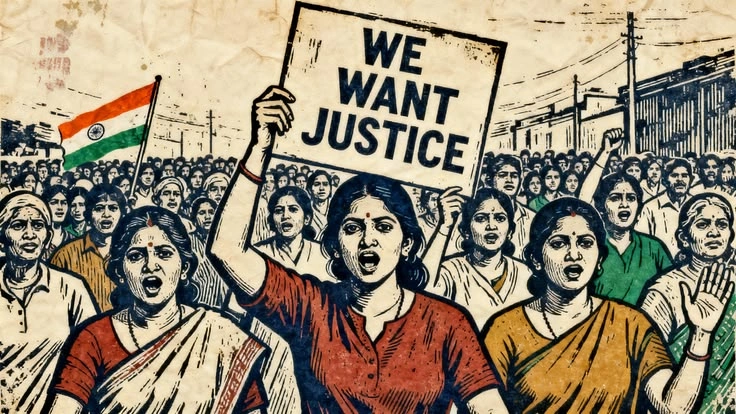
Women’s Reservation Bill Sparks Parliamentary Storm As parties clash over delimitation, equity The hallowed halls of India’s Parliament have rarely been as acrimonious as in the opening days of the special session of spring 2026. At the heart of the storm: the much-cherished Women’s Reservation Bill, which seeks to reserve 33% seats in the Lok Sabha, state legislatures and the Delhi Assembly for women. What began as a landmark precept to ensure gender-equitable representation has quickly escalated into a politically charged battleground, with government members and opposition benches trading barbs, charges and heart-rending pleas that cut to the core of India’s democratic edifice.
The stakes are huge. If passed in its current form, the bill would alter the makeup of India’s legislatures by 2029, adding hundreds of women MPs and MLAs to a political sphere still dominated by men. Yet, the debate is not just about numbers on paper—it touches on caste, federal balance, the role of the Census, and the very nature of political power in a coalition‑driven democracy. As the government pushes for a clean, early implementation, opposition parties are raising questions that many voters have quietly asked for years: Who will benefit? Who might lose? And is this reform being fast‑tracked to serve a political timetable as much as a social one?
The Bill That Refused to Die
The roots of this debate stretch back decades. The idea of reserving one‑third of seats for women in Parliament first gained serious traction in the 1990s, when the then‑Congress‑led government floated a constitutional amendment in 1996. Over the years, versions of the bill were revived and shelved, blocked by back‑and‑forth between parties, fears of altering caste equations, and the sheer difficulty of mustering a two‑thirds majority in both houses.
In 2023, the political landscape finally shifted. The bill—formally the Constitution (One Hundred and Sixth Amendment) Act—was passed in both the Lok Sabha and Rajya Sabha, creating a legal framework for 33% quotas after the first delimitation exercise based on the next Census. That law has now been taken forward by a fresh set of enabling bills cleared by the Union Cabinet in early April 2026, paving the way for amendments to be placed before Parliament during the special session. The core promise is unchanged: 33% of seats for women in the Lok Sabha, state assemblies, and the Delhi Assembly, with rotation to ensure that no constituency is “reserved” indefinitely.
On the floor of the House, the ruling coalition has pitched this as a historic justice measure. One minister, speaking in Hindi, asked: “If we give women 50% of Panchayat seats, what is the logic behind denying them representation at the national level?” The underlying argument is simple but politically potent: India has one of the world’s largest populations of women, yet they account for only about 15% of the Lok Sabha and similarly low shares in many state legislatures. Closing that gap, the government insists, will not just be “fair” but also force parties to groom women leaders, redesign campaigning techniques, and rethink how policy is debated.
Delimitation Becomes the Flashpoint
For all the talk of women’s empowerment, the real heat in Parliament has come from an issue that sits just behind the reservation measure: delimitation. The government’s package includes bills that would increase the total number of seats in the Lok Sabha to 840 and set up a fresh delimitation exercise after the next Census. Here is where the debate becomes more complicated—and more fractious.
Opposition parties are seized by the fear that delimitation could tilt power away from the Hindi‑heartland states and toward the South. India’s last full Census was in 2011; the 2021 exercise was delayed and remains incomplete, leaving critical demographic data—especially on caste and sub‑national identities—unresolved. The Samajwadi Party, for example, has publicly questioned the timing of rushing women’s reservation alongside delimitation, demanding that the next Census be completed first. “Start with the Census,” argued party leader Akhilesh Yadav during the debate. “Without proper data, any delimitation will be a political exercise, not a democratic one.”
The worry is that if delimitation is tied to women’s reservation, the altered seat map could freeze into law an imbalance that some states perceive as unfair. Southern and eastern states, where population growth has slowed, may lose relative weight in the House, while others gain. For parties rooted in these regions, the prospect of fewer seats combined with a reshaped electoral map feels like a double blow. One Congress MP put it bluntly: “We support women’s reservation in principle, but we cannot endorse a delimitation that weakens our federal structure.”
Prime Minister Narendra Modi has tried to diffuse this tension, appealing for consensus on the floor of the Lok Sabha. In an emotional address, he urged MPs to think of their mothers, wives, and sisters before casting their votes. “If we can reserve 33% of seats for girls in school admissions, why can’t we reserve 33% for women in our legislatures?” he asked. “This is not a government bill; it is a people’s bill.”
Yet for many opposition lawmakers, that rhetoric does not erase the deeper calculations. As one senior MP told reporters later, off the record: “The question isn’t whether women deserve more space. It’s whether this package is being used to reset the entire political map in a way that benefits one side more than the others.”
Political Theatre and the Numbers Game
Beneath the lofty ideals, the debate has exposed the mechanics of India’s intense numbers game. Women’s reservation and delimitation require not just a simple majority, but a constitutional amendment backed by a two‑thirds majority in both houses. With the current political arithmetic, the government cannot assume this will be a walkover.
Opposition parties have openly spoken of a strategy to defeat the bill—or at least stall it—by rallying cross‑party support. Some leaders believe that if enough smaller parties and regional outfits converge, they can push the combined opposition tally high enough to block the measure. One strategist, speaking in private, put the hypothetical opposition count at over 220 votes in the Lok Sabha, enough to create a serious hurdle.
This has triggered a counter‑move by the ruling coalition, which has been engaged in quiet lobbying, reassurances, and in some cases, political bargaining behind the scenes. The message being sent to fence‑sitters is clear: support the bill and be on the right side of history; oppose it and risk being labelled regressive or indifferent to women’s rights. One regional leader, caught between ideological support for gender justice and practical concerns about delimitation, summed up the bind: “We want to vote ‘yes’ on women, but not on a delimitation that might shrink our space.”
The theatre of the House has been equally telling. Several speeches in the Lok Sabha have blended personal anecdotes with political calculation. One woman MP, visibly emotional, recalled how as a child she watched her mother wait for hours just to get her work approved by male officials. “Today,” she said, “I am here because someone took a chance on a woman. Now it is our turn to make that chance available to more women.”
At the same time, sharp barbs have been exchanged. The Congress and some regional parties have accused the government of using women’s reservation as a “googly” or a “Chinaman” to distract from other issues, suggesting that the timing of the bill is politically convenient rather than constitutionally urgent. The ruling side has hit back, accusing the opposition of obstructing progress for the sake of short‑term electoral advantage.
India and the Global Context
To understand the scale of what is at stake in India, it helps to look beyond its borders. Globally, the demand for gender quotas in legislatures has grown over the past two decades, especially in countries where women’s representation has lagged. Rwanda, for example, now has one of the highest percentages of women in its lower house, thanks to legally mandated quotas. In South America, countries like Bolivia and Mexico have used gender‑parity rules to rapidly increase the share of women in Congress.
Yet India’s situation is distinct. With a population of over 1.4 billion, a deeply stratified caste system, and a complex federal structure, any quota arrangement is bound to intersect with questions of identity, region, and power. The 33% reservation is not just about gender; it is also about how many Dalit women, Adivasi women, and women from backward castes will actually benefit when seats are rotated and parties decide who to field.
In India, the precedent of women in Panchayati Raj institutions has already shown both promise and pitfalls. Over the past two decades, the reservation of one‑third of seats for women in local bodies has brought hundreds of thousands of women into grassroots politics. Some have used these roles as springboards to district councils, state assemblies, and even national politics. Some have been little more than figureheads, with their husbands or male relatives effectively running their constituencies. Those stories loom large in the current debate: Will women’s reservation in Parliament empower real decision‑makers, or will it simply formalise existing patriarchal structures in a new form?
Women’s Reservation Bill Ignites Firestorm in Parliament as Parties Clash Over Delimitation and Equity