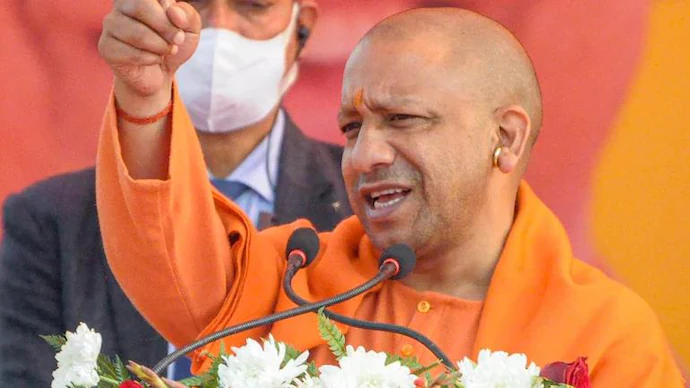
July 29,2025 — Yogi Adityanath has created political history by becoming the longest-serving Chief Minister of Uttar Pradesh, completing over 8 years and 130 days in office as of July 28, 2025. This achievement places him ahead of Dr. Sampurnanand, who held the role for 5 years and 345 days between 1954 and 1960.
Adityanath assumed leadership of the state on March 19, 2017, following the Bharatiya Janata Party’s (BJP) decisive win in the assembly elections that year. In 2022, he returned for a second consecutive term — a first for any chief minister in the state’s post-independence period who completed a full five-year term and retained office.
His extended tenure is marked by a focus on administrative reforms, security measures, and large-scale development projects. Several high-profile infrastructure initiatives — including the Purvanchal, Bundelkhand, and Ganga expressways — have been launched to improve connectivity and stimulate economic activity across various regions.
Under his administration, the government has emphasized stricter law enforcement, with a stated objective of reducing organized crime and improving public safety. State officials credit these efforts for a measurable decline in serious criminal activity, although critics argue that data transparency and human rights concerns remain areas of contention.
In terms of economic policy, the Adityanath government has held multiple investment summits aimed at drawing industry and generating employment. The state has also promoted religious tourism by investing heavily in heritage sites like Ayodhya, Varanasi, and Mathura.
Politically, Yogi Adityanath’s influence extends beyond Uttar Pradesh. He has become a prominent face for the BJP on the national stage, regularly participating in campaigns outside the state. His growing stature has led to speculation about his potential role in shaping the party’s future leadership beyond the state level.
However, his leadership style has also drawn criticism. Opponents accuse the administration of deepening communal divides and concentrating power at the top. Concerns over democratic transparency and inclusiveness in governance have been frequently raised by civil society and political observers.
Despite these criticisms, Adityanath remains a dominant figure in Uttar Pradesh’s political landscape. His continued electoral success and ability to maintain control over a complex and diverse state underscore his significance within the BJP and Indian politics at large.
As the country looks ahead to the 2029 general elections, Yogi Adityanath’s record-breaking term may serve not only as a benchmark for state governance but also as a launchpad for greater national ambitions.