
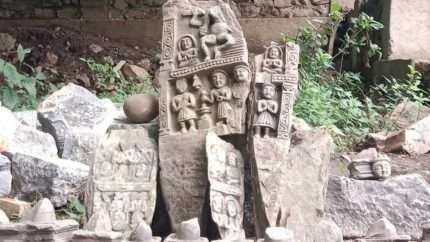
Discovery linked to Karkota dynasty, deepens cultural and archaeological understanding of ancient Kashmir
4 August,2025— A significant archaeological discovery has emerged from the ongoing restoration work at the Karkoot Nag spring in the Salia region of Aishmuqam, Anantnag. Laborers working under a government-led initiative have unearthed ancient Hindu idols and Shivlings, believed to date back nearly 1,400 years. Preliminary insights suggest these artifacts may be associated with the Karkota dynasty, a prominent ruling power in Kashmir during the 7th to 9th centuries CE.
The restoration project, undertaken by the Public Works Department (PWD), aimed to rejuvenate the spring, which holds religious importance among Kashmiri Pandits. However, the routine work took an unexpected turn when workers discovered stone artifacts beneath the soil, drawing immediate attention from heritage authorities.
In response to the findings, the Jammu and Kashmir Department of Archives, Archaeology, and Museums dispatched a team to examine the site. The department has since taken custody of the artifacts, which include multiple stone-carved idols and Shiva Lingams. Officials confirmed that these items would be sent to the SPS Museum in Srinagar for further examination, including scientific dating and material analysis.
Dr. Shakeel Ahmad, an official from the archaeology department, noted the significance of the find: “The initial appearance and craftsmanship of the idols point to an early medieval origin. These objects will undergo detailed study by experts to establish their historical context and religious relevance.”
The Karkoot Nag site has long been regarded as sacred by local communities, particularly Kashmiri Pandits, who associate the spring with ancient religious practices. Historians believe the artifacts may offer new insights into temple architecture, iconography, and devotional rituals prevalent during the Karkota rule.
The Karkota dynasty, which began under Durlabhavardhana around 625 CE, is known for ushering in a period of political strength and cultural development in Kashmir. Its most celebrated monarch, Lalitaditya Muktapida, was instrumental in temple construction and patronage of art, architecture, and learning. The unearthed relics could potentially be remnants from temple complexes established during that flourishing era.
Local reactions to the discovery have been a mix of reverence and curiosity. Several residents have called on the government to recognize the area as a protected archaeological zone, not only to preserve its historical assets but also to boost cultural tourism in South Kashmir.
Experts believe the site may yield more findings if systematic excavation is carried out. “This is likely just the beginning,” said an independent research scholar familiar with the region’s history. “With careful exploration, we could uncover further layers of Kashmir’s ancient civilization.”
As studies begin on the recovered relics, historians and archaeologists are hopeful that this discovery will enhance our understanding of early Hindu traditions in Kashmir and reaffirm the region’s status as a cradle of rich and diverse heritage.

