
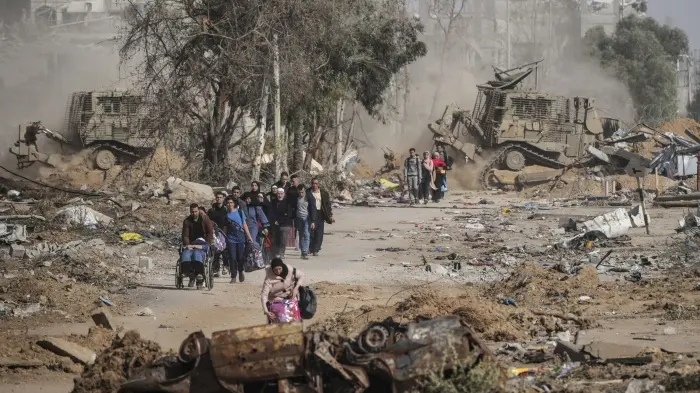
Israel’s ground assault on Gaza City has intensified in mid-September 2025, with residents reporting heavy bombardment from air, land and sea as tanks push deeper into densely populated neighborhoods. The operation has trapped hundreds of thousands of civilians in northern Gaza, worsening a humanitarian crisis marked by soaring casualties, famine conditions and widespread displacement.
The Israeli Defence Forces said the offensive is aimed at dismantling Hamas’s military infrastructure and securing the release of hostages. Troops advanced into districts including Sheikh Radwan and Tel al-Hawa, supported by artillery and airstrikes. Communications blackouts have cut off large parts of Gaza City, making it difficult to confirm casualty figures, but local health officials and international monitors warn of rising deaths and severe shortages of food, fuel and medicine.
The closure of the Zikim Crossing on September 12 has left northern Gaza isolated from humanitarian supplies. The United Nations has warned that famine is already taking hold in parts of the territory, with aid convoys unable to deliver essentials. Overcrowding in shelters, lack of potable water and fuel shortages have compounded the crisis, with residents describing conditions as “unbearable.”
Israel announced a temporary evacuation corridor for civilians to move southward, but many residents say they fear permanent displacement or lack the means to travel safely. Southern Gaza, already overwhelmed by earlier waves of displacement, struggles to provide adequate shelter, medical care and food supplies.
International reaction has been swift. United Nations officials have condemned the assault, with a recent UN Commission of Inquiry accusing Israel of committing genocide. Regional powers including Saudi Arabia and Qatar have also criticized the military campaign. Israel maintains that its actions are consistent with its security needs and insists that humanitarian aid is being facilitated, though international agencies dispute the level of access.
Meanwhile, in the occupied West Bank, mass arrests, home demolitions and restrictions have intensified following a deadly shooting in Jerusalem earlier this month. The Israeli government revoked hundreds of work permits for Palestinians from the attackers’ villages, a move rights groups say constitutes collective punishment. Military raids and nightly arrests have been reported across multiple towns, with checkpoints and closures further restricting movement.
Humanitarian organizations warn that the combined impact of the ground assault in Gaza and punitive measures in the West Bank risks further destabilizing the region. With famine conditions spreading in northern Gaza and rights groups raising alarm over collective punishment, international pressure is mounting for immediate steps to ensure civilian protection, safe access to aid and a halt to practices that deepen the crisis.

