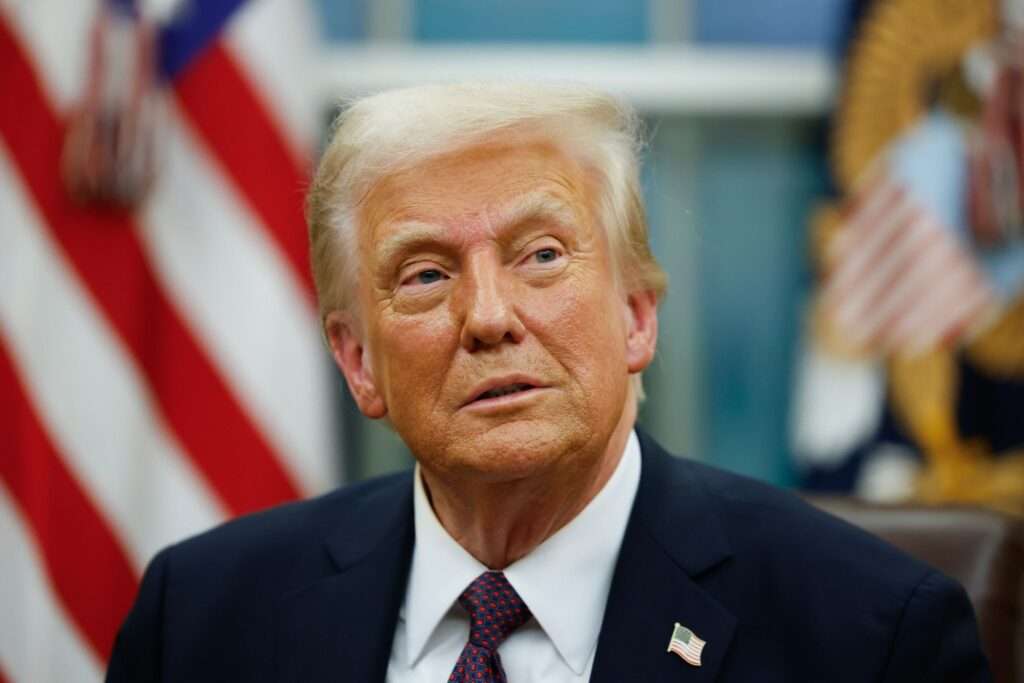
In a dramatic shift in defence policy, U.S. President Donald Trump announced on October 30, 2025, that he has instructed the Department of Defense to resume nuclear weapons testing “immediately.” The statement, made via his social media platform shortly before his meeting with Chinese President Xi Jinping in Busan, South Korea, ends a 33-year voluntary moratorium on nuclear explosive testing by the United States.
The announcement comes amid growing concerns over nuclear modernisation by global powers and is being framed by the administration as a strategic response to perceived testing activity by rivals such as Russia and China. Trump’s declaration stated: “Because of other countries’ testing programs, I have instructed the Department of War to start testing our Nuclear Weapons on an equal basis. That process will begin immediately.”
Analysts note that the last U.S. nuclear explosive test occurred in 1992, and since then the country has relied on simulation and sub-critical testing to validate its stockpile. The return to testing marks a potentially seismic shift in U.S. arms-control posture and casts doubt on the future of the Comprehensive Nuclear-Test-Ban Treaty (CTBT) framework, which has never fully entered into force.
International reactions were swift. China’s foreign ministry urged Washington to “abide by its commitment to a moratorium on nuclear tests” and maintain global strategic stability. Meanwhile, Russia warned that the U.S. decision could open the door to a new arms race—an echo of Cold War-era competition.
Critics within the U.S. and abroad raised concerns about the practical need and risks of resuming nuclear detonations. Experts argued that resuming nuclear testing could undermine America’s longstanding commitment to restraining a global arms race and damage decades of diplomatic progress. They also pointed out that modern simulation technologies and sub-critical experiments have made explosive testing unnecessary for maintaining the reliability of the U.S. nuclear arsenal.
The timing of the announcement—immediately prior to the Trump-Xi summit in Busan—is notable. It may reflect a deliberate strategic gesture aimed at strengthening U.S. leverage in negotiations or signalling resolve on the global stage. At the same time, it raises questions about transparency, as officials have yet to clarify whether the testing will involve explosive detonations or flight tests of nuclear-capable systems.
President Trump’s decision to resume nuclear weapons testing after three decades marks a pivotal moment in U.S. defence strategy and global nuclear diplomacy. With international non-proliferation mechanisms under strain, the move could trigger heightened tensions, provoke reciprocal actions by rival states, and reshape the architecture of strategic deterrence. As governments and experts digest the implications, the world now faces renewed uncertainty in the realm of nuclear arms control—making the coming months critical for global stability and strategic dialogue.