
In a week of significant global developments, China achieved a new milestone in its ambitious space program, Europe witnessed a decisive centrist resurgence in Dutch politics, and humanitarian concerns mounted in Sudan as conflict displaced tens of thousands.
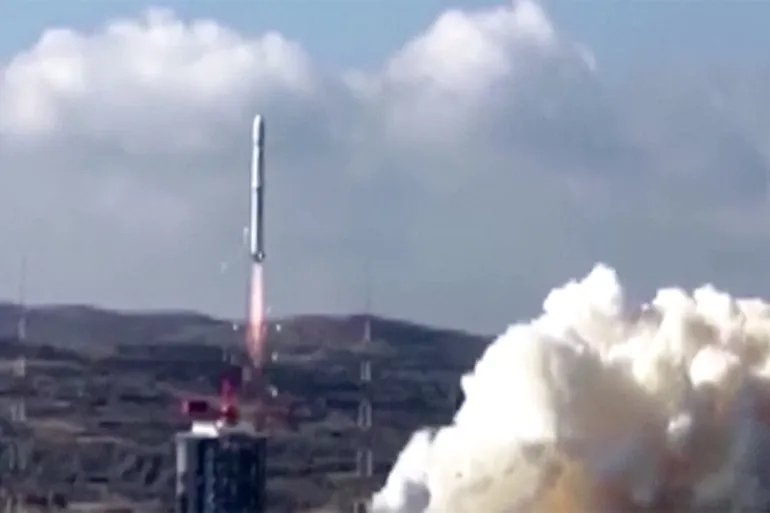
China’s Shenzhou 21 spacecraft successfully docked with the Tiangong space station on Saturday, setting a national speed record for orbital rendezvous. The crewed mission, launched from the Jiuquan Satellite Launch Center in the Gobi Desert, connected with the space station in less than seven hours—surpassing China’s previous docking times. The mission’s rapid success highlights the growing sophistication of China’s space technology and its determination to rival long-established players like NASA and Roscosmos.
The Shenzhou 21 mission carries two veteran astronauts tasked with conducting scientific experiments and maintenance operations aboard Tiangong. According to China’s Manned Space Agency, this achievement marks a crucial step toward the nation’s long-term goal of developing a permanent lunar base and advancing deep-space exploration. Analysts view the record-setting docking as both a technical feat and a strategic message showcasing China’s increasing influence in global space affairs.
Meanwhile, in Europe, Dutch centrist leader Rob Jetten declared victory after a closely contested general election that may redefine the Netherlands’ political landscape. His party, Democrats 66 (D66), emerged narrowly ahead of rivals in a tight race that underscored growing voter demand for pragmatic, pro-European leadership. The 38-year-old Jetten, known for his focus on climate policy, renewable energy, and progressive social reforms, pledged to build a “coalition of stability” to guide the Netherlands through economic and environmental challenges.
Political observers noted that Jetten’s victory reflects a broader European trend toward centrism amid rising polarization. With traditional conservative and populist parties losing ground, the D66 win could signal renewed momentum for moderate, reform-oriented governance across the European Union.
However, optimism in Europe and Asia contrasts sharply with deepening turmoil in Sudan, where fighting between the national army and the paramilitary Rapid Support Forces (RSF) continues to devastate civilian populations. The recent capture of El-Fasher, a key city in the Darfur region, by RSF forces has displaced more than 60,000 residents, according to humanitarian agencies. Reports from aid groups describe a worsening humanitarian crisis, with shortages of food, medical supplies, and shelter threatening thousands of lives.
The United Nations has condemned the violence and called for immediate access for humanitarian assistance, but ceasefire efforts have repeatedly collapsed. Analysts warn that without international intervention, Sudan risks sliding further into instability reminiscent of its early-2000s conflicts.
From China’s record-breaking strides in space to Europe’s political recalibration and Africa’s deepening humanitarian crisis, this week’s developments underscore a rapidly shifting global landscape. As nations pursue progress in technology and governance, the persistence of violent conflict serves as a reminder that peace and cooperation remain humanity’s most formidable challenges.

