
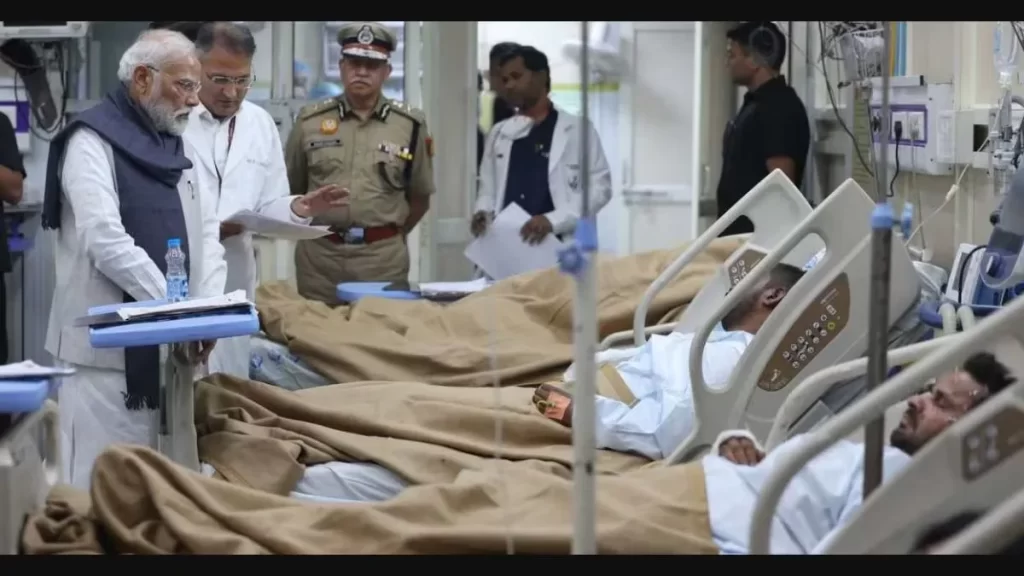
The death toll from the November 10 car explosion near the historic Red Fort in Delhi has continued to rise, with more critically injured victims succumbing to their wounds in hospital. Authorities confirmed that additional patients admitted with severe burn injuries and trauma could not be saved, pushing the fatality count higher more than a week after the devastating blast.
A High-Intensity Blast in a Crowded Zone
The explosion occurred around 6:50 p.m. at a busy intersection near the Red Fort Metro Station, one of the most frequented corridors in Old Delhi. Witnesses described a sudden flash, followed by a loud detonation that engulfed multiple vehicles in flames. The blast created panic across the densely packed Chandni Chowk–Red Fort stretch, causing significant damage within seconds.
Initial on-site assessments indicated that several victims died instantly, while dozens sustained severe burns, fractures, and blast-related injuries. Hospitals across central Delhi were placed on emergency alert as ambulances rushed the injured to nearby facilities.
Victims Battle for Life
Many survivors were admitted in critical condition with high-percentage burns and multiple fractures. Some required amputations and complex surgical interventions. Despite sustained efforts by medical teams, several patients succumbed to their injuries over the past few days, contributing to the steadily rising death toll.
Forensic teams have noted that among the deceased, some remains were found in partial or fragmented condition, highlighting the force and intensity of the explosion.
NIA Takes Over Terror Investigation
The Union government has officially declared the incident a “terror attack,” transferring the investigation to the National Investigation Agency (NIA). Preliminary forensic reports suggest the use of high-grade explosives, possibly configured in a manner consistent with improvised explosive devices (IEDs) designed for maximum combustion rather than shrapnel dispersion.
Investigators have identified the suspected driver of the vehicle involved in the blast, with DNA recovered from the site matching samples taken from a Pulwama-based medical professional. This has widened the scope of the probe, pointing toward the possibility of a radicalised professional network operating under the guise of legitimate occupations.
Officials are also examining digital communication trails, including encrypted messaging platforms, which may have been used by the perpetrators to coordinate the attack. Sources indicate that the operation may involve a so-called “white-collar module,” raising concerns about deeper, more organised terror linkages.
Capital on High Alert
In response to the attack, Delhi has been placed under heightened security. Police presence has increased across metro stations, markets, government buildings, and major tourist destinations. Security agencies have enhanced surveillance to prevent potential secondary threats.
Government Announces Compensation
The Delhi government has announced ex gratia compensation for victims and families affected by the blast. The relief package includes financial support for the next of kin of the deceased, as well as assistance for those permanently or seriously injured.
A Disturbing Pattern
Security analysts note that the attack reflects a troubling evolution in urban terrorism, where operatives may be opting for improvised or less conventional explosive setups. The involvement of educated professionals adds a new dimension to investigative concerns, prompting a deeper examination of radicalisation pathways.
As the NIA continues its investigation, authorities are focused on identifying all collaborators involved and preventing any further threats emerging from the same network.

