
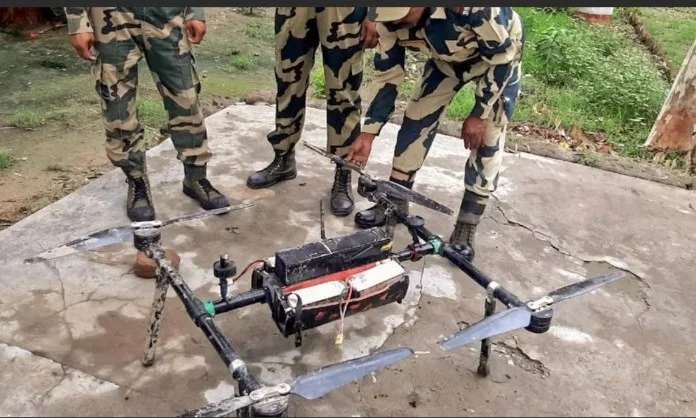
The Border Security Force (BSF) has intensified security measures along the India–Pakistan border after neutralising 255 drones this year, marking one of the highest recorded interceptions of aerial smuggling attempts. The increase underscores the growing dependence of cross-border networks on unmanned aerial vehicles to traffic heroin, synthetic drugs, and weapons into Indian territory.
According to senior BSF officials, many of the intercepted drones carried heroin, ICE (crystal meth), firearms, grenades, and high-grade explosives. The total recovery made by the force so far includes approximately 329 kilograms of heroin, 16 kilograms of ICE, 191 weapons, 12 hand grenades, and more than 10 kilograms of explosives. Authorities have also apprehended around 240 Indian nationals and 19 Pakistani individuals suspected of involvement in organised smuggling operations.
This sharp surge in drone-enabled trafficking comes at a time when the Punjab border region is preparing for the winter fog season. Visibility along the frontier typically plunges during this period, creating potential opportunities for smugglers to carry out covert aerial drops. Anticipating such attempts, the BSF has reinforced its surveillance grid and deployed specialised monitoring equipment to counter smuggling activities. Additional focus has been placed on riverine zones and approach roads commonly used for retrieving illicit consignments.
Joint operations with the Punjab Police are set to increase, allowing for coordinated checks on vehicles and individuals operating near the border. Officials noted that swift action in these areas is crucial, as ground teams are often deployed to intercept smugglers attempting to collect packages dropped by drones.
Security agencies point to several recent operations that highlight the sophistication of smuggling attempts. In one instance earlier this year, six Pakistani drones were brought down within a single day near Amritsar, yielding heroin, pistols, magazines, and assorted contraband. Many of the seized aerial devices were high-performance commercial drones capable of carrying significant payloads and covering long distances under low visibility.
The BSF has been adapting its tactics to keep pace with the evolving threat. Anti-drone systems, enhanced night-vision technologies, and advanced tracking tools have been integrated into border operations. Forensic analysis of recovered drones has also helped authorities understand smuggler tactics, flight patterns, and technological upgrades used by traffickers. These insights support the continuous refinement of interception strategies.
The broader implications of these developments point to a growing trend of narco-terrorism executed through aerial platforms. As traditional smuggling routes become riskier due to heightened ground surveillance, reliance on drones has increased significantly. This shift has prompted both state and central security agencies to invest more heavily in counter-drone infrastructure, including infrared sensors, PTZ cameras, and integrated monitoring systems.
As winter advances, the BSF remains on high alert. The coming months will serve as a critical test of India’s evolving border security mechanisms. While the force has demonstrated strong preparedness and effective interception capabilities, officials acknowledge that traffickers are continually exploring new ways to exploit terrain, technology, and weather conditions.
The BSF’s strengthened vigilance, coupled with cross-agency collaboration and technological upgrades, is expected to play a decisive role in curbing the influx of narcotics and weapons across the border. The fight against drone-based smuggling, however, remains dynamic — requiring constant innovation, rapid response, and unwavering surveillance to safeguard national security.

