Unrest across Bangladesh has intensified sharply following the death of student activist Sharif Osman Hadi, a prominent youth leader, and the targeted shooting of another influential youth figure, underscoring growing political volatility just weeks before the country’s general elections. The events have ignited widespread protests, sparked violent clashes, and heightened tensions both within Bangladesh and with neighbouring India.
Sharif Osman Hadi, a 32‑year‑old activist and spokesperson for the Inqilab Mancha movement, was shot by unidentified assailants in Dhaka on December 12, 2025, while campaigning for an upcoming parliamentary seat. He was airlifted to Singapore for advanced medical care but succumbed to his injuries on December 18, triggering nationwide outrage.
Violent Protests and National Mourning
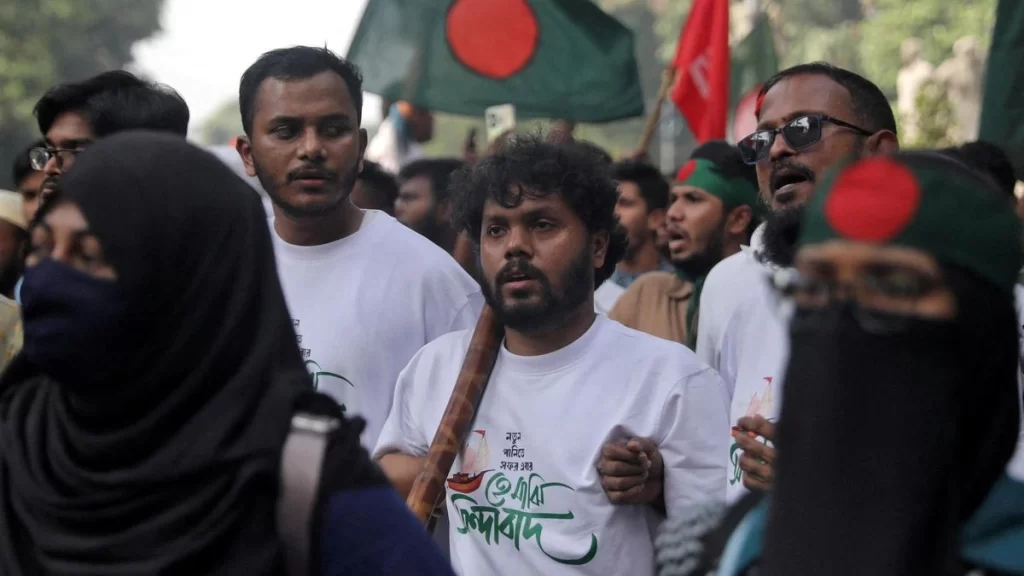
In the immediate aftermath of Hadi’s death, thousands of demonstrators took to the streets of Dhaka and other major cities, demanding swift justice and accountability. What began as a series of vigils and marches quickly escalated into brutal confrontations with law enforcement and destructive actions from protest groups.
Protesters vandalised and set fire to the offices of major media outlets, accusing them of biased reporting and alleged foreign influence. Cultural centres such as Chhayanaut also came under attack, signalling the unrest’s rapid spread into cultural and civil society spheres.
Authorities declared a day of national mourning, with tens of thousands attending Hadi’s funeral under heavy security on December 20. Interim government leaders and military officials pledged to honor his legacy and pursue those responsible.
Escalation: Shooting of Another Youth Leader
Just days after Hadi’s death, another high‑profile youth leader, Md Motaleb Sikder, was critically shot in Khulna on December 22, 2025, deepening concerns about the deteriorating security environment. Sikder, like Hadi, played a significant role in youth mobilization and political activism, and his targeting has underscored fears that political violence may be mounting.
The twin incidents have caused alarm among civil society and political observers, who warn that the escalation could undermine Bangladesh’s fragile democratic transition and further polarise public sentiment as the February 2026 general elections approach.
Political and Diplomatic Aftershocks
The unrest has rapidly taken on a broader political dimension, exacerbating tensions between domestic factions and straining diplomatic ties with India. Anti‑India slogans have been reported at multiple protests, and demonstrations near Indian diplomatic missions in Dhaka and Chattogram have prompted heightened security measures.
India, in turn, temporarily scaled back visa operations at its Chittagong consulate amid rising hostility, underscoring the diplomatic sensitivity of unfolding events.
Former Prime Minister Sheikh Hasina, currently living in India after her ouster during the 2024 uprising, has criticised the interim government led by Nobel laureate Muhammad Yunus, asserting that the current leadership has failed to maintain law and order and protect minority communities.
Security and Human Rights Concerns
As protests spread beyond urban centres, security forces have been deployed nationwide to contain violent outbreaks. Civil liberties groups and international observers have expressed concern over reports of mob violence, including the lynching of a Hindu man during the unrest, and have called for impartial investigations and respect for human rights.
The growing turmoil, analysts say, poses a serious challenge to public safety and democratic processes in Bangladesh, raising urgent questions about the nation’s political stability.
Outlook: A Nation at a Crossroads
With the general election looming and public trust in governance under strain, Bangladesh now finds itself at a critical juncture. The deaths and shootings of prominent youth voices have not only galvanized mass movements but also highlighted deep fissures within society. As authorities vow crackdowns and peace advocates call for restraint, the coming weeks will be pivotal in shaping Bangladesh’s political future and restoring public confidence in the rule of law.