
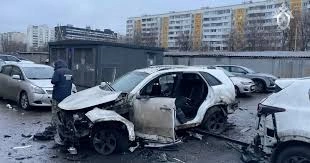
Lieutenant General Fanil Sarvarov, head of the Operational Training Directorate of the Russian Armed Forces’ General Staff, has died after a car bomb explosion in southern Moscow early Monday, intensifying concerns over targeted attacks on senior military officials amid the ongoing conflict involving Russia and Ukraine.
Russian authorities confirmed that an improvised explosive device detonated beneath Sarvarov’s vehicle on Yasenevaya Street at approximately 7 a.m. local time. The 56‑year‑old general was rushed to hospital following the blast but succumbed to his injuries, according to the Investigative Committee of Russia.
Explosion Details and Immediate Response
Preliminary investigations indicate the bomb was placed under the chassis of Sarvarov’s Kia Sorento, detonating as he either got into or began driving the vehicle. Law enforcement officers cordoned off the scene and forensic teams began a forensics inquiry into what Moscow is calling a “premeditated murder.”
The Investigative Committee has officially opened a criminal case under Russia’s criminal statutes governing murder and illegal handling of explosives, and has said it is exploring multiple theories, including potential involvement by Ukrainian intelligence services — a claim that Ukraine has not publicly confirmed.
Key Facts at a Glance
| Detail | Information |
|---|---|
| Victim | Lieutenant General Fanil Sarvarov |
| Position | Head of Operational Training Directorate, Russian General Staff |
| Location | Yasenevaya Street, Southern Moscow |
| Incident | Explosive device detonated under vehicle |
| Outcome | Sarvarov died of injuries in hospital |
| Investigation | Criminal inquiry launched; multiple leads examined |
| Suspected Link | Russian authorities cite Ukrainian intelligence as a line of inquiry |
Strategic Context and Security Implications
Sarvarov’s assassination marks yet another high-profile attack on Russian military officials. Over the past year, several senior figures — including Lieutenant Generals Igor Kirillov and Yaroslav Moskalik — were also killed in bombings and targeted attacks, according to multiple investigative sources tracking such incidents.
The incident underscores mounting security vulnerabilities within the Russian capital and raises questions about the effectiveness of protective measures for high‑ranking officials. Analysts suggest the precision and brazenness of the attack — executed in a residential Moscow district — reflect sophisticated operational planning.
Russian President Vladimir Putin has been briefed on the situation, the Kremlin said, with state agencies coordinating responses and public safety directives. In a statement, the Investigative Committee emphasized exhaustive efforts to trace all leads, including ballistic and electronic evidence, to establish a chain of responsibility.
Regional Stability and Broader Conflict Dynamics
The assassination comes amid deeply strained Russia‑Ukraine relations and ongoing conflict that has persisted since early 2022. Previous attacks on Russian figures have, in Russian state rhetoric, been attributed to Ukrainian special operations forces, though independent verification remains limited.
International observers warn that such high‑profile killings could further erode prospects for diplomatic engagement and escalate tensions along existing fault lines. With peace negotiations stalled and both sides fortified in their positions, this incident may become emblematic of a new phase of covert operations and asymmetric engagements.

