
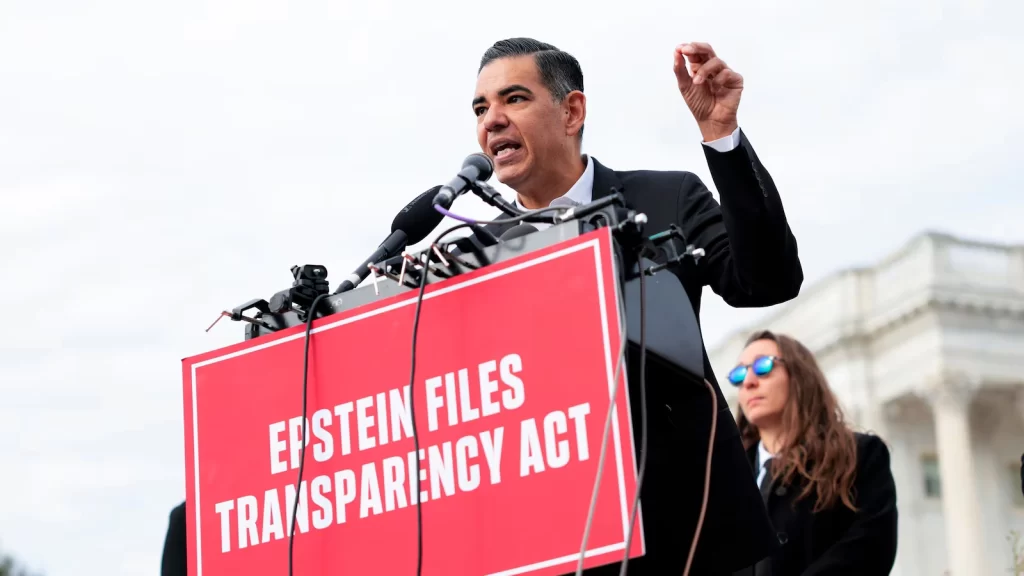
The U.S. Department of Justice (DOJ) has begun a highly anticipated rolling release of documents and photographs from its long-running investigation into convicted sex offender Jeffrey Epstein, triggering fierce political debate just days after a law mandating disclosure took effect. The release — ordered under the Epstein Files Transparency Act, signed into law by President Donald Trump in November 2025 — has shed light on hundreds of thousands of pages of evidence, yet immediate controversy has overshadowed its initial impact.
On December 19, 2025, the DOJ published thousands of documents, images, grand jury records, flight logs, and police reports collected from multiple federal investigations into Epstein and his associates. The rollout represents the first phase of a legally mandated effort requiring unprecedented transparency into previously sealed materials. However, the release has been marked by heavy redactions, missing files and bipartisan accusations of non-compliance — particularly over how the department has balanced transparency with victim privacy concerns.
Contents of the Initial Release
Among the documents are:
- Photographs depicting Epstein and alleged activities, some previously unseen by the public.
- Court documents and FBI complaints, including historic allegations first raised decades ago.
- Flight logs and contact lists from Epstein’s private aircraft and residences.
- References to high-profile individuals appearing in the materials — though not necessarily implying illegal conduct.
Advocates say these files represent a rare glimpse into the scope of federal evidence amassed over years of investigation. Yet the heavy use of redactions, including blacked-out pages, obscured names, and missing files, has frustrated lawmakers and survivors alike.
Political and Legal Backlash
Although the Epstein Files Transparency Act required all unclassified records be made public within 30 days of enactment, the DOJ’s partial disclosure has drawn sharp criticism from both Democrats and Republicans. Lawmakers contend that the staggered release and redaction choices fail to fulfill the statutory deadline and transparency goals of the law.
Representative Ro Khanna (D‑CA) — co-author of the law — publicly stated that the DOJ’s actions “do not comply” with congressional intent, arguing that the department must provide written explanations for every redaction. Meanwhile, Representative Thomas Massie (R‑KY) echoed concerns that critics are considering contempt proceedings against Attorney General Pam Bondi should compliance not improve.
Senate Minority Leader Chuck Schumer also accused the DOJ under Trump of “breaking the law,” warning that further delays and omissions could lead to legal challenges.
DOJ’s Response and Victim Privacy
Justice Department officials, including Deputy Attorney General Todd Blanche, defended the release strategy, emphasizing that redactions were necessary to protect the identities and privacy of victims and comply with court orders. Blanche dismissed accusations of political influence in the redaction process, insisting the department’s handling was legally justified.
At least “several hundred thousand” documents remain scheduled for phased release in the coming weeks, according to DOJ statements. Officials say this approach ensures sensitive content is properly vetted before public disclosure.
Survivor and Public Reaction
Victim advocacy groups have expressed frustration, describing the heavily redacted files as a “slap in the face” given decades of demands for transparency. Critics also highlight concerns over the disappearance — and later restoration — of certain files, including images tied to public figures.
Key Controversy at a Glance:
| Issue | Public & Political Response |
|---|---|
| Partial release vs. full compliance | Bipartisan criticism that DOJ missed statutory deadline |
| Massive redactions | Advocates claim reduced transparency |
| Removal of select files | Sparks accusations of political interference |
| Ongoing phased release | DOJ cites victim privacy and legal constraints |
Looking Ahead
As the DOJ continues its phased disclosure under the Epstein Files Transparency Act, political and legal pressure is likely to intensify. Lawmakers are exploring avenues to enforce compliance, while public interest remains high in uncovering the full scope of the Epstein investigation. The coming weeks will determine whether the remaining documents satisfy demands for transparency, protect sensitive information appropriately, and withstand scrutiny from both sides of the political divide.

