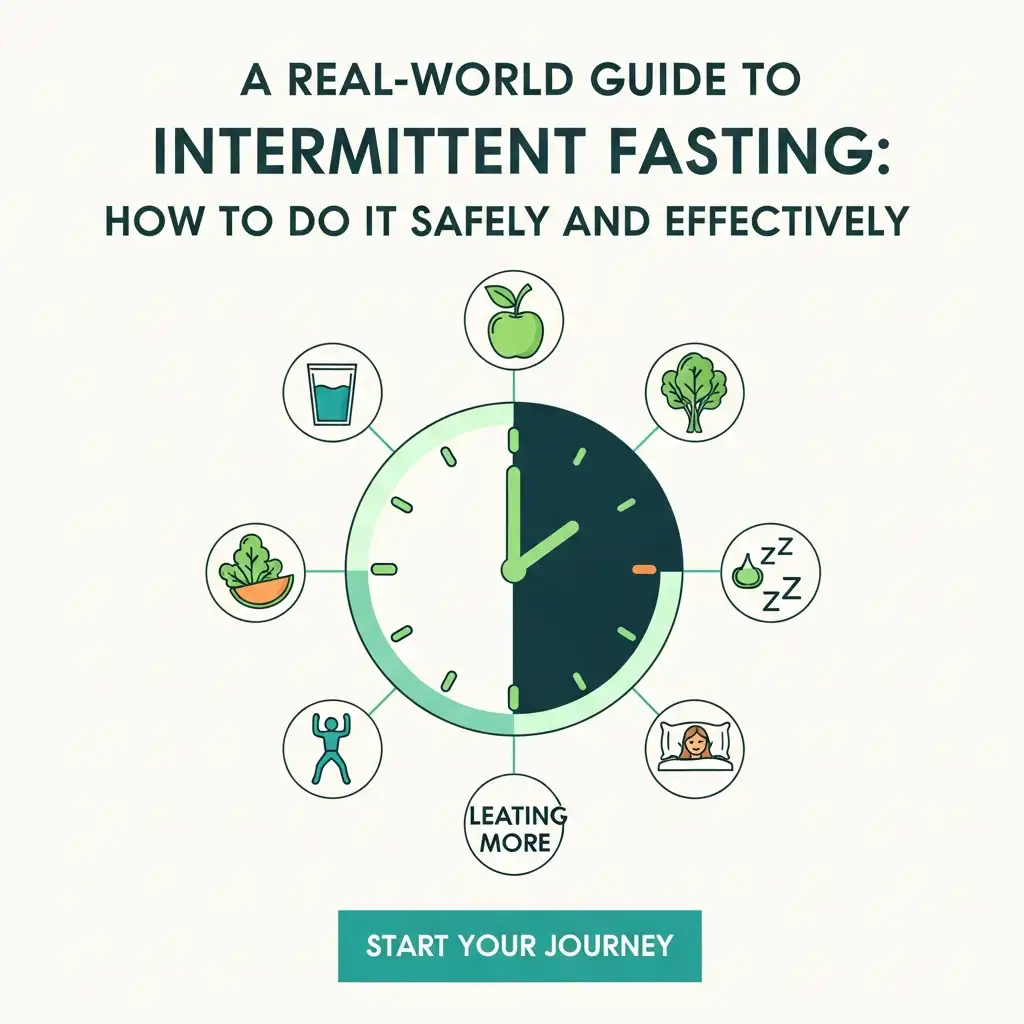
I’ll always remember the first time I tried intermittent fasting. After reading an article that made it sound easy, I started a 20-hour fast right away. I was trembling, angry, and ready to devour my desk by the 14th hour. I gave up since I was sure that fasting wasn’t for me.
I was doing everything wrong, it turns out.
Intermittent fasting can help you lose weight, have more energy, and enhance your metabolic health, but only if you do it right. If you jump in too quickly, ignore your body’s signals, or make other typical mistakes, you’ll end up unhappy and sure that it doesn’t work.
Let me show you how to do this in a safe and effective way so that you achieve results without feeling like you’re going through a lot of pain.
Start slowly or you’ll crash and burn
Most individuals make the mistake of going from eating six times a day to trying to fast for 24 hours. That’s like trying to run a marathon when you’ve only ever walked around the block. Your body needs time to become used to it.
Start by not eating for 12 hours. If you eat dinner at 7 PM and breakfast at 7 AM, that’s 12 hours, so you might already be doing this without knowing it. This is your starting point.
After 12 hours feels good (give it a week or so), add two more hours. You might complete dinner at 7 PM and not eat again until 9 AM. You’re really simply skipping breakfast or eating it a little later.
You can then slowly work your way up to 16 hours, which is the 16:8 approach that many people use. This suggests that you should consume all of your meals in an eight-hour period, such as from midday to 8 PM.
I spent two weeks at each level so my body could get used to it before moving on. Some people adjust more quickly than others. There’s no award for rushing, and if you push too hard too quickly, you’ll probably quit up.
Pick Your Fasting Window Based on Your Life
A lot of people make the mistake of forcing themselves to stick to a fasting schedule that doesn’t work with their way of life. They read that someone fasts from 8 PM to noon, so they try to do the same thing, even when they work nights or have early morning gym classes.
Your fasting window should fit in with your life, not get in the way of it.
If you don’t feel hungry in the morning, don’t have breakfast. Instead, have your first meal at midday. If you wake up starving and breakfast is your favorite meal, skip dinner and eat breakfast instead. You don’t have to fast in the morning.
I don’t get hungry until late morning anyhow, so it was easy for me to forgo breakfast. My buddy Sarah, on the other hand, likes her eggs and cream in her morning coffee. Instead, she fasts from 6 PM to 10 AM, which means she stops eating dinner earlier. Same benefits, but a different schedule.
Think about your job hours, how your family eats, and your social life. If you eat dinner with your family every night at 6 PM, don’t adopt a fasting schedule that makes you sit there and watch everyone else eat. That’s agony.
What You Can Really Have While You’re Fasting
At first, this confuses everyone, and even specialists don’t always agree on what it means. But here’s what I’ve found works and what the study generally backs up:
Water is always good. You can drink as much as you want. Drink more than you think you need, because thirst can sometimes seem like hunger, and being hydrated makes it easier to fast.
Black coffee and plain tea are fine. They have almost no calories and won’t break your fast. Some individuals think that even black coffee makes your body release insulin, although it’s not much. Drink coffee if it helps you get through your fasting time.
This is where it gets tricky: anything with calories technically breaks your fast. That means you can’t have cream, sugar, or milk in your coffee. I know, I know—black coffee is hard to drink at first. But you grow used to it. Or you could add a little bit of cinnamon to make it taste better.
What about drinks with no calories? Diet sodas, flavored sparkling water, and sugar-free energy drinks are all up for debate. Some fake sweeteners could make your body make insulin even if they don’t have any calories. My opinion is that they are probably fine if they help you stay to your fast and you are seeing benefits. If you reach a plateau, try getting rid of them and watch what occurs.
Bone broth is a gray area. It has some calories, therefore it officially ends a fast. But it’s not much, and some people drink a cup of bone broth to help them get through long fasts. If you’re fasting for a long time (24 hours or more), it’s okay to have something other than water and black coffee. But if you’re fasting for 16 hours or less, simply drink water and black coffee.
How to Break Your Fast the Right Way
How you end your fast is almost as important as the fast itself. When I broke a 20-hour fast with a massive meal of pasta, I learned the hard way that this is true. I felt bad for hours afterward.
Start with something that won’t upset your stomach. I normally eat eggs and avocado or Greek yogurt with berries to break my fast. Some folks like a tiny salad or a few nuts.
Don’t break your fast with meals that are heavy, full of carbs, or sugary. After fasting, your insulin levels are low, and a big surge isn’t good for you. Plus, you might feel tired and full.
Take your time eating. Your stomach hasn’t been full for a long, so it needs some time to wake up. I used to eat my first meal so quickly that I felt sick afterward. Now that I eat thoughtfully, I appreciate my meals more.
One thing that works for me is to drink a huge glass of water 10 to 15 minutes before I break my fast. It helps with the first hunger pang and stops you from eating too much.
What to Eat When You Can Eat
You can’t eat junk food during your eating window and expect to get fantastic results just because you’re fasting. I’ve seen people go without food for 18 hours, then consume pizza, ice cream, and candy for six hours straight. Warning: They didn’t shed any weight.
Eat whole foods that are full with nutrients. If you eat carbs, pick ones with fiber, such sweet potatoes, quinoa, or brown rice. Otherwise, think about eating veggies, good proteins, healthy fats, and some fruits.
Protein is very important. When you’re fasting, you want to keep your muscle mass, and getting enough protein can assist. My first meal should have at least 30 grams of protein.
Don’t try to cut back on calories too much when you’re fasting, especially at initially. If you’re fasting for 16 hours and 8 hours, eat until you’re full during your eight-hour window. A lot of individuals naturally eat less since they’re not hungry as often, but don’t force yourself to eat very little on top of fasting. That will make you feel bad and make you want to quit.
During my eating window, I eat two full meals and perhaps a snack if I’m really hungry. I’m not counting every calorie; I’m just eating real food until I’m full.
Managing Hunger: It’s Not What You Think
The most common anxiety about fasting is hunger. I understand—I was scared of being hungry all day. But I learned that hunger comes and goes in waves.
At first, you’ll feel hungry at the same times you always do. Your body is used to eating at that time, so it tells you you’re hungry. But if you wait 15 to 20 minutes, the hunger usually goes away.
Get busy with something else, drink water, or have some black coffee or tea. I learned that keeping occupied throughout my fasting window makes a big difference. I don’t think about eating much when I’m working on something or exercising. When I’m bored and not doing anything, that’s when I’m really hungry.
After a few weeks, something fantastic happens: you don’t feel as hungry as you used to. Your hunger hormones take care of themselves. If I didn’t eat for more than four hours, I would get wobbly and angry. I can now go 16 to 18 hours without feeling bad at all.
That being said, it’s crucial to tell the difference between real hunger and hunger that comes from habit. If you’re weak, wobbly, and can’t focus because you’re hungry, eat something. Habit hunger is when you feel like you “should” eat since you’re used to eating at a certain time. You can get past that.
Should you work out while fasting?
At first, I was terrified to work out when I was fasting. Wouldn’t I be weak? Wouldn’t I lose muscle? Wouldn’t I pass out?
Most people can work out just well while fasting, and some even do better. Your body is used to using stored fat for energy while you fast, even when you work out.
I conduct my strength training in the morning after not eating all night. I’m about four hours away from breaking my fast. My performance hasn’t gotten worse; in fact, it’s become better in several lifts.
Most people can do light to moderate cardio while fasting. No trouble with walking, jogging slowly, or biking. Some people even conduct high-intensity workouts while fasting without any problems.
But if you’re new to fasting, don’t try to do your hardest workout right away while you’re fasting. First, let your body get used to fasting for a few weeks. Then try working out while fasting little by little.
Stop if you feel dizzy, weak, or not right while working out on an empty stomach. Eat something,