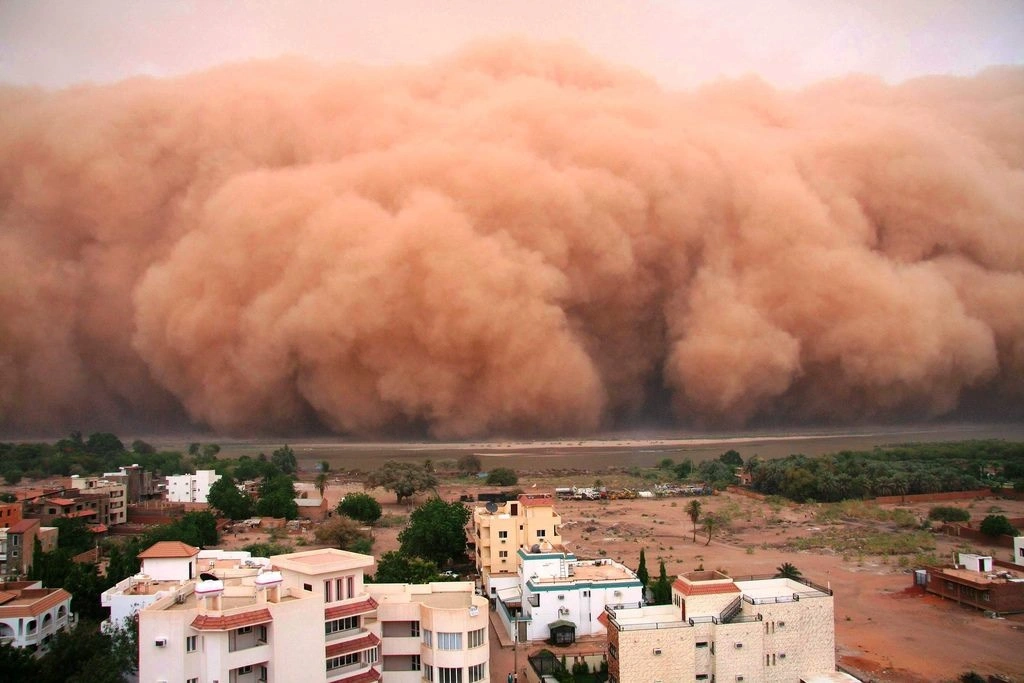
The whole country of Saudi Arabia has been warned against long-term sandstorms. Transportation, health, and daily living will all be greatly affected by these storms.
Beginning of the Crisis
In early 2026, the kingdom is hit by a lot of sandstorms. In big cities like Riyadh, Jeddah, Dammam, and the eastern province, notifications last for a few days. General supervisors at the National Center for Meteorology have said that visibility would be worse, winds will bring small dust particles, and severe circumstances will last until February 24 and beyond. This event shows how quickly desert storms may get to Saudi Arabia. Dust stays in dry locations because of the weather, which makes these storms worse.
Officials and citizens say that thick clouds of dust are covering cities, which has caused major airports to cancel flights and ground transportation to stop. The warnings about the sandstorm center on the immediate dangers to weak populations, like persons with breathing problems, and also put stress on the country’s infrastructure. Vision 2030 wants to make the economy more varied, but these kinds of natural disasters make it hard for Saudi Arabia to develop its transportation and public health systems.
What meteorology is and how storms work
When strong winds from the north blow a lot of sand and dust from the Rub’ al-Khali desert and nearby vacant quarter areas, sandstorms erupt in Saudi Arabia. Shamals or haboobs are other names for these storms. Forecasts say that in places that are affected, wind speeds will be over 60 km/h and visibility will be less than 1,000 meters. The National Center of Meteorology thinks this will linger for a few days, with the most dust in the afternoons.
Climate data shows that these storms have been worse in the last ten years because of global warming, which has made the weather drier and changed the way the wind blows. The levels of PM10 and PM2.5 in the air in Riyadh have gone above what is safe, thus alerts have been extended to keep people safe. We can look at things that have happened before, like the huge dust storm in 2022. More than 200 planes were grounded by that storm, and thousands of passengers went to the hospital. We should respond like this immediately.
Important things to know about the storm:
Wind gusts are always between 50 and 70 kilometers per hour.
Dust plume coverage: From the north of Tabuk to the south of Najran.
Length: Early estimates predict it will last at least till February 26.
Experts say that the long-lasting nature is because a high-pressure system has stopped moving across the Arabian Peninsula, trapping dust in low-level jets. This kind of weather makes things worse in the area and also makes the air quality worse, which affects the Gulf states close door.
Transportation networks are having trouble
Warnings about sandstorms have stopped all of Saudi Arabia’s transportation systems. On February 24, King Khalid International Airport in Riyadh had more than 150 aircraft delayed and 70 canceled. Some airlines, like Saudia and Flynas, changed their flights to Dubai and Bahrain. Runways had to close because people couldn’t see well, which left thousands of travelers stuck during busy periods.
In only two days, hospitals in Dammam and Qatif set up mass casualty protocols and treated almost 5,000 individuals.
The Saudi CDC’s public health campaigns stressed how important it is to drink adequate water and stay away from dusty places. Schools transferred their classes online, which affected two million youngsters.Mosques also ceased Friday prayers in public settings. Experts say that allergy outbreaks will get worse over time since being around sandstorms all the time makes the immune system weaker.
Advice about safety:
During busy times, put on safety glasses and masks.
Don’t work out outside; instead, use applications to evaluate the air quality.
Cleaning the filters in your HVAC system will keep dust from building up within.
Doctors think that the silica in Saudi dust permanently scars lungs, and they want more screening programs because they get so many notifications.
How it changes the economy and daily life
People in Saudi Arabia are less active because of all the warnings about sandstorms. Major cities are becoming ghost towns. Schools and universities stayed closed for longer, and all classes were held online all weekend. Families stayed indoors as the sky turned yellow and the air got dense. This caused shopping malls to lose 60% of their customers.
The tourism industry is having a hard time making money since Hajj preparation sites in Makkah stopped admitting people in. This made early pilgrims leave. Retail and hospitality lost SAR 200 million, even if the number of people working from home went up by 40%. This was helpful for digital platforms like Tawakkalna that send out alerts and offer services.
Effects on a broader scale and professional review
Desertification accelerates up as temperatures rise, which renders the Arabian Gulf more vulnerable to climate change. By 2030, experts at King Abdullah University think storms would happen 20% more often. This will put a lot of pressure on the parts of Vision 2030 that are meant to last. Health economists predict that the total cost of health care, which includes both medical expenses and lost productivity, will be more than SAR 10 billion a year.
Brent crude rose 2% because of worries about a small supply in the oil market that were happening all over the world. Dust that moves from one country to another is bad for the environment and makes it harder for countries to get along. We are better ready for the storms of 2024 than we were for the storms of 2026, but there are still difficulties with how cities are built, including uncontrolled desert growth. Ten provinces are affected by the event that lasts seven days in 2026. It barely lasts five days and costs SAR 8 billion in 2024. Since 2020, there have been 15% more storms.
Saudi Arabia Extends Sandstorm Alerts: Chaos Hits Transport, Health