
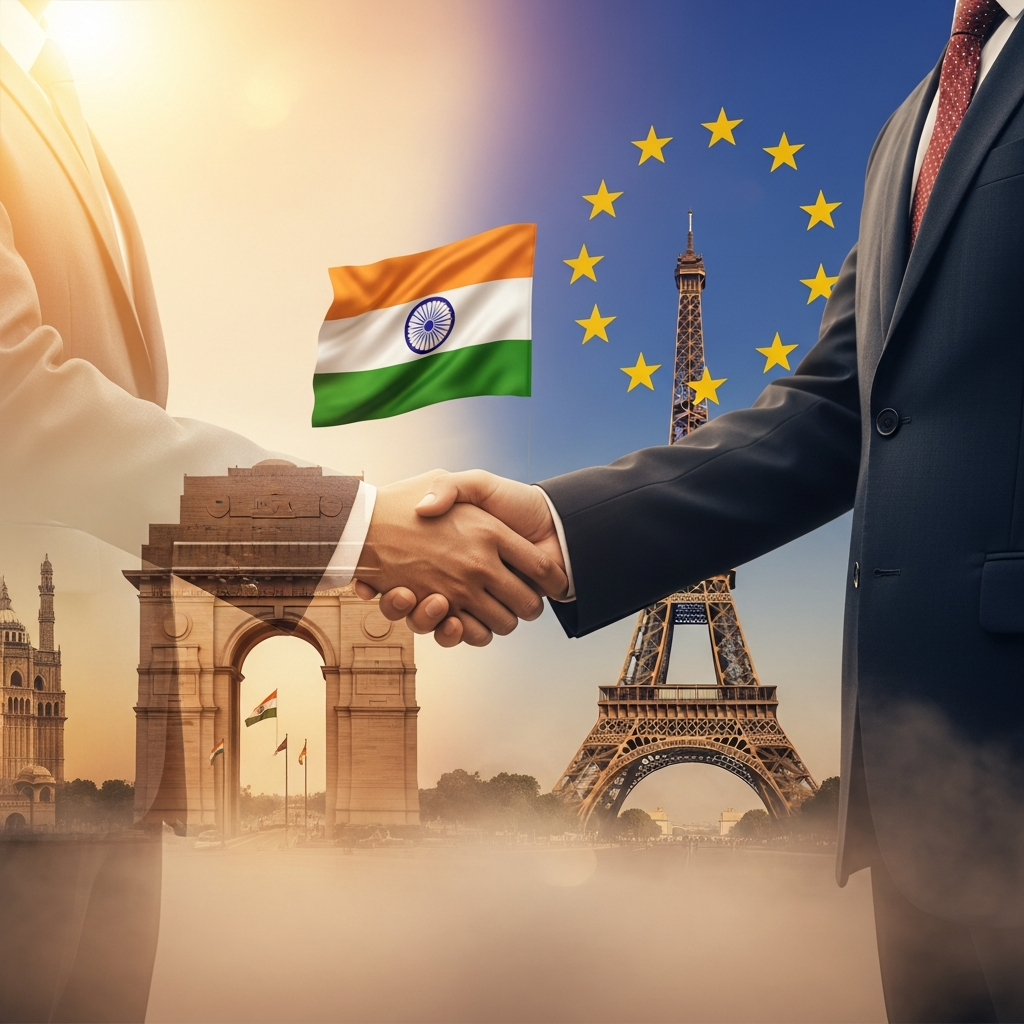
After years of stalled talks and missed deadlines, New Delhi and Brussels are closer than ever to sealing a free trade agreement that could reshape global commerce — and send a powerful signal about cooperation in an uncertain world.
There is a particular kind of diplomatic fatigue that sets in around trade negotiations that have been “almost there” for going on two decades. The India–EU free trade agreement has tested that patience more than most. Launched with considerable fanfare in 2007, the talks collapsed in 2013, were relaunched in 2022, and have since moved through a series of cautiously optimistic communiqués and joint statements that have been met, understandably, with scepticism from business communities on both sides. And yet, something feels genuinely different this time.
The convergence of political will, economic necessity, and a shifting global order appears to have finally produced the conditions under which a deal is not just desirable — it is, for both parties, strategically essential. The India EU trade deal now in progress is no longer merely a tariff-reduction exercise. It is a statement about what kind of world India and Europe want to help build together.
The main goal of the proposed free trade agreement is to get rid of the barriers that have quietly kept a trading relationship from growing as large as it should have been. India and the EU already trade more than €130 billion worth of goods and services with each other every year, but both sides know that this number is much lower than what it could be. India has high tariffs on European cars, machinery, and wines, and European markets have real barriers to Indian pharmaceuticals, textiles, and IT services. The deal is supposed to fix both sides of this ledger.
Indian exporters have a huge chance to change their businesses by getting better access to 27 European markets all at once. India’s growing middle class and quickly modernizing industrial base make it one of the last truly large frontier markets for European businesses, especially those in high-end manufacturing, clean technology, and financial services. There are a lot of numbers involved. Analysts say that a full agreement could add tens of billions of euros to trade between the two countries over the next ten years and also greatly increase investment flows in both directions.India and Europe don’t just do business with each other. They are democracies that want to show that open, rules-based trade still works and still wins.
The investment aspect is especially important. The deal includes more than just goods and services; it also includes rules for protecting and encouraging foreign direct investment. European companies have sometimes found India’s rules and regulations to be unpredictable. Indian companies that want to do business in Europe have also had to deal with their own red tape. A strong investment chapter with clear ways to settle disputes and open protections would address long-standing concerns on both sides and could open the door to a new generation of cross-border business ventures in areas like green energy and digital infrastructure.
It would be foolish to talk about the India-EU trade deal without taking into account the geopolitical situation. Thirteen years ago, the first talks fell apart. A lot has changed in the world since then. Pandemics, wars, and major powers using trade as a political weapon have all broken up supply chains that used to go on without a break across continents. In recent years, both India and the European Union have had to quickly reevaluate their strategic dependencies, especially their reliance on single-source suppliers for important goods.
In this situation, expanding trade partnerships is not only good business sense; it is also a matter of national security. The EU is less likely to face the risks that come with relying too much on other big trading partners if it strengthens its ties with India. India gets leverage, prestige, and a strong base for its bigger goals in global trade by getting special access to European markets. Because both sides are democracies with similar values about the rule of law and open markets, the relationship is more stable than just business deals.
Policymakers are not missing this. High-ranking officials from the European Commission have called India a “indispensable partner” in the EU’s efforts to diversify its trade. Indian commerce ministry officials have said that this deal is one of the current government’s top priorities when it comes to foreign trade. When political talk and real strategic interests are this close, deals that seemed impossible can happen.
There are still real problems, of course. In some EU member states, access to agricultural markets is still a politically sensitive issue. India has always been protective of its dairy, poultry, and farming industries, and European negotiators are asking for concessions that domestic groups in New Delhi will fight hard against. The EU’s Carbon Border Adjustment Mechanism, which taxes imports based on how much carbon they emit, has caused problems. Indian officials say it acts as a hidden trade barrier that hurts developing economies more than others. There are still problems with data localization rules and intellectual property protections for drugs.
These problems are not impossible to solve, but you shouldn’t wish them away either. Based on the history of this negotiation, the difference between “close to a deal” and “deal done” may be bigger than it looks from the outside. It will be hard for both sides to make politically uncomfortable compromises, and in a democracy, trade concessions are never easy to understand.The hardest part of any trade deal isn’t the money. It is convincing voters at home that what they are giving up is worth what they are getting in return.”
But the case for completion has never been stronger. The free trade agreement gives both sides a real way to boost economic growth at a time when growth is hard to come by around the world. It gives businesses on both sides certainty, scale, and access. And it gives the world something that is becoming less common and more valuable: proof that constructive, multilateral economic cooperation is still possible and can still get things done. That might be the most important thing this deal makes, more than any tariff schedule.

