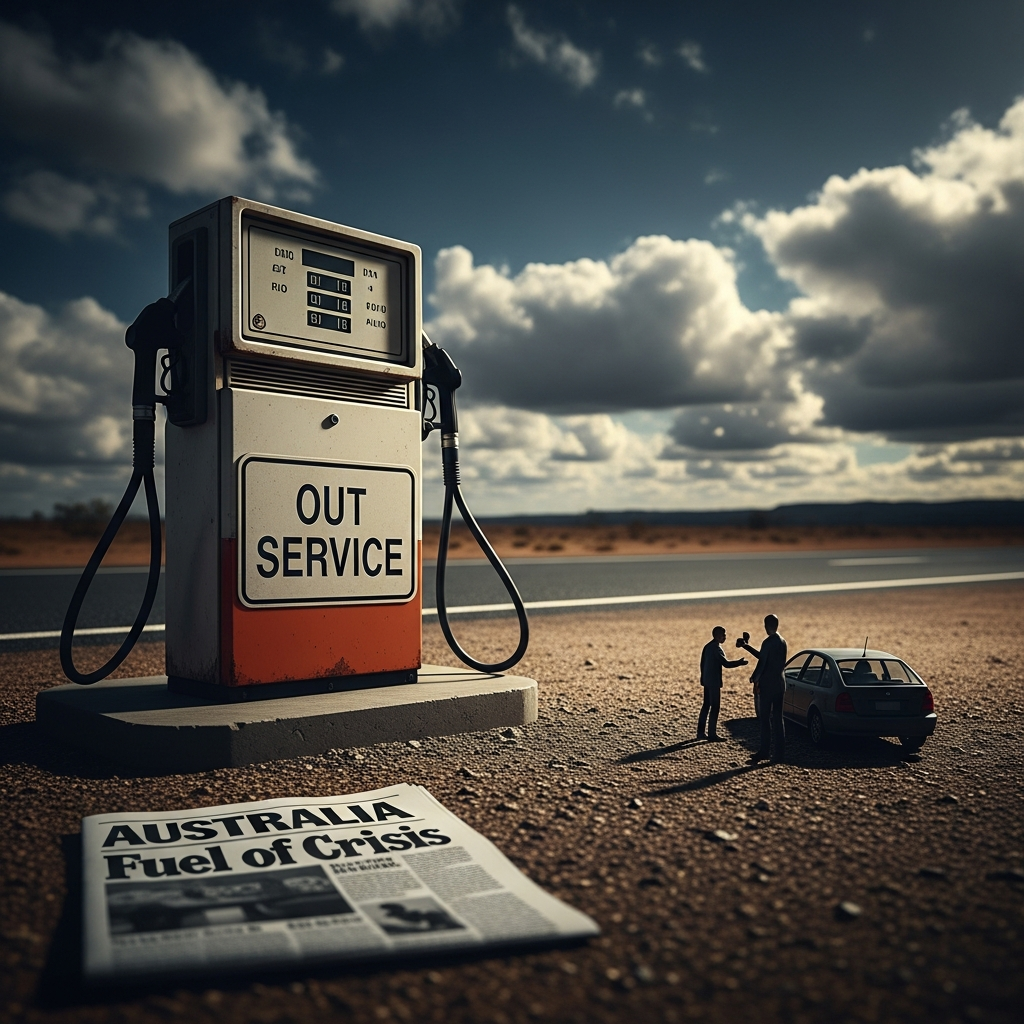
As petrol queues lengthen along the east coast, a deeper debate is unfolding in Canberra — one that will shape how Australia powers itself for decades to come.
There is something quietly alarming about a petrol station with no petrol. For many Australians living along the east coast, that unsettling sight has become increasingly common in recent weeks. Forecourts that were once taken for granted now display apologetic signs and empty bays. Motorists circle, frustrated. The Australia fuel crisis, as it has come to be called, is no longer a distant headline — it is a lived, daily inconvenience turning into a genuine national concern.
But what is causing it, who is responsible, and — most importantly — what happens next? The answers are more complicated than the empty pumps might suggest.
Australia has long carried a structural vulnerability in its fuel supply chain that few wanted to confront. The country imports the vast majority of its liquid fuels, with domestic refining capacity having steadily contracted over the past two decades. When global shipping lanes tighten, when geopolitical tension disrupts supply routes, or when trade partners redirect resources, Australia feels the pinch acutely. That fragility is now fully exposed.
Global geopolitical pressures — ongoing instability in key oil-producing regions and shifting trade priorities among Australia’s major partners — have converged into the current fuel shortages rippling through Queensland, New South Wales, and Victoria. Government officials have been quick to reassure the public that the situation is temporary. Critics are equally quick to point out that “temporary” has become a suspiciously recurring word in Australian energy policy discussions.
“Every crisis eventually ends — the question is whether we use this one to finally fix the system, or simply wait for the next.”
The Albanese government has moved swiftly on the diplomatic front, engaging with international partners including the United States and Japan to help stabilise import volumes. Emergency reserves are being tapped, and we’re coordinating with fuel suppliers to address the current challenges.
It’s unclear if these steps will be enough to address the immediate challenges, yet the political imperative to respond, and to be perceived as doing so, is undeniable.
Perhaps the most heated aspect of the current debate is the proposed gas export tax. The idea is straightforward in principle: Australia is one of the world’s largest exporters of liquefied natural gas, yet domestic gas prices remain stubbornly high and supply periodically tight. Critics argue that this is a national absurdity — a country sitting atop extraordinary energy wealth that still struggles to keep its own lights on at an affordable price.
Proponents of the export tax argue that a levy on outgoing LNG shipments would generate revenue to subsidise domestic supply and fund the energy transition. It would, they contend, force gas companies to prioritise Australian consumers before shipping reserves offshore. Several independent economists have backed the concept in principle, noting that countries like Norway have used similar mechanisms to maintain domestic energy security while remaining significant exporters.
The industry response has been swift and predictably hostile. Gas producers are sounding alarms about a proposed tax, arguing it would erode investment confidence, jeopardize existing long-term agreements with Asian trading partners, and, in the end, make Australian exports less competitive. Their influence in Canberra has been both apparent and well-funded. This discussion has laid bare a core conflict in Australia’s energy strategy: the challenge of reconciling the economic advantages of export-led expansion with the urgent requirement to provide affordable energy for Australians.
“Australia exports enough gas each year to heat every home on the continent many times over. The political question is not whether we have the resources — it is who they belong to.”
The political debate surrounding the crisis has broken along predictable but genuinely significant lines. The government is caught between its obligations to industry partners, its agreements with international allies, and its responsibility to ordinary voters who are watching fuel prices climb. Opposition parties have seized on the crisis as evidence of policy failure, while crossbenchers and Greens senators push hard for more aggressive intervention in the gas export market.
State governments, too, have entered the fray. Some premiers have called for a national cabinet meeting specifically on energy security, arguing that the crisis demands coordinated federal and state action rather than Canberra acting in isolation. There is a growing sense among many politicians — across party lines — that the current situation has made visible a systemic failure that cannot simply be managed through diplomatic phone calls and reserve releases.
What makes this political debate particularly charged is that it sits at the intersection of immediate economic pain and long-term structural transformation. Voters are angry about prices at the pump right now. But policymakers know that any solution that simply kicks the problem down the road — without addressing Australia’s chronic dependence on imported liquid fuels — will only deliver a more severe version of the same crisis in five or ten years’ time.
There is, perhaps, a silver lining buried in the disruption. The crisis has dramatically accelerated conversations about renewable energy investment that were previously moving at a glacial political pace. Solar, wind, green hydrogen, and battery storage have all received renewed attention from ministers who might previously have treated them as aspirational rather than urgent. Several major renewable projects that were stalled in regulatory processes have reportedly been fast-tracked in the wake of the fuel disruption.
This matters because Australia’s long-term answer to energy policy challenges cannot come from importing more oil or taxing gas exports in isolation — it must come from a genuine transition to a domestically generated, renewable energy base that is insulated from the volatility of global commodity markets and geopolitical tensions. The sun and wind, as commentators are fond of noting, do not require international shipping routes.
Running on Empty: Australia’s Fuel Crisis and the Political Battle Behind It.