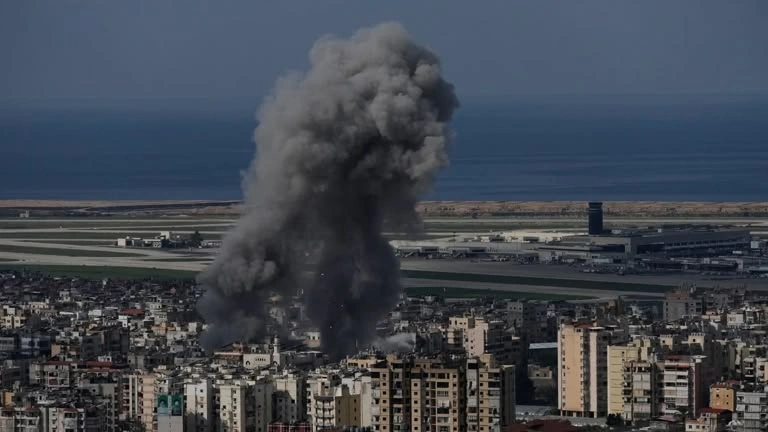
A fragile, 10‑day ceasefire between Israel and Lebanon has taken hold along their volatile border, offering a brief pause in a conflict that has already killed more than 2,000 people and displaced over a million. Yet, even as the guns have gone quiet, the pause feels more like a breath between shocks than a genuine turning point. On both sides, leaders and ordinary citizens are asking the same uneasy question: Can this truce actually lead to real peace, or is it just a countdown to the next round?
What the Ceasefire Actually Means
The ceasefire was announced by U.S. President Donald Trump, who said that Israel’s prime minister and Lebanon’s president had agreed to a 10‑day halt in hostilities to create space for deeper diplomatic talks. The truce officially began at midnight local time on April 16, 2026, and formally applies between the Israeli state and the Lebanese state. Crucially, it does not formally bind Hezbollah, the Iran‑backed armed group that has been Israel’s main opponent in southern Lebanon for the past six weeks.
Trump has publicly urged Hezbollah to “respect” the ceasefire, framing it as a test for the group’s seriousness about peace. Behind the scenes, U.S. officials say the short‑lived deal is meant both to ease the humanitarian crisis and to soften the ground for a broader U.S.–Iran negotiation that could recalibrate Tehran’s role across the region.
How It Came About—and What Israel Is Still Doing
The current fighting began in early March 2026, when Israel stepped up cross‑border operations against Hezbollah following a wave of rocket and missile attacks on northern Israel. Within weeks the conflict escalated into an intense air and ground campaign, with Israeli forces moving up to 10 kilometers into southern Lebanon to create what Prime Minister Benjamin Netanyahu has called a “security zone.”
Even as the ceasefire has taken effect, Israel has signaled it sees this as a tactical pause, not a full retreat. Israeli officials tell foreign media that troops will stay in southern Lebanon, clearing sites they describe as Hezbollah infrastructure, including bunkers, weapons caches, and communication nodes. That means drones still hover overhead, checkpoints remain in place, and entire villages along the border are effectively sealed off from normal life. For many Lebanese civilians, the idea of a ceasefire rings hollow when foreign soldiers are still on their soil.
Hezbollah’s Role—and Hezbollah’s Limits
Hezbollah has publicly stated it will abide by the ceasefire, but its position is complicated. The group has long framed itself as a “resistance” movement against Israeli occupation and U.S. influence, and any perception that it has backed down risks alienating its base. At the same time, the human toll of the past six weeks—including thousands dead, hundreds of thousands displaced, and whole border towns reduced to rubble—has rattled even its staunchest supporters.
Iran, Hezbollah’s main backer, has carefully positioned the truce as a product of “steadfast resistance” rather than international pressure, saying that sustained pressure forced Israel to the negotiating table. Senior Iranian officials have insisted that Lebanon’s security and Hezbollah’s presence must be negotiated as one package, underlining that any long‑term deal will have to address Iran’s broader regional calculations.
The Human Toll on the Ground
The ceasefire offers a rare window to see just how damaged the region has become. In Lebanon, medics and humanitarian workers report a shattered healthcare system: clinics overwhelmed, supplies running low, and trauma‑care units still operating at near‑crisis levels. More than 2,000 people have been killed since early March, and at least one‑fifth of Lebanon’s population has been displaced—some moving north toward Beirut, others crowding into overcrowded schools and makeshift camps.
In southern Lebanon, the impact is even more visible. The destruction of the Qasmiyeh Bridge over the Litani River, the last remaining functional crossing in that area, has cut off vital supply lines and stranded tens of thousands of civilians. Roads once lined with orchards and smallholdings are now threaded through rubble and unexploded ordinance.
Across the border, in northern Israel, residents who have lived under the shadow of Hezbollah rockets for years are also exhausted. Some express relief that the immediate bombardment has stopped; others worry that the truce will only freeze a situation that still leaves them vulnerable and dependent on unpredictable diplomacy.
What the Ceasefire Does—and Does Not—Fix
On paper, the 10‑day truce is designed to do three things: reduce immediate violence, create a safer environment for humanitarian work, and open a channel for more durable talks between Israel, Lebanon, and outside powers such as the United States and the European Union. It is not a neutrality deal, nor does it spell out final borders, security arrangements, or the status of Hezbollah’s arsenal—a fact that many analysts see as a major weakness.
U.S. officials have emphasized that the ceasefire is “temporary in nature but critical in timing,” suggesting that the next 10 days will be a trial period for whether Lebanon’s government can consolidate control along the border and whether Hezbollah can restrain its operatives without losing face. If the lull holds, it could buy time for a longer‑term security framework that resembles the 2006 UN‑backed resolution: disarming militants along the frontier, demarcating borders, and strengthening the Lebanese state’s presence in the south.
Early Violations and Growing Doubt
The fragility of the ceasefire became apparent almost immediately. Within hours of the truce taking effect, Lebanese military sources reported multiple Israeli strikes in southern villages, insisting that no Hezbollah attack had preceded them. On the other side, Israeli officials say their forces will still respond to any “imminent threat” from Hezbollah, effectively leaving the door open to localized clashes that could still spiral out of control.
This slippage raises a deeper question: Can a ceasefire survive when both sides are still operating by different rulebooks? For many observers, the real test will not be whether the border stays quiet for 10 days, but whether Lebanon’s government and Hezbollah can reach an internal understanding that allows Beirut to speak with one voice, rather than ceding that voice to a heavily armed non‑state actor.
How the War Affects the Wider Region
The Israel–Lebanon front is only one strand of a much larger regional puzzle. The current conflict is deeply entwined with the U.S.–Israel war against Iran, which has roiled shipping lanes, raised oil prices, and sent security and intelligence agencies across Asia and Europe into overdrive. The Israeli campaign in Lebanon has also heightened tensions in the occupied Golan Heights and along the Jordanian and Iraqi borders, where Iranian‑linked groups have signaled their readiness to respond to any escalation.
In this context, the ceasefire is not just about two neighbors; it is a barometer of how much regional actors are willing to talk rather than fight. If the truce holds, it could create space for a broader diplomatic opening that Beijing, Moscow, and European powers have all said they want to support. If it breaks down, the risk of a wider, multi‑front conflict—potentially involving oil infrastructure, shipping chokepoints, and even global financial markets—would rise sharply.
India’s own diplomatic stance—calling for restraint, humanitarian pauses, and a return to dialogue—reflects a broader Global South preference for conflict prevention over military solutions. New Delhi and others in the region are likely to watch carefully whether this 10‑day truce can be extended into a more durable framework, or whether the Middle East is heading toward another cycle of short truces and long‑term instability.
Israel–Lebanon Ceasefire Holds—But Tensions Still Simmer