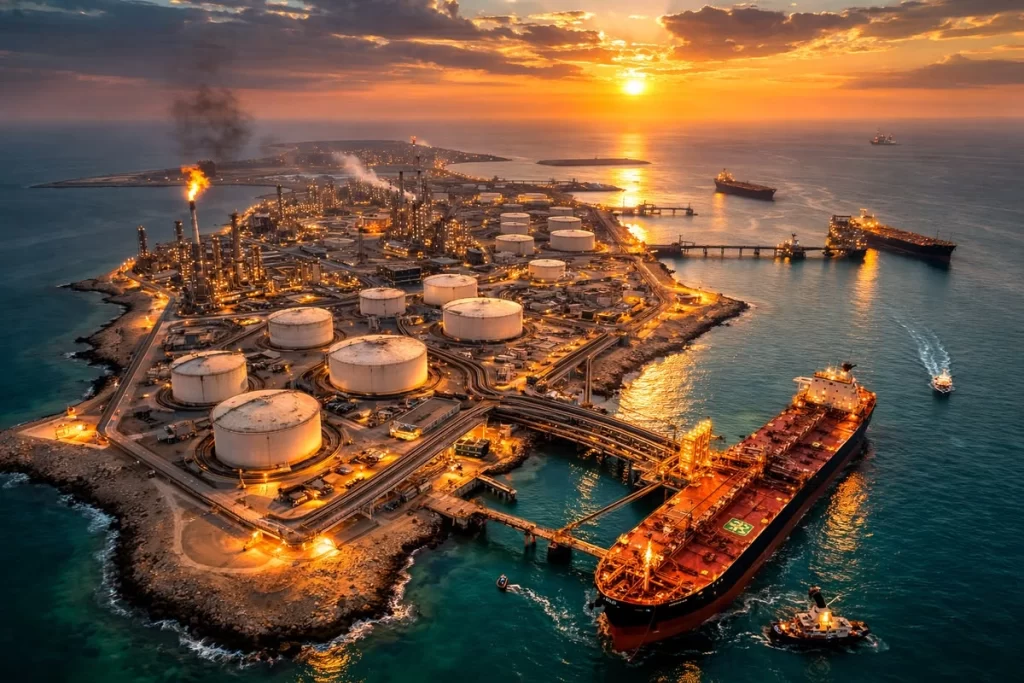
The International Monetary Fund has sounded the alarm on the world’s energy issues, urging governments to reduce consumption as the blockade of the Strait of Hormuz reverberates across global supply systems. Oil, gas and even specialist commodities like helium are in short supply, and ordinary life in factories and kitchens is feeling the squeeze. This is more than just another headline, it’s a call to action which might change the way we power our economies in the coming months.
Roots of Crisis: Gulf Geopolitical Flashpoint
Tensions in the Middle East have exploded into what analysts are calling the worst energy disruption since the oil shocks of the 1970s. The Strait of Hormuz, that short stretch of water between Iran and Oman, carries around 20-25% of the world’s seaborne oil commerce, and a fifth of its liquified natural gas. Then conflict, which brought it to a partial or near-total close in early 2026, related to rising US-Iran tensions saw tankers halt moving and prices soar overnight.
It’s no hyperbole. At one stage, more than 2,000 ships, from oil to petrochemicals, were beached. IMF Managing Director Kristalina Georgieva put it bluntly: a “20th-century sort of shock in the 21st century,” slow-moving yet harsh since modern economies operate on just-in-time deliveries. Tankers take up to 40 days to get to locations like Fiji or India so even if the fighting stopped tomorrow, shortages still continue.
Georgieva made the point recently at a joint IMF-World Bank-IEA meeting. She advised governments to “do no harm” by neither banning exports or hoarding, which simply makes a crisis worse. When countries hoard, prices go up even more. And poorer countries are priced out totally. Just think about it.
Strained supply chains: It’s not only oil and gas
Global supply systems were already weak after years of pandemics, trade conflicts and climate shocks, but this Hormuz debacle showed how fragile they are. It’s more than simply gasoline. Naphtha for plastics. Helium for semiconductors. Jet fuel for airlines. All wrapped in the web. Power systems flicker and factories idle hardest in the manufacturing heartland of Asia.
Take batteries and renewables: Processing of copper, cobalt, nickel requires chemicals like sulfuric acid, which is presently in short supply and more expensive owing to diverted shipping. More than 50 GWh of energy storage projects in the Middle East alone face delays, many involving Chinese enterprises whose equipment crosses the strait. Food chains are also affected – fertilizer inputs linked to gas prices mean increased supermarket expenses around the world.
The numbers are stark:
20-25% of world oil trading ceased.
LNG reduced to a fraction of normal.
Hit nations could need $20-50 billion in IMF financing.
Rerouting across Africa takes weeks and adds fuel expenses, turning a regional feud into a worldwide nightmare. What does this mean for your next flight or smart phone? Delays, that’s all.
IMF’s Core Message: Save Now, Never Hoard
The IMF’s request boils down to simple mathematics: demand outstrips supply, so cut demand. Georgieva cited successful COVID-era tactics: free public transit, work-from-home orders, scaling back energy hogs like heavy industry. South Korea, a net importer of jet fuel yet an exporter, is tapping reserves but also pushing for efficiencies.
No wide subsidies, the IMF advises. They distort markets. Instead, targeted help to the vulnerable and conservation. Central banks ? If inflation expectations are anchored, keep rates stable and don’t boost rates on a knee jerk. Export controls? No major as they stoke the fire.
This is as nearly a dozen countries eye IMF bailouts amid food insecurity worries. It’s realistic advice: preserve power now to prevent outages later.
The high stakes for India in the energy crunch
This is close to home for India. The country relies on the strait for oil, gas and a stunning 90% of LPG imports in times of disruption – well above global standards. Pune manufacturers, Mumbai refiners and Delhi households are all exposed when prices rise and stocks run low. The government buffers are good, but diversification to places like the U.S. or Russia takes time and resources.
India’s import-dependent energy mix makes the misery worse. They cook with LPG that impacts millions. Gas for power plants could cause brownouts this summer. But there’s action, putting domestic gas first for fertiliser, looking round for alternatives. Still, rationing or price spikes could be felt by households. How long will buffers last as tankers crawl around Africa?
Global Echoes – In Asia, Europe and Beyond
Asia is suffering heavily, with Japan, South Korea and China facing shortages of helium for semiconductors and naphtha for chemicals. Europe’s LNG dreams? Dashed on green commitments, pushing back to coal. Georgieva is most worried about sub-Saharan Africa and the Pacific, where energy access is already low and deteriorating.
Even the US feels it vicariously, with increased global pricing and pressure on allies. Asian fabs ration power, semiconductors vital to EVs and AI stutter. The question is, will this lead to rethinking globalization or simply patching up the leaks?
Lessons from History and How to Move Forward
Recessions, queues at pumps, embargoes – the echoes of the 1973 and 1979 oil crises ring loud. The twist today? Quick facts, slow ships. But there are opportunities: increasing electricity prices make storage batteries more attractive in places with lots of renewable energy. Tech and strategy could strengthen chains: Blockchain for tracking, nearshoring factories.
India is looking at more renewables and strategic reserves. The IEA called this the “biggest energy security danger ever” and advocates for coordinated stockpiles, not silos, around the world.
IMF Calls For Global Energy Conservation As Strait Of Hormuz Crisis And Supply Chain Turmoil Continue