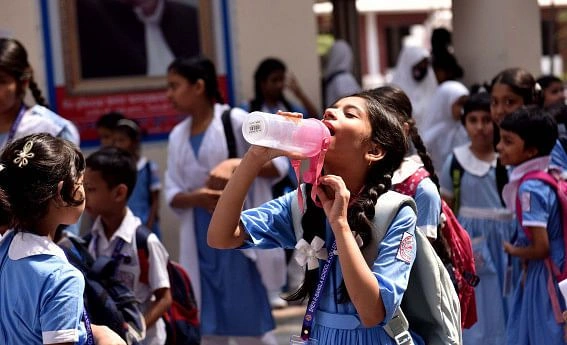
Noida, the bustling satellite township on the fringes of Delhi, is no stranger to searing summers. But this year, the heat’s become terrible. Schools across the area are cutting schedules and moving courses indoors as temperatures reach beyond 45°C, leaving parents and educators scrambling. It’s not simply humid afternoons anymore, it’s a stark reminder of how climate change is changing the fabric of life in India, the effects hardest on children. So what does this mean for education, health and the future as heatwaves become more common and more intense?
The Record-Breaking Heatwave
North India has been scorching under one of the country’s worst heatwaves in years. Last week, temperatures touched 47 degrees Celsius in Noida as the India Meteorological Department (IMD) issued red alerts in Uttar Pradesh. This is not an isolated event. Data from the IMD shows heatwaves are lasting longer now, from a few days in the 1980s to weeks today. Delhi-NCR including Noida has already recorded over 20 hot days this season – considerably above the long-term norm.
Why so extreme? Urban heat islands are a significant reason why. Noida’s tremendous expansion — skyscrapers, concrete roads and green space being squeezed out — acts like a pressure cooker trapping heat. Add in climate change , with rising global temperatures caused by greenhouse gases , and you have this deadly mix . The World Weather Attribution group has attributed similar phenomena to human-induced warming, recently finding a 30% greater chance of such protracted heat in India.
Parents from Sector 50 took to social media to share instances of children collapsing in PT sessions and classrooms turning like saunas. One mom said her 10-year-old returned home dizzy after just two hours outdoors, local news said. Schools moved quickly. The district administration of Gautam Buddh Nagar has ordered all government and private schools to function from 7.30 AM to 11.30 AM till further orders. No outdoor activity, mandatory water breaks, air conditioned classrooms where possible. It’s a stop-gap measure, but it does shed light on the situation.
How Schools in Noida Are Coping
Switching to morning only routines is not unusual for Indian summers but this feels different – more urgent. There are around 500 schools in Noida and Greater Noida with lakhs of kids, many of them belong to low-income households and do not have AC at home. Principals are trying to balance safety with full curricula.
Take Ryan International School in Sector 25, they have moved to online classes in the afternoon for senior classes, blending virtual sessions with brief physical ones. St. Xavier’s set up “cool zones” equipped with fans and mist sprays. Government schools have scant resources. So they have staggered times – primary kids go from 7 AM to 11 AM, seniors till lunch.
Major changes in Noida schools:
Classes: 7:30 AM – 12 PM max. No afternoon classes.
No outside sports or gatherings.
Hydration drives: ORS sachets for every youngster.
WhatsApp notifications to parents for heat warnings
Educators worry about lost learning. ““A day’s work done in half a day,” claimed a teacher at DPS Noida. Exams are coming up and with monsoons delayed, this could take time. Ever wonder how a few degrees can change a child’s entire school year?
Health Risks: Children on the Frontline
Heat is not only uncomfortable, but deadly, especially to children. Pediatric specialists say their bodies heat up three to five times faster than an adult’s. Cases have gone up by 40% in hospitals in Noida in the past week, from dehydration and heat exhaustion to strokes. At AIIMS Delhi, around 100 heat-related admissions were received, most of them children from NCR.
This is a ticking bomb in India with 40% of the population under 25. Heatwaves are “silent killers” that claim more than 500 lives annually but are underreported among vulnerable groups, says the National Disaster Management Authority. Poor ventilation in schools makes it worse – many classrooms in Noida don’t have fans, let alone AC.
Real world influence ? A similar wave in 2015 killed 2,500 in India. This year, children of construction-crazy Noida laborers are in for a double whammy: parents working outdoors, children in heated rooms. Doctors prescribe loose garments, doctors recommend salted lemon water, enforcement is uneven.
A Pattern Across India: Climate Change in Action
The story of Noida is a microcosm of the national story. Schools in Delhi shut for a week straight. Ajmer in Rajasthan reached 49°C, closing institutions. Timing shifts were similar in Bihar, UP. Kerala, generally cooler, is battling heat indices of 50C pushed by humidity.
India’s climatic vulnerability is obvious. The country ranks eighth on the Global Climate Risk Index with heatwaves rising 150 per cent since 1980, research by IIT Gandhinagar reveals. It is aggravated by urbanization – UN forecasts indicate that by 2030, 40% of Indians would be living in cities, roasting under asphalt jungles.
The same storyline plays out globally. Europe cooked in 2022 at 48 degrees Celsius; the US suffered record heat last summer. But India’s population density makes its heat waves punchy – 1.4 billion people, many in heat-traps like the Indo-Gangetic plain. El Niño and climate changes extend the suffering of monsoon delays.
What is so personal about this? Think migrant workers in Noida, sending kids to school as they work in 50°C industries. Or farmers in adjacent UP, whose ICAR data says crop yields drop 10-15% with each degree rise, pinching family budgets.
Government response: progress but there are still gaps
The government of Uttar Pradesh responded. CM Yogi Adityanath ordered “heat action plans” — cooler timings, medical camps, tree plantation drives. In Noida, the administration installed water tankers and shaded bus stations. The Heat Action Plan 2024 will provide early warnings using the IMD app, presently available to 100 million users across the country.
But the road is still rocky. According to an NITI Aayog research, only 20% of schools possess heat-resilient infrastructure. The countryside is left behind and many schools in Bihar still offer full-day classes. The money matters: India’s climate budget last year was Rs 10 lakh crore but the provision for education is thin.
Innovations bring hope. Delhi has ‘heat clinics’ in schools for fast check-ups. Apps like Heatwave India predict risk block by block. NGOs like Goonj give cooling kits to the slum schools.
Long-Term Fixes: Making Ourselves Stronger
Temporary fixes may buy time, but a vision is needed for real transformation. Experts are calling for “green schools” – solar panels, green roofs, native trees. Noida’s master plan promises 20% green cover by 2030, but execution lags
Climate nod in India’s National Education Policy 2020 Teaching schoolchildren about heatwaves could ignite awareness Cool classrooms inspire in Finland; pioneering Heat Action Plan in Ahmedabad cut mortality 25% since 2010.
Communities do the same thing. Noida residents planted 5,000 seedlings in the “Green Noida” drives last month. Schools hold “no-car days” to reduce emissions. But to scale that? It requires policy muscle.
Imagine a Noida school with rainwater harvesting, shaded playgrounds and AI-monitored temps. Possible? Yes, if urban planning is built around people and not concrete.
Voices from the Ground: Parents, Teachers, Kids Speak
On the streets frustration mingles with adjustment. “My son is missing playtime but health is priority,” Priya Sharma, a Sector 62 resident juggling work calls during drop-offs, says. “Weather does not stop syllabus pressure,” a worried teacher Anil Kumar says.
Kids adapt the quickest. ‘We are doing painting in the cold room now,’ beamed 12-year-old Riya from a government school. It’s encouraging to see their spunk, but shouldn’t they demand more?
#HeatwaveIndia trends as people share tips: DIY coolers from bottles, early bedtimes. It’s climate activism from the bottom up.
Looking Ahead: A Hotter Future Without Action
Noida’s school shake-up is a wake-up call Climate change-driven heatwaves harm education, health and equity. Key points:
Climate Centre models: Expect 2-3x more extreme heat days by 2050, frequency growing
Worst affected: Children, impoverished, urban poor. Vulnerable.
There are solutions: Early warnings, green infra, policy push.
India is at a tipping point. As we get closer to COP30, and with net-zero pledges, bolder initiatives such as making cool schools and cutting emissions could chill things down. For now, the kids of Noida soldier on in the morning haze. Will we let heatwaves mark their childhood or construct a resilient tomorrow? The option is ours to make.
Schools in Noida Alter Timings in Wake of Brutal Heatwave Hitting Classrooms: A Stark Sign of Climate Change Hitting India