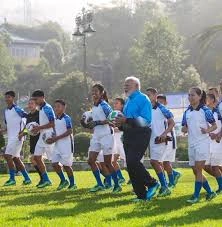
A morning in Gangtok looked different from the usual political footage. Instead of a podium or a crowd of party workers, Prime Minister Narendra Modi was seen in a simple T‑shirt and shorts, chasing a football on a small ground in Sikkim, surrounded by grinning teenagers. The moment, quick and informal, has already become one of the more talked‑about images of his current tour—part campaign pause, part national conversation starter about how India’s political leadership connects with its youngest citizens.
At first glance, it may seem like just another photo‑op—a brief, feel‑good interlude between big‑ticket speeches and policy announcements. But scratch the surface and this impromptu football session in Sikkim is telling a more layered story: about the government’s push to mainstream sports, about the political symbolism of informal bonding with youth and about how a small northeastern state is being stitched into the larger national narrative through culture, sport and everyday imagery.
The Moment That Caught the Nation’s Eye
The scenes played out in Gangtok, ahead of Sikkim’s 50th statehood celebrations where Modi was scheduled to inaugurate development projects worth over ₹4,000 crore, including infrastructure and connectivity upgrades. But before the formal event, he found time for something less scripted: a short football match with local boys and girls.
Camera frames captured him in full‑blown action—dribbling, passing, even scoring a goal, followed by high‑fives and laughter. He later described the session as “energising,” posting images and a short video on social media with the line: “Nothing like playing some football with my young friends in Sikkim on a lovely Gangtok morning!” That off‑the‑cuff tone, unusual in a politician so used to measured messaging, quickly became the hook that social media latched on to.
Why Football, and Why Now?
India is not a football‑first nation, at least in the sense that cricket still dominates the sporting imagination. But in pockets like Sikkim, West Bengal, and the northeastern states, football runs deep in the culture. For a national leader to step into that space, literally, is both a symbolic gesture and a calculated nod to regional identities that often feel overlooked in the grand sweep of Delhi‑centric politics.
The timing also stands out. Modi had just wrapped up an intense campaign trail in West Bengal, where football is almost a religion, before moving to Sikkim. That proximity has sparked speculation: Is this a political message to Bengal voters, wrapped in a ball and a smile? Whether intentional or not, images of a prime minister kicking a ball with teenagers in the Himalayas travel fast and carry emotional weight—often more than a 45‑minute speech.
Beyond politics, the moment fits into the government’s broader “sports for all” narrative. Over the past decade, policy initiatives, funding pushes, and youth‑centric sports schemes have been steadily promoted under flags like Khelo India and a broader FitIndia push. Seeing the country’s top leader join a grassroots game rather than just announce a stadium or a scholarship, sends a quieter but potent message: If you play, we are here too.
Grassroots Engagement Beyond the Campaign Stage
In an era of distant rallies and carefully choreographed rallies, Modi’s hands‑on engagement with Sikkim’s youth feels different. He didn’t just visit a stadium; he stepped onto the same pitch, wore the same casual kit, and—visually—erased the usual hierarchy between the powerful and the ordinary.
For the students who played with him, the experience is likely to be remembered for years. Some describe it as a confidence booster, a reminder that they are being seen, not just as “future voters” in political jargon, but as human beings with energy, dreams, and, in this case, a love for football. Several youngsters later said they had been practising for hours before the session, nervous and excited—only to end up laughing at the Prime Minister’s jokes and listening to his simple advice on discipline, fitness, and teamwork.
This kind of interaction, while seemingly small, feeds into a larger narrative about accessibility. In a country where political leaders are often photographed atop dais, surrounded by guards, the image of a sitting prime minister chasing a ball in Gangtok blurs those lines, if only for a few minutes. It’s no surprise, then, that the video of him celebrating a goal with students began trending almost immediately.
The Bigger Picture: Sports, Development and Identity But behind the football moment is a more sobering agenda: connecting sports and youth development with economic growth. Sikkim, like many of the northeastern states, has limited infrastructure, fewer job opportunities for the youth and brain drain, as young people leave in search of better futures. The ₹4,000‑crore package of development projects that Modi is set to launch—spanning roads, connectivity, and tourism infrastructure—cannot be separated from this youth‑centric outreach.
Youth who feel connected to sports, culture, and local opportunity are less likely to see their homeland as just a transit point to the cities. When a national leader plays football with them, it implicitly says: There is life here, and there is value in staying and building. That emotional resonance is hard to translate into policy documents, but it shapes how young people view their own futures.
Globally, sport has long been used as a tool for inclusion and soft power. Think of how football, basketball, or cricket bring communities together in conflict zones, urban slums, and divided societies. India, still in the early stages of a sports‑for‑development approach, is beginning to experiment with this more deliberately. Modi’s football session in Sikkim may be a small dot on that timeline, but it fits into a pattern where sport is no longer treated as mere entertainment, but as infrastructure for social cohesion.
Political Signal or Genuine Conviviality?
Not everyone looks at the moment in the same way. Some of the political observers believe Sikkim football session to be a subtle but a strategic image building exercise. With the country transitioning out of one election cycle and edging into the next, every visible interaction with youth carries electoral undertones.
Football, in particular, is a powerful emotional symbol in several key states. The question that naturally follows is: How much of this is about connecting with youth, and how much is about speaking to Bengal, Assam, and other football‑loving regions through a Sikkim lens? Layered messaging is the bedrock of campaigns. A simple game can be a coded message on regional outreach, youth appeal, and cultural sensitivity.
At the same time, the informality of the session—its lack of a formal backdrop, the absence of heavy security in the foreground, and the visible joy of the children—makes it feel less like a staged ritual and more like a genuine pause in the political routine. Could it be both things? A calculated political gesture and a human moment at the same time?
How This Fits India’s Youth Narrative
India’s demographic reality is simple and stark: the country has one of the youngest populations in the world, with a massive cohort of people under 25 shaping its economy, culture, and politics. Leaders across the spectrum have been trying to find ways to “reach youth”—through social‑media‑centric campaigns, youth‑focused schemes, and splashy schemes promising education, jobs, and startups.
Yet, those promises often feel distant, especially in remote regions. In that context, a prime minister joining a football game on a local pitch becomes a kind of visual shorthand for something many politicians struggle to deliver: presence and relatability. It’s not that a match of football will solve unemployment or resource gaps, but it does create a rare sense of inclusion—of being seen, of being in the same frame, literally and figuratively.
For young people who watch the video on their phones, the takeaway might be simpler than policymakers realise: If the Prime Minister can play football with us, maybe we matter more than we think.
What This Means for the Future of Political Outreach
If this Sikkim moment becomes a reference point, it raises an interesting question: Will political leaders in India start to treat sport as a regular part of public engagement, or will this remain a one‑off, feel‑good episode? In an age of screen‑centred politics, where leaders debate, gesture, and announce, a few minutes of shared physical activity can cut through the noise more effectively than a thousand campaign posts.
There is also a wider debate about how democracies interact with youth. In many countries, presidents and prime ministers have been seen at school events, community games, or cultural festivals, but the line is rarely crossed as visibly as in this Sikkim football session. When the highest officeholder in the land joins a local match, it blurs the line between the ceremonial and the everyday in a way that can be both inspiring and slightly unsettling.
Perhaps one might even ask: Is this a form of engagement that actually strengthens democracy by making leadership appear more tethered, or does it threaten to turn politics into a performance where every gesture is analyzed for its meaning?
On the Pitch with Youth: How PM Modi’s Football Moment in Sikkim Became a Statement on Grassroots Engagement