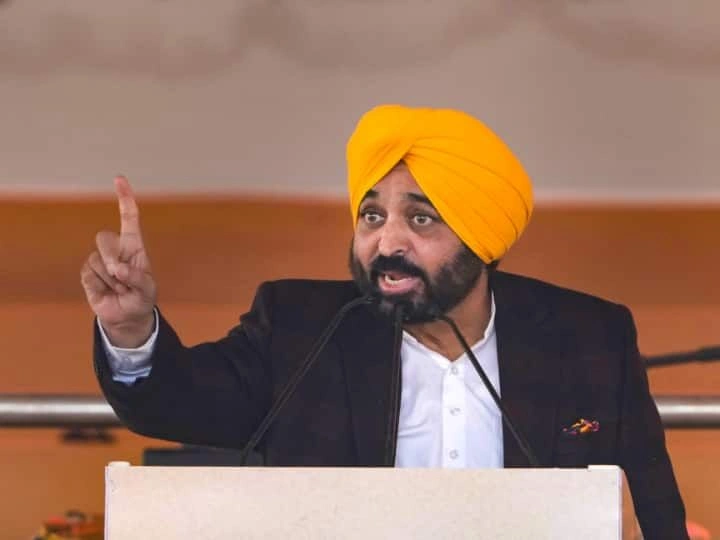
Punjab Chief Minister Bhagwant Mann’s planned meeting with President Droupadi Murmu over the defection of seven Rajya Sabha MPs has turned a party dispute into a full-blown political showdown. What began as a sudden shift in loyalty has now grown into a wider battle over mandate, representation, and the limits of India’s anti-defection framework.
A crisis that escalated fast
The immediate trigger was the reported exit of seven Rajya Sabha MPs, including six from Punjab, from the Aam Aadmi Party and their move toward the Bharatiya Janata Party. AAP leaders say this was not just an internal rupture but a direct betrayal of the mandate given by Punjab’s elected representatives.
Bhagwant Mann has now sought a formal meeting with the President and has reportedly been given time on May 5 at noon. The move signals that AAP wants to take the fight beyond party politics and place it in the constitutional arena.
Why defections matter
The politics of the Rajya Sabha may not be as dramatic as battles on the Assembly floor but it can impact the national balance of power in no small measure. Punjab had given AAP a strong voice in the Upper House, and the loss of seven members would sharply weaken that position.
The controversy has also raised a larger question: when MPs elected under one political banner switch sides, who really owns that mandate? The question is particularly sharp in Punjab, where the AAP is calling the defections an affront to voters and a hit to the state’s political voice.
AAP’s legal and political push
AAP has already moved the Rajya Sabha Chairman seeking disqualification of the seven MPs under the Tenth Schedule, arguing that the defections amount to a violation of the anti-defection law. Party leaders say they want an early hearing and a clear decision.
At the same time, Mann’s planned meeting with the President is meant to keep pressure high and signal that the state government views the matter as more than a routine party split. In political terms, it is a message that Punjab will not accept what AAP is calling a betrayal of the people’s mandate.
The constitutional limits
The demand for a “recall” of MPs has stirred attention, but the legal ground is far less flexible than the politics around it. India’s anti-defection law, under the Tenth Schedule, provides for disqualification in defined cases, but it does not create a general right to recall MPs once elected.
That distinction matters. AAP may be able to argue for disqualification if it believes the legal conditions are met, but asking for a recall from the President is largely a symbolic political move because the Constitution does not give the President power to remove MPs simply on demand. Even so, the symbolism is powerful, and in a state-level political battle, symbolism often counts as much as procedure.
Why Punjab is central
This is not happening in a vacuum. Punjab has been one of AAP’s most important political bases, and any visible erosion of its Rajya Sabha strength is likely to have consequences beyond Parliament. The party is also trying to protect its image at a time when opposition attacks on governance, internal discipline, and leadership credibility are intensifying.
For Mann, it is also personal and political. He is trying to project a sense of firmness, indignation and institutional seriousness all at once, in taking the matter to the President. Is it just a legal challenge? Not really. It is also a test of whether AAP can hold together its political narrative in Punjab.
What is likely next
The next phase will depend on two parallel tracks. First, the Rajya Sabha Chairman’s response to AAP’s disqualification petition will determine whether the matter moves into a formal constitutional process. Second, Mann’s meeting with the President will keep the issue in the national spotlight and may shape how aggressively AAP frames the dispute in the coming days.
For now, the political messaging is clear. AAP wants to cast the defections as an attack on democratic trust, while its rivals are likely to argue that lawmakers are free to move as they choose within the law. Somewhere between those two positions lies the real story of this crisis: not just who switched sides, but what such switches mean for accountability in Indian politics.
Bigger political picture
The larger significance of the episode goes beyond one party or one state. Defections, especially in the Rajya Sabha, often become flashpoints because they expose the tension between party discipline and individual political choice. In this case, the timing makes it even sharper, because the issue arrives against the backdrop of broader political competition in Punjab and the Centre.
That is why the Mann-President meeting has attracted so much attention. It is not only about seven MPs. It is about whether a state government can force a national conversation around political loyalty, constitutional remedy, and democratic legitimacy. And that, in today’s climate, is exactly the kind of fight that can reshape both headlines and public perception.
Bhagwant Mann’s President Meeting Over Rajya Sabha Defections Puts Punjab Politics on a Knife-Edge