International brokerages have revised their outlook on Tata Steel as regulatory costs in Europe, project delays, and geopolitical headwinds cloud the near-term picture — even as India operations hold steady.
Why the market is watching
There are stocks the market watches with casual interest, and then there are stocks it watches the way a navigator watches weather on an open sea. Tata Steel has, in recent weeks, shifted firmly into the second category. A confluence of international pressures — revised brokerage outlooks, regulatory cost escalation in Europe, and shifting global steel demand — has placed India’s largest steelmaker under an unusually bright spotlight, and the questions being asked are ones that will matter well beyond any single quarter’s earnings report.
For investors tracking Tata Steel news, the shift in analyst sentiment has been notable. Several international brokerage firms have revisited their projections, citing operational costs that are climbing in the company’s European business at a pace that is proving difficult to absorb through pricing alone. The story here isn’t catastrophe — it’s compression. Margins under pressure. Headroom shrinking. A business model being tested by a regulatory environment it did not anticipate when it made its strategic push into European markets.
“Margins under pressure. Headroom shrinking. A business model being tested by a regulatory environment it did not anticipate.”
The European problem
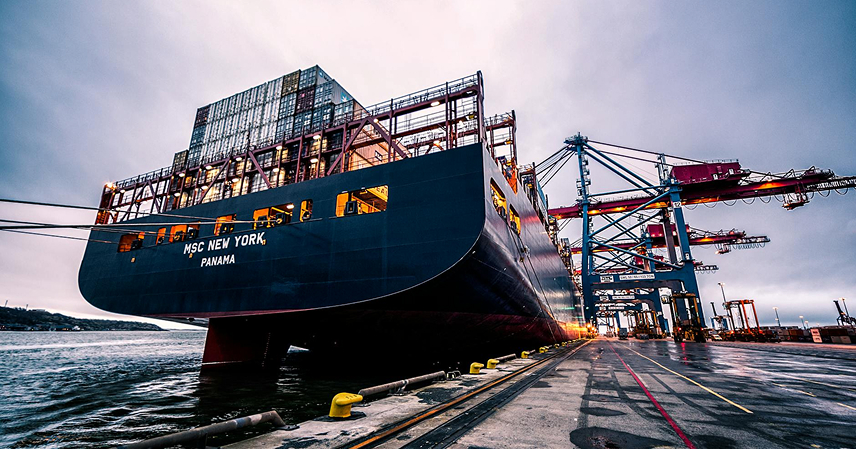
To understand why Tata Steel news dominates business updates right now, you have to understand what the company actually looks like as a global entity. Its European operations — primarily centred on the UK and the Netherlands — represent a significant share of its production capacity and revenue. They also represent its most complex regulatory exposure.
Europe’s carbon compliance landscape has tightened substantially in recent years. The EU Emissions Trading System, combined with the UK’s post-Brexit carbon pricing frameworks, means that steelmakers operating blast furnace technology face mounting costs that cannot simply be passed on to buyers in a market where demand itself is softening. Construction slowdowns across continental Europe, reduced automotive output, and a general cooling of manufacturing activity have all contributed to a steel demand environment that is less forgiving than it was even two years ago.
Tata Steel is not uniquely exposed — these are industry-wide pressures in the Indian steel sector’s global context. But as one of the largest international operators in Europe with deep capital commitments, it carries more of the burden than most. Delays in the planned transition to electric arc furnaces at its Port Talbot plant in Wales — a shift designed precisely to reduce environmental compliance costs — have added to the timeline uncertainty that analysts find most difficult to model.
Geopolitics as a business variable
The steel industry has always had a political dimension, but the past two years have added layers of complexity that even seasoned analysts in the stock market India ecosystem find hard to price in cleanly. Trade tensions between major economies, the redrawing of energy supply chains post the Russia-Ukraine conflict, and the rise of protectionist industrial policies — particularly in the United States and parts of Southeast Asia — have created a global steel demand picture that is fragmented and volatile in ways that simple demand forecasting cannot fully capture.
For Tata Steel, this means that overseas project timelines that looked achievable eighteen months ago now face geopolitical variables that were not in the original calculus. When infrastructure projects in key markets slow down because of political uncertainty, when procurement decisions get tangled in import tariff disputes, the operational schedule that underpins a capital-intensive steelmaker’s financial projections starts to fray at the edges.
When infrastructure projects slow down because of political uncertainty, the operational schedule underpinning a capital-intensive business starts to fray.
The domestic anchor
Here is the part of the Tata Steel story that deserves equal billing, even if it generates less dramatic headlines: the company’s Indian operations are, by most assessments, holding up well. India’s infrastructure buildout — highways, railways, urban housing, renewable energy installations — continues to drive robust domestic steel consumption. The industrial economy in India is expanding in ways that provide a relatively stable demand floor for domestic steelmakers, and Tata Steel’s integrated production assets in Jharkhand and Odisha give it cost advantages that European competitors cannot replicate.
This domestic resilience matters for how investors should read the current analyst downgrades. A revised outlook driven primarily by European regulatory and operational headwinds does not necessarily reflect a broken business — it reflects a geographically diversified company in which one large division is navigating a genuinely difficult environment while another operates on firmer ground.
What investors should track
For those monitoring the Indian steel sector as part of a broader portfolio or research mandate, the key indicators to watch over the coming quarters are not hard to identify. Progress — or further delays — on the Port Talbot transition to lower-emission steelmaking will be the clearest signal of whether European cost pressures are being brought under control. Any clarity on European carbon credit pricing will matter. So will signals on Indian infrastructure spending continuity in the Union Budget cycle.
Tata Steel is not a stock in distress. It is a stock at an inflection point — one where the gap between its domestic strength and its international challenges is wider than usual, and where patient investors will be watching to see whether management can close that gap through execution or whether external forces continue to widen it. In the current business updates landscape, few Indian industrials carry as much concentrated global risk alongside comparable domestic opportunity.
Near-term risks
EU carbon compliance costs
Port Talbot transition delays
Softening European steel demand
Geopolitical project disruptions
Stable factors
Robust domestic India demand
Integrated low-cost India plants
Infrastructure spend momentum
Strong brand in Indian market