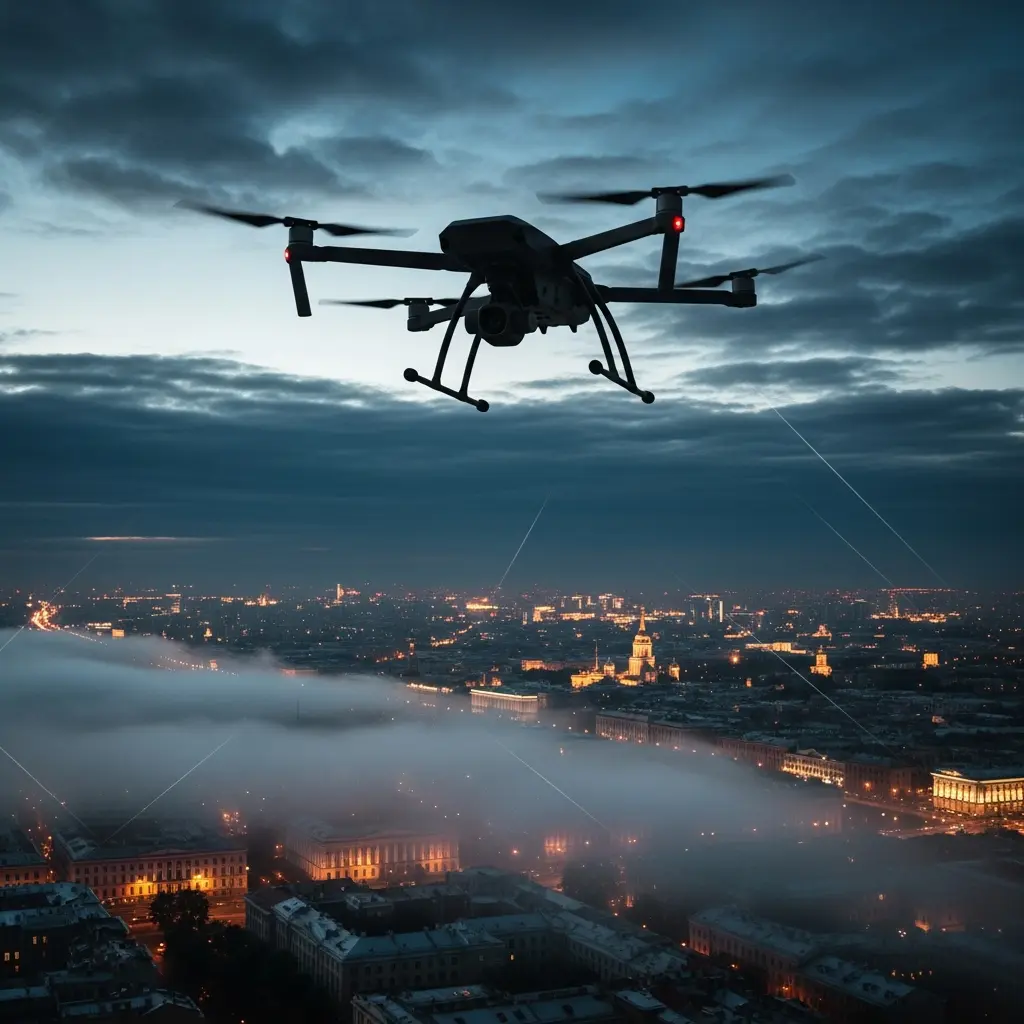
Fresh drone activity near one of Russia’s most iconic cities signals that the Ukraine-Russia war is entering a phase where no corner of the conflict feels distant — and the world is watching with growing unease.
800+ Days of active conflict
~50+ Nations providing support to Ukraine
2 UN Security Council members in direct dispute
St. Petersburg is a city of bridges, canals, and grand imperial architecture — a place more associated with Dostoevsky and the Hermitage Museum than with the sharp whine of approaching drones. Yet that is precisely where the latest chapter of the Ukraine-Russia war has reached, as fresh reports confirm new drone activity near the city, rattling nerves and drawing a fresh wave of global attention to a conflict that has already reshaped European security for years.
For those following the Ukraine Russia war closely, the geographic expansion of drone strikes is not entirely surprising. Ukraine has increasingly relied on long-range drone campaigns to pressure deep into Russian territory, hitting infrastructure, fuel depots and military logistics far behind the front lines. But activity near St. Petersburg — Russia’s second-largest city and a major cultural and economic hub — carries a different kind of symbolic weight.
Why St. Petersburg changes the equation
There is a significant psychological dimension to where strikes occur, and the St. Petersburg attack reports underscore that dimension sharply. Moscow, Belgorod, and Kursk have previously been touched by the war’s reach. But St. Petersburg, sitting on the Baltic, connected to European trade routes, home to some 5.6 million residents, adds a new layer of urgency to international conversations about escalation and risk.
Russian security agencies have responded swiftly, increasing monitoring and air defense posture around strategic facilities in and around the city. The moves reflect a broader pattern: as Ukraine’s drone capabilities have matured — in range, precision, and numbers — Russia has been forced to divert significant air defense resources away from frontline priorities to protect its interior.
“Every drone that reaches deep inside Russian territory is not just a military event — it is a message about the changing nature of this conflict and who controls the narrative of reach.”
For Ukraine, the strategic logic is clear. Long-range drone strikes do multiple things at once: they chip away at Russian military and energy infrastructure, they reduce Russian air defense capacity, and they send a message to domestic audiences and international partners that Ukraine remains on the offensive despite the grinding realities of the front line.
The global security ripple effect
The news of the drone strikes has been felt well beyond the two countries directly involved. Global security analysts are watching the developments with concern, worried about the potential for miscalculation as the conflict continues to expand in geographic scope.
European capitals, already grappling with the economic and energy aftershocks of the war, now face a renewed debate about their own security posture. The Baltic states — Estonia, Latvia, and Lithuania — which share borders or maritime boundaries with Russia, have been among the most vocal in calling for reinforced NATO preparedness. Activity near St. Petersburg, which lies close to Finland’s border, will only intensify those conversations.
Trade routes through the Baltic Sea, already disrupted in the early stages of the conflict, face renewed scrutiny. Insurance premiums for vessels operating in contested or proximate waters have risen considerably over the past two years, and fresh incidents near a major Russian port city are unlikely to calm those markets.
Key dimensions of the Europe conflict
Military dimension
Long-range drone campaigns expanding geographic scope
Diplomatic dimension
Global leaders calling for dialogue; UN sessions ongoing
Economic dimension
Baltic trade routes, energy markets, and sanctions under pressure
Security dimension
NATO posture reviews; air defense resource allocation stress
Diplomacy in the shadow of escalation
Calls for dialogue have grown louder, even as the military situation grows more complicated. Global leaders from Europe, North America, and parts of the Global South continue to push for negotiated pathways, but the conditions for talks remain as contested as the battlefields themselves. Ukraine insists on sovereignty over its internationally recognized territory; Russia has shown no willingness to withdraw from areas it has claimed. The gap between those positions has not narrowed meaningfully in months.
What has changed is the urgency in diplomatic corridors. The expansion of drone activity toward major Russian population centers raises the specter of escalation — not necessarily a deliberate choice to widen the war, but the kind of incident-driven miscalculation that historians later identify as turning points. Several European foreign ministers have used this latest round of drone strike news as a fresh impetus to push for ceasefire frameworks, even partial ones.
Where does this go from here?
Predicting the trajectory of the Ukraine Russia war has humbled many analysts over the past several years. What seemed like a conflict that might end within weeks has stretched across seasons and years, reshaping military doctrine, energy policy, and alliances in ways few anticipated.
What can be said with confidence is that the introduction of drone activity near St. Petersburg raises the stakes of any miscalculation. Both sides retain the capacity to escalate further; both also carry the costs of a prolonged conflict in their economies, their military systems, and the lives of their people.
For the world watching the Europe conflict from a distance, the hope is that the expanding geography of this war eventually becomes the argument that finally brings both parties to a table — not as a sign of one side’s defeat, but as recognition that the cost of continuing keeps rising for everyone. That moment has not yet arrived. But with drones now in the skies over St. Petersburg, the pressure to find it has never been more acute.
Drones Over St. Petersburg: How the Ukraine-Russia War Keeps Pushing New Boundaries.