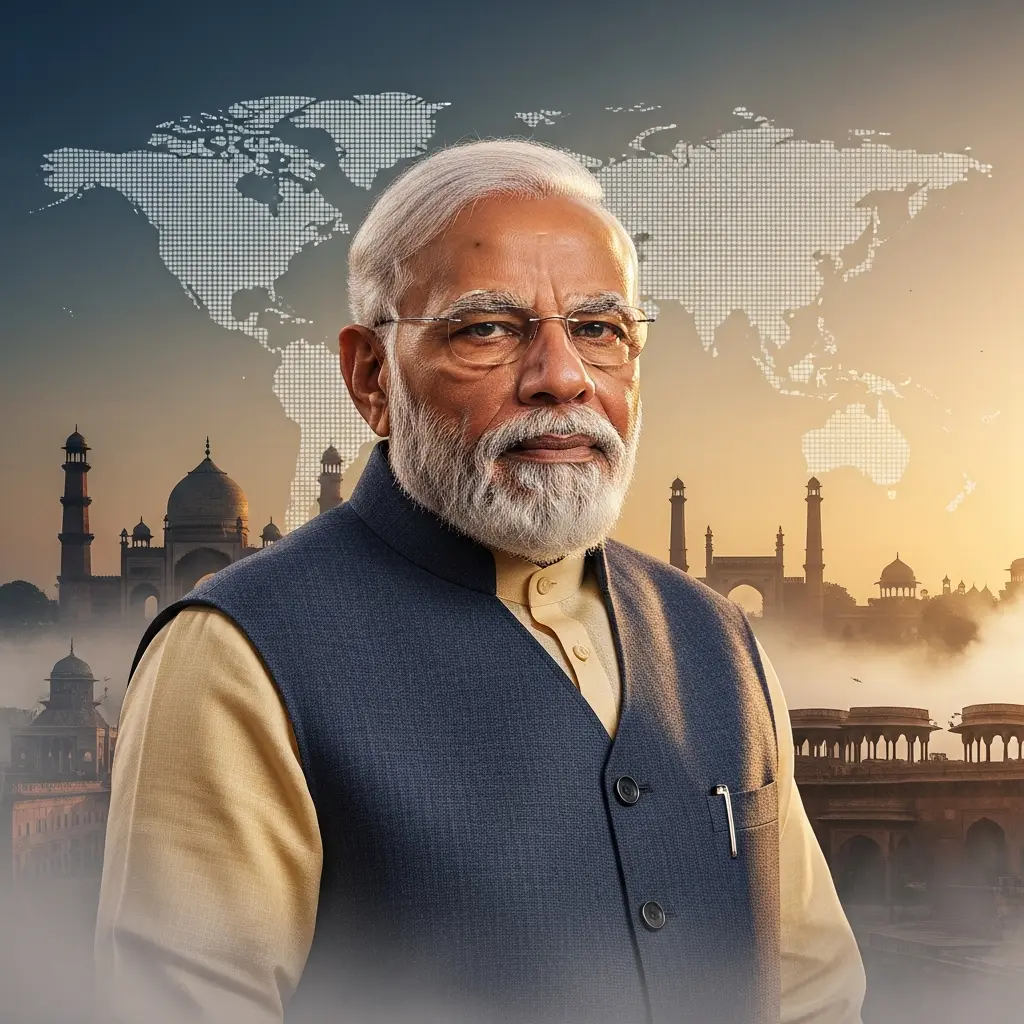
Some political milestones are just numbers, but others make a country pause and reflect. When Narendra Modi crossed the milestone of India’s longest serving Prime Minister, it was more than just a calendar date — it was about a changing of the guard in Indian politics, governance and the country’s growing stature on the world stage.
For a democracy as big, diverse and unpredictable as India, to remain politically relevant for years is no mean feat. It requires something more than campaign sloganeering and electoral arithmetic. It needs a connect with people that endures even when the going gets tough.
From Gujarat to the Global Stage Those who have followed Narendra Modi’s political career know it didn’t begin in New Delhi. Long before he walked into the corridors of South Block, he was developing his leadership philosophy in Gujarat, where he served as Chief Minister for over a decade. That experience – managing a large state with complex development challenges – became the foundation for his approach to India’s leadership.
Modi’s rise to the premiership in 2014 was a watershed moment in India’s political narrative. The mandate was massive, the expectations enormous, and the scrutiny relentless. And yet, Indian politics — which has rarely been kind to those seeking extended power — gave him not one, but two more mandates, each affirming a sustained bond between the leader and the electorate.
Becoming India PM for a historic stretch is, by every measure, a reflection of something deeper than political machinery. It is a vote for a particular vision of where India should go.
What the Numbers Actually Mean
Crossing this milestone means Modi has now been at the helm of Indian politics longer than any of his predecessors — a list that includes towering names from the country’s post-independence history. It is a record that arrives not by default, but by repeated electoral success in a country with more than a billion voices, hundreds of languages, and some of the most complex socioeconomic fault lines in the world.
Political observers have noted that the consistency in Modi’s electoral performance is rooted in policy continuity. From infrastructure projects that have redefined India’s highways and waterways, to digital initiatives that brought millions of unbanked citizens into the financial mainstream — there is a recognizable thread running through his years in office. Voters have found in that thread a reason to stay loyal across election cycles.
This is not to say the journey has been without debate. Any tenure of this length inevitably carries controversy alongside achievement. But in democratic terms, longevity of this kind carries its own verdict.
India’s Leadership on the World Map
One of the most visible shifts during Modi’s tenure has been in global diplomacy. His watch has seen much of India’s historical equivocation on non-alignment being shed, embracing a more assertive role in the world. Whether it was hosting the G20 presidency, mediating dialogue in times of global conflict, or deepening ties with the Western bloc and the Global South simultaneously, India’s foreign policy footprint has grown significantly.
When world leaders reached out to congratulate Modi on this milestone, it was not mere diplomatic pleasantry. Their greetings were an expression of a larger truth – that India’s leadership matters in global conversations today, in a way it perhaps did not two decades ago. From climate negotiations to trade corridors, from tech partnerships to defense agreements, India has emerged as a voice that the international community actively courts rather than passively acknowledges.
It did not happen overnight but the consistent leadership of India over this long span of time has definitely hastened it.
The Conversations This Milestone Sparks
Records of this nature tend to trigger broader reflection, and this one is no different. Across political circles — within India and beyond — the discussion has turned to what sustained leadership actually means for a democracy. Does continuity breed strength or complacency? Does a long-serving leader cement institutions or consolidate power around one personality?
These are fair and necessary questions for any democracy to ask. India’s political opposition has raised them. Academics have debated them. Civil society has weighed in. And that, in itself, is a sign of a healthy democratic culture — one that celebrates milestones while holding them up to scrutiny.
What seems clear, regardless of where one stands politically, is that the era of Narendra Modi has permanently altered the grammar of Indian politics. Coalition compulsions, regional pressures, caste arithmetic — all the traditional forces that once dictated electoral outcomes have been reconfigured in ways that political scientists will study for decades.
A Nation Still in Motion
India today is not the India of 2014. Its economy has climbed the global rankings. Its infrastructure has transformed in ways visible even to the skeptical eye. Its youth — the largest such demographic cohort in the world — is more aspirational, more connected, and more impatient for progress than any generation before it.
Whether Modi’s longest-serving tenure translates into the kind of legacy that endures beyond political cycles remains for history to judge. But the milestone itself is real. And it belongs not just to one man — it belongs to the democratic process that produced it, the voters who sustained it, and the institutions that held it accountable along the way.
India continues to move. The milestone is noted. The journey is far from over.
Modi’s 10th Year As India’s Longest Serving Prime Minister An Achievement That Strikes A Chord.