.
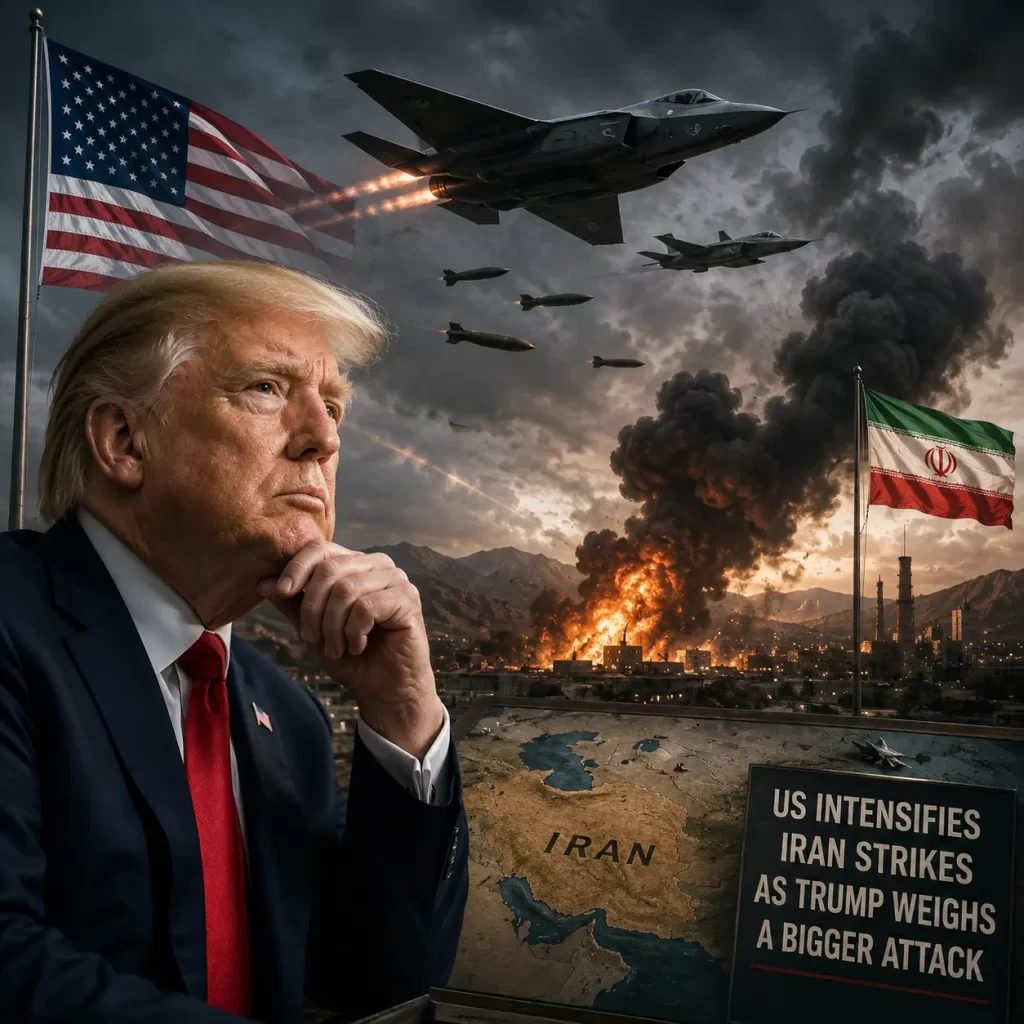
The war between the United States and Iran shows no signs of slowing down. US Central Command confirmed a 13th consecutive night of airstrikes this week, hitting targets across Iranian cities including Khorramabad, Jask, and Bandar Abbas. The renewed bombing campaign, which restarted in early July after weeks of an uneasy truce, has once again turned the Middle East into the center of global anxiety, with oil markets, shipping lanes, and diplomatic channels all being tested at the same time.
According to Iran’s Health Ministry, at least 50 people have been killed and hundreds more injured since the strikes resumed on July 6. Entire neighborhoods near military and infrastructure sites have reported damage, and one strike on a desalination plant reportedly left thousands of residents without running water. Iran, for its part, has not stayed passive. It has launched retaliatory attacks toward US-linked positions in Bahrain and Kuwait, targeted shipping near the Strait of Hormuz, and even threatened bases as far away as the UK and the Indian Ocean, accusing Washington of using them to stage bomber missions.
Trump Signals He’s Not Done Yet
President Trump has made it clear that the current level of strikes may not be the ceiling. Speaking to reporters this week, he suggested he’s considering a much larger military push than what the world saw during the original campaign back in the spring, when Operation Epic Fury dismantled large parts of Iran’s missile production and naval capacity. Trump has reportedly told associates that Iran “hasn’t received enough pain yet” to be pushed toward serious negotiations, a comment that captures just how far apart the two sides remain.
That gap became even more obvious this week when Iraq’s prime minister traveled to Tehran carrying a ceasefire framework from Washington. Iran’s negotiators rejected it outright. Foreign Minister Abbas Araghchi didn’t mince words, saying the real obstacle isn’t the messenger or the channel used to deliver the offer — it’s Washington’s entire approach, which he described as unreasonable and self-serving. Iranian officials have also made clear they have no interest in any short-term or partial deal that leaves the question of who controls the Strait of Hormuz unresolved, a sticking point that has derailed nearly every ceasefire attempt since the war began.
Oil Markets and Global Shipping Feel the Strain
Beyond the human toll, the economic ripple effects are becoming impossible to ignore. Oil prices climbed past $100 a barrel for the first time since May, driven partly by the ongoing closure of the Strait of Hormuz and partly by a fresh wave of Houthi attacks on shipping in the Red Sea. With two of the world’s most critical maritime chokepoints under threat at once, energy analysts warn that price spikes could stick around for months, regardless of how the fighting itself plays out. Washington has also reimposed sanctions on Iranian oil exports, adding another layer of pressure on an economy already strained by over a year of intermittent conflict.
Congress Is Divided Too
The war isn’t just dividing Washington and Tehran — it’s dividing Washington internally. The US House of Representatives recently voted to require congressional approval before any further escalation, a rare bipartisan pushback against the administration’s approach. A similar measure failed in the Senate, though, meaning Trump technically retains the authority to keep expanding the campaign without needing lawmakers’ sign-off. That split vote says a lot about how uneasy some in Congress have become about a conflict that was originally framed as a short, decisive operation but has since dragged on for months with no clear end in sight.
What Comes Next
For now, there’s no indication that either side is ready to blink. Iran’s military has publicly dismissed the idea of a negotiated pause, with one spokesperson going as far as to say the country would never come to terms with Washington on its current footing. Trump, meanwhile, continues to hold both carrot and stick, floating the possibility of an even larger offensive while insisting the door to talks technically remains open.
Whether that door stays open much longer is anyone’s guess. What’s clear is that the conflict has moved well past its original scope. What began as a campaign aimed at Iran’s missile and naval capabilities has evolved into a wider regional standoff touching Gulf shipping lanes, oil markets, and now potentially bases thousands of miles away from Iran itself. Until Tehran and Washington find some common ground — particularly over control of the Strait of Hormuz — the nightly pattern of strikes and retaliation looks set to continue, with the rest of the world left watching oil prices and shipping schedules for the next sign of how far this war is willing to go.