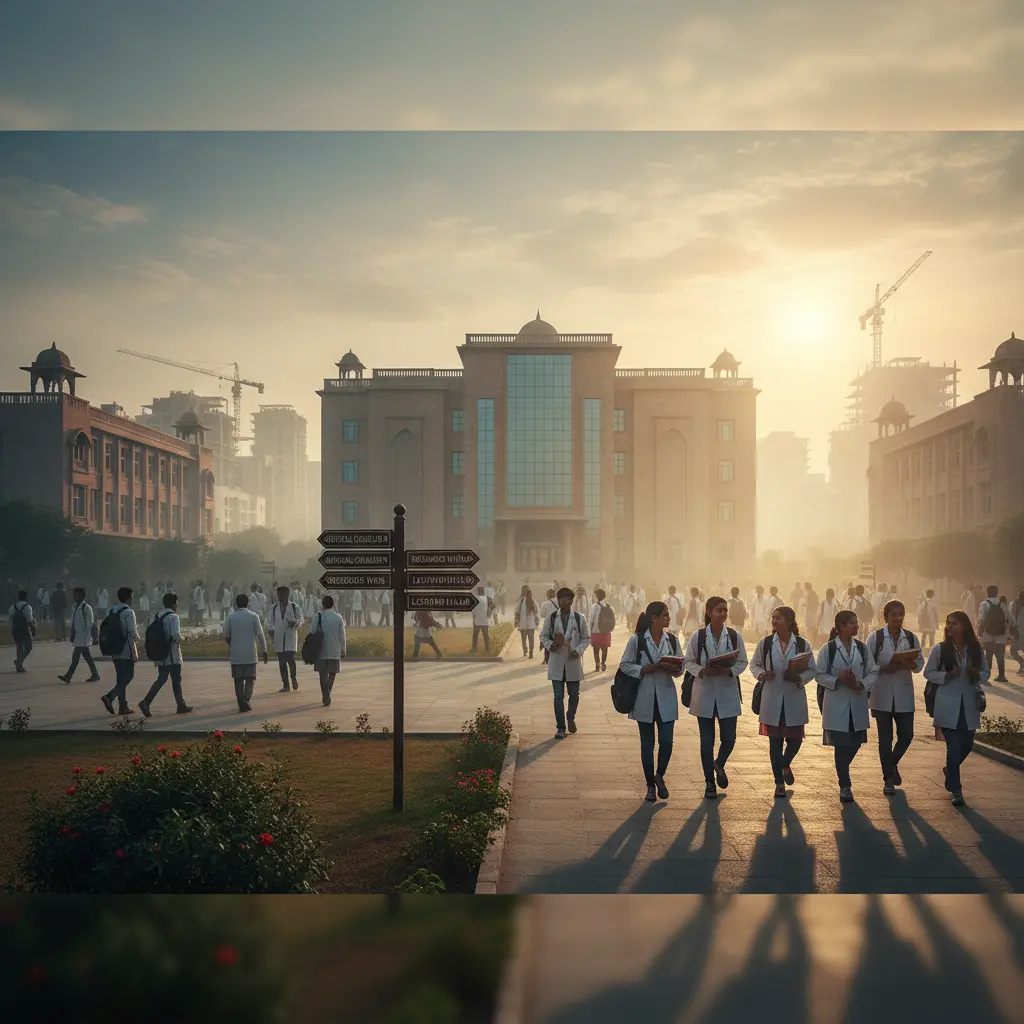
Medical education in India just got a fresh round of expansion, and the timing couldn’t be better for the lakhs of students who sat for NEET UG 2026 hoping for a shot at an MBBS seat. The National Medical Commission has approved 25 new medical colleges and 9,911 additional MBBS seats for the 2026-27 academic session, pushing the country’s total MBBS seat count past 1.36 lakh for the first time.
The Numbers, Laid Out
According to the final seat matrix released by the Medical Assessment and Rating Board, the NMC’s regulatory arm for college approvals, a total of 1,27,028 existing MBBS seats have been renewed for this academic year, while 9,911 new seats have been added through fresh approvals and intake increases at existing colleges. Add it all up, and India now has 1,36,939 MBBS seats spread across 823 medical colleges, not counting Institutes of National Importance like AIIMS Delhi, which are counted separately.
Of the 823 colleges, 441 are government institutions offering 63,296 seats, while 382 are private colleges accounting for 73,643 seats. That’s a notable detail in itself: private medical colleges now offer more seats than government ones nationally, even though government colleges remain far more affordable for most students.
Where the New Colleges Are Coming From
Of the 25 newly approved medical colleges, seven are government institutions contributing 400 MBBS seats, while 18 are private colleges adding 2,000 seats. That works out to private colleges accounting for roughly 83 percent of the seats added through these new institutions alone, a trend that’s been fairly consistent in recent years as more private players enter the medical education space.
Geographically, the expansion isn’t evenly spread. States including Chhattisgarh, Rajasthan, Karnataka, Maharashtra, Bihar, and Andhra Pradesh have seen the biggest jumps in both new colleges and additional seats this cycle. Some states have reportedly added well over a thousand new seats through a mix of new colleges and increased intake at existing ones, which should meaningfully ease local competition for aspiring doctors in those regions.
The Process Behind the Numbers
The public notice announcing all this was issued by MARB on July 14, 2026, and it makes clear that the seat matrix reflects two kinds of approvals bundled together: entirely new medical colleges getting the green light to start admitting students, and existing colleges being allowed to increase their intake capacity. Private colleges that received either kind of approval have been directed to submit an Electronic Bank Guarantee to MARB within seven days of the notice, and the formal Letter of Permission will only be issued once that guarantee is verified and found satisfactory.
The NMC has also been fairly firm about compliance. Counselling authorities, including the Medical Counselling Committee and state-level bodies, have been instructed to strictly follow the approved seat matrix, and colleges have been warned against admitting students beyond their sanctioned intake. Any discrepancies colleges spot in their own listed seat numbers need to be flagged to MARB before counselling actually begins, and any revisions that do happen will be uploaded to the NMC’s official website for counselling bodies to reference.
Why This Matters for NEET Aspirants
For the roughly two million-plus students who typically sit for NEET UG each year, the gap between the number of aspirants and the number of available MBBS seats has long been one of India’s most brutal admission bottlenecks. Even with steady annual increases, competition for seats, especially in government colleges, remains fierce. This latest expansion won’t close that gap entirely, but it does chip away at it, and the concentration of new seats in states that have historically had fewer medical colleges should help improve access for students in underserved regions who previously had to relocate far from home just to pursue an MBBS degree.
Part of a Longer-Running Effort
This is not a one-off. This is part of a bigger initiative the government has been working on for some years now, starting with Prime Minister Modi’s promise on Independence Day 2024 to add 75,000 new medical seats in five years. The NMC approved 10,650 new MBBS seats and 41 new colleges for the 2024-25 session, followed by a similar increase for 2025-26. This year’s addition of nearly 10,000 seats, while somewhat more modest in college count than some previous years, still represents a meaningful continuation of that trajectory.
Officials have consistently framed these expansions as being about more than just admission numbers. With India’s healthcare demands rising alongside its population and an ageing demographic in the years ahead, building a larger pipeline of doctors has become something of a policy priority in its own right. More seats today should, in theory, translate into a stronger healthcare workforce a decade or so from now, provided the quality of medical education keeps pace with the speed of expansion.
For now, students and parents tracking NEET UG 2026 counselling will want to keep an eye on the state-wise seat matrix as it’s rolled out, since the practical impact of this expansion will really come down to how these additional seats get distributed once counselling rounds begin in earnest.