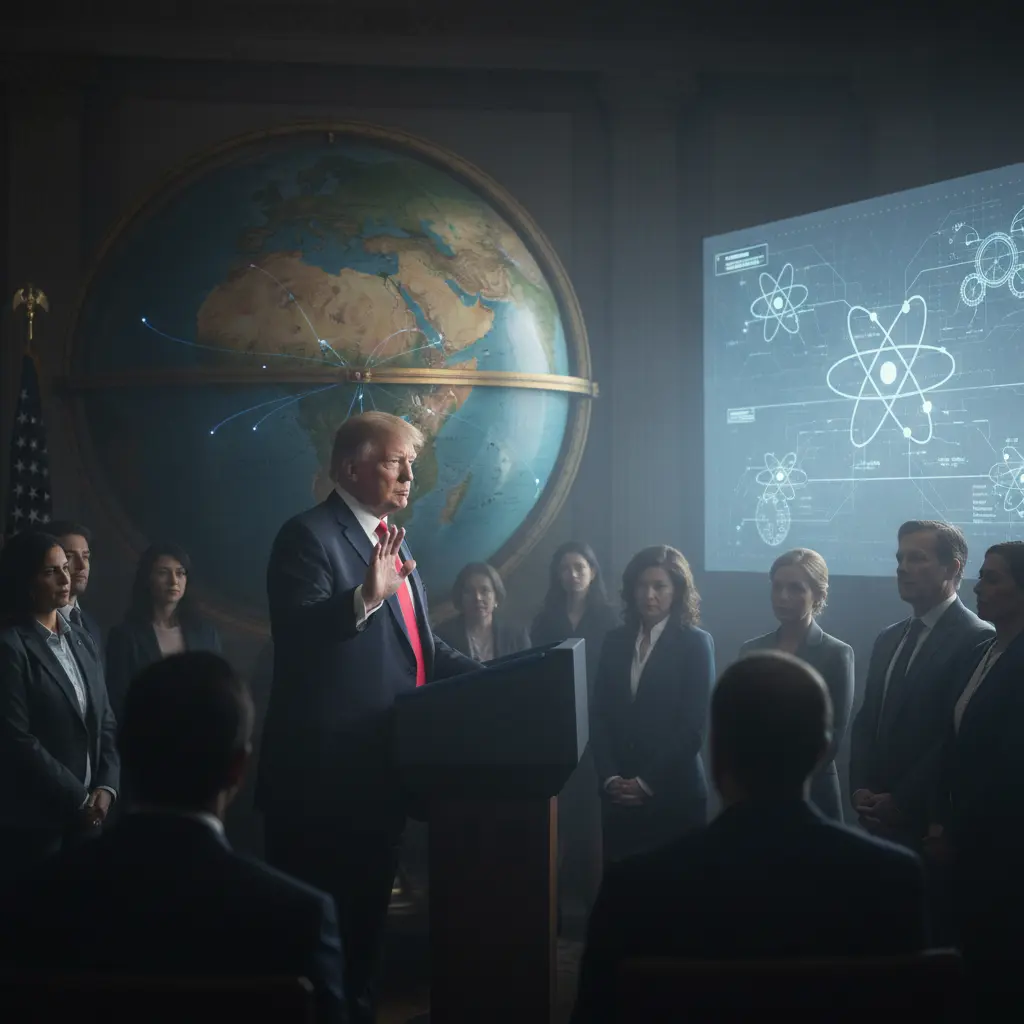
President Donald Trump has pulled back from the brink of a major new military strike on Iran, announcing late Saturday that Washington will hold off on action while negotiators race to finalize what he described as the “perimeters” of a deal. The Trump Iran strike cancelled decision comes after months of on-and-off fighting between the two countries and marks one of the more dramatic reversals of the conflict so far.
Trump made the announcement in a late-night post, saying the United States remains “locked and loaded and ready to go” against Iran but had agreed to stand down after being approached by Tehran and other Middle Eastern governments asking for more time. According to Trump, the emerging framework would call for a full and immediate reopening of the Strait of Hormuz along with an end to Iran’s nuclear program. He framed the pause as conditional, warning that the offer to hold fire only stands if a formal agreement can be reached quickly.
The reversal followed a tense several days in which American officials had reportedly ordered preparations for a fresh, large-scale assault on Iranian energy and infrastructure targets, with strikes potentially set to begin as early as this past weekend. That plan appears to have been shelved, at least for now, as diplomatic channels reopened.
Gulf states push for de-escalation
Behind-the-scenes pressure from Gulf allies played a significant role in the shift. Saudi Arabia’s Crown Prince Mohammed bin Salman reportedly spoke directly with Trump and voiced concern about the strike plans, while Saudi state media said the kingdom’s leadership emphasized the need for dialogue rather than further military escalation. Qatar, the United Arab Emirates, Turkey, and Pakistan were also said to have urged both Washington and Tehran to step back from the edge.
Secretary of State Marco Rubio pointed to Iran’s posture as evidence that recent American military pressure had shifted Tehran’s calculus, suggesting Iranian officials now appear more open to negotiating both the future of their nuclear program and the terms of shipping access through the Strait of Hormuz — a waterway that normally carries roughly a fifth of the world’s oil supply.
Iran’s mixed signals
Iran’s response has been anything but unified. The country’s foreign ministry indicated that talks with Oman over a mechanism for safe transit through Hormuz are in their final stages, a sign that some technical progress is genuinely being made. At the same time, hardline voices inside Iran have pushed back hard against Trump’s framing of events. State-linked outlets dismissed his claims outright, and Iran’s acting defense minister said that while Tehran views the American statements as part of a psychological and cognitive warfare campaign, it is nonetheless treating every threat as real.
That tension — cautious diplomatic movement paired with public defiance — has defined much of the broader US Iran nuclear talks since a ceasefire brokered in mid-June effectively collapsed. Neither side has budged much on the core sticking points: Iran’s uranium enrichment activities and who controls passage through Hormuz. Israel, which joined the US in earlier rounds of strikes but was not part of that initial ceasefire arrangement, is reportedly watching the current diplomatic push from the sidelines rather than actively participating in it.
Oil markets react
Financial markets responded almost immediately to the news. Oil prices dropped sharply as traders priced in a lower probability of a supply disruption through Hormuz, one of the world’s most critical energy chokepoints. Any sustained closure or serious conflict near the strait tends to send crude prices spiking, so signs of de-escalation — even conditional ones — tend to ease that pressure quickly. Whether that relief holds will likely depend on how the next several days of negotiations unfold.
A fragile pause, not a resolution
It’s worth being clear-eyed about what this moment actually represents. Trump himself has repeatedly paused military action to allow room for negotiation before, only to see diplomacy stall and strikes resume. This latest cancellation carries the same built-in uncertainty. Iran has not issued a unified government response, and the mixed messaging from Tehran’s own officials — split between talk of progress with Oman and dismissal of Trump’s account as exaggerated — suggests the situation remains fluid.
Still, for a region that has spent months bracing for wider escalation, even a temporary halt to active strike planning offers a measure of breathing room. Whether the days ahead are marked by a real deal on the nuclear program and access to Hormuz or just another round of stalled talks and new threats, the shape of Middle East tensions in 2026 will likely be determined far beyond this single weekend.
Trump Cancels Planned Strike on Iran, Signals Nuclear and Hormuz Agreement.