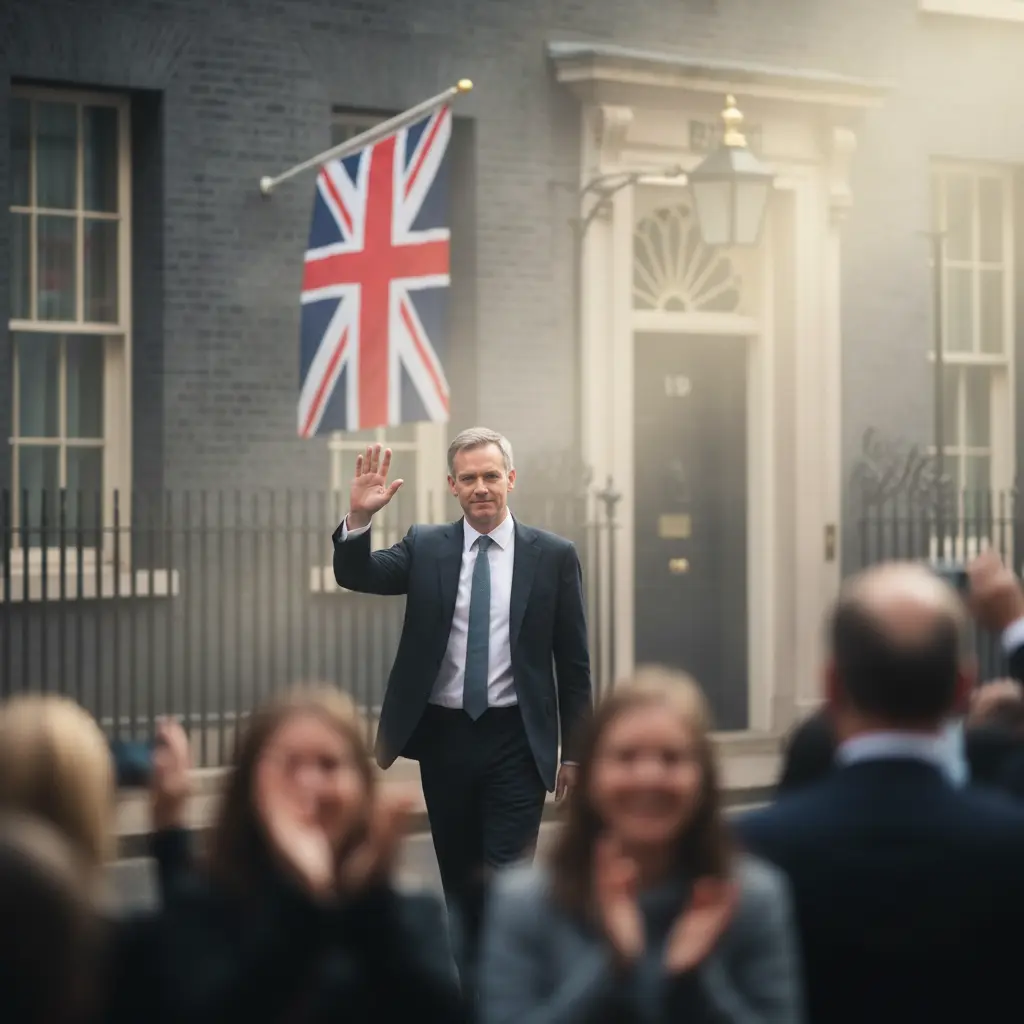
Britain has a new occupant at 10 Downing Street, and once again it didn’t take a general election to get there. Andy Burnham has formally become prime minister after a morning of royal formality at Buckingham Palace, taking the reins from Keir Starmer, who stepped down last month following a rough stretch of election defeats, policy reversals and mounting pressure from within his own party.
It’s worth pausing on the number, because it says a lot about the state of British politics right now: Burnham is the seventh person to hold the office of prime minister in a little over a decade. That kind of churn used to be unthinkable in a country famous for its political stability. These days, it’s just Tuesday.
From Manchester to Downing Street
Burnham’s route to the top job wasn’t exactly conventional either. The former mayor of Greater Manchester — long nicknamed the “King of the North” — had to fight his way back into Parliament through a by-election earlier this summer before he could even be considered for the Labour leadership. Once he cleared that hurdle, though, things moved fast. He was confirmed as Labour’s new leader, and days later King Charles III formally invited him to form a new government after accepting Starmer’s resignation.
Starmer, for his part, didn’t linger. In his final remarks outside Number 10, he called the job “the privilege of my life” and wished Burnham “every success.” It was a graceful exit from a premiership that never quite escaped the shadow of local election losses and a series of policy U-turns that eroded public confidence.
“A Circuit-Breaker for Britain”
Burnham wasted no time setting a different tone. Standing outside Downing Street for his first address as prime minister, he promised what he called a “circuit-breaker for Britain” — language clearly designed to signal a sharp break from the drift of recent years. He pledged what he described as the biggest changes to Britain’s political and economic model in 40 years, and said a fuller, 10-year national plan would follow later this year.
More immediately, he zeroed in on the cost-of-living crisis that has hung over British households for years now. His first instruction as prime minister, he said, would be to end rough sleeping in the country — a deliberately concrete, visible commitment rather than a vague promise of “change.” He also spoke of giving people “some breathing space,” with further cost-of-living measures expected within the week.
It’s a notably humble opening pitch for someone stepping into one of the world’s most scrutinized jobs. Rather than leaning on grand rhetoric, Burnham has been candid about where his party has fallen short. “We have not been good enough, and we need to be better,” he told the country. “We will be.”
The reshuffle that followed his arrival wasn’t entirely smooth — several senior figures, including the deputy prime minister and the finance minister, announced they were leaving the Cabinet within hours of the handover, a reminder that unifying Labour’s fractured ranks may prove just as hard as fixing the economy.
Washington Takes Notice
Burnham’s in-tray is stacked, and foreign policy hasn’t waited for him to settle in. President Donald Trump wasted no time getting on the phone with Britain’s new leader, later describing the call as “very good” and posting that the conversation covered a wide range of topics — the broader US-UK relationship, North Sea oil, trade, the two countries’ military alliance, and efforts to help demine the Strait of Hormuz. Trump said the two leaders plan to meet in person before long, adding that Burnham has “a big job ahead of him” but expressing confidence he’s up to it, with the US “there to help.”
Burnham has been notably measured in how he’s characterized the relationship so far, declining in a later interview to say outright whether he trusts the American president, while still describing their exchange as a good one. It’s the kind of careful diplomatic footing new leaders often adopt with Washington — friendly enough to keep channels open, guarded enough not to overcommit before they’ve properly found their feet.
A Country Looking for Stability
What comes next will say a lot about whether Burnham can actually break the cycle he’s inherited. The UK has cycled through prime ministers at a startling pace since the 2016 Brexit vote, and each new leader has arrived promising to be the one who finally steadies the ship. Burnham’s advantage, if he has one, is that his politics have long been shaped by a very different instinct than the Westminster technocracy voters have grown weary of — a focus on place, on regional investment, and on communities that have felt left behind by national policy for years.
Whether that translates into durable public trust remains to be seen. For now, though, Britain has a new prime minister, a promised 10-year plan on the horizon, and a cost-of-living pledge that will be the first real test of whether this latest change at the top amounts to anything more than another name on a long list.