
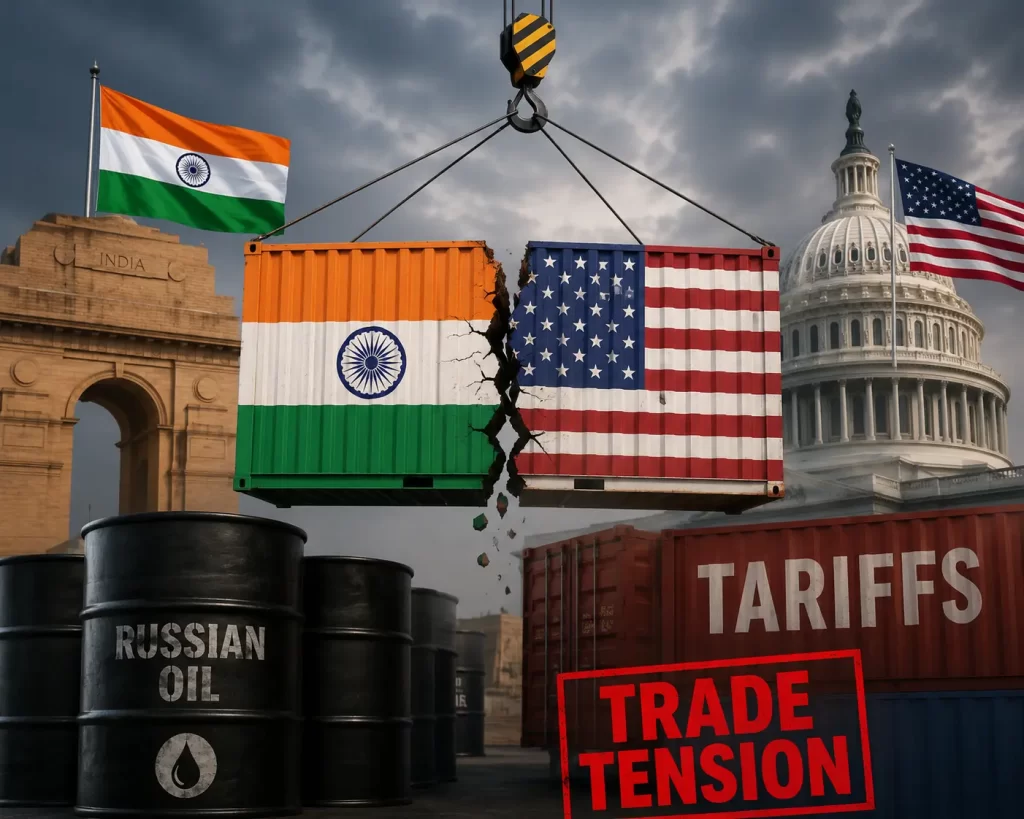
Just when India-US trade relations seemed to be finally getting into calmer waters, a new flashpoint has emerged — and, once again, it’s India’s appetite for cheap Russian crude that’s at the heart of it.
Back in February, the two countries struck a deal that brought US tariffs on Indian goods down to 18%, a move widely seen as a reset after months of tension. That goodwill is now being tested. The US Senate has passed a bipartisan bill, the Lindsey O. Graham Sanctioning Russia and Iran Act of 2026, which would give the White House authority to slap tariffs of up to 100% on countries that keep buying Russian oil and gas. The bill cleared the Senate by a lopsided 86-11 vote, and India is one of just five countries named directly in the legislation, alongside China, Slovakia, Hungary and Azerbaijan.
For New Delhi, the timing couldn’t be more awkward. India has become one of the biggest buyers of discounted Russian crude since the war in Ukraine began, with refiners currently importing somewhere around 1.5 million barrels a day, taking advantage of price discounts that Moscow has offered as Western buyers turned away. Russian oil now accounts for a substantial share of India’s total crude imports, and Indian officials have consistently defended the purchases as a matter of energy security rather than politics — pointing out, not without justification, that European countries have themselves continued importing Russian energy without facing anything close to this level of scrutiny.
That’s exactly the argument India has repeated every time this issue resurfaces. New Delhi has called it unfair to be singled out when other economies, including US allies, continue absorbing Russian exports. It’s a fair point, and one that’s likely to keep coming up as the bill moves further through Washington’s legislative process.
Importantly, none of this is happening automatically. The Senate bill doesn’t impose tariffs outright — it hands the decision to the US Trade Representative and gives the president broad discretion to impose, delay, waive or modify the penalties depending on what Washington decides is in its national interest. The legislation still has to clear the House of Representatives, which isn’t expected to take it up until it reconvenes later this month, before it could even reach the president’s desk. So while the headlines about “100% tariffs” sound alarming, the reality is this is still very much a moving target rather than a done deal.
That hasn’t stopped it from casting a shadow over ongoing India-US trade talks, though. Trade advisers on both sides have signaled that the matter is expected to be resolved “directly” between Prime Minister Narendra Modi and President Donald Trump, suggesting Washington sees this less as an immediate economic threat and more as a bargaining chip heading into broader trade negotiations. Some experts in India seem to agree. Analysts have noted that even in a worst-case scenario where the tariffs are actually imposed, the hit to Indian exports would likely run somewhere in the $30-40 billion range, shaving perhaps 0.2 percentage points off GDP growth — significant, but manageable rather than catastrophic.
There’s also a bit of irony in how this situation has unfolded. Washington itself eased sanctions on Russian crude purchases in the past when it needed to manage energy market pressures, which gives India’s negotiators a reasonable comeback whenever the fairness question comes up. It’s a reminder that a lot of this friction is as much about leverage and optics in the broader US-Russia standoff over Ukraine as it is about oil itself.
Indian exporters, for their part, don’t appear to be waiting around to find out how this plays out. Industry representatives say many businesses have already been diversifying into other markets and are drawing some comfort from newer free trade agreements India has signed, which could soften the blow if additional tariffs do eventually land. That kind of hedging suggests New Delhi isn’t treating the threat lightly, even if it isn’t panicking either.
For now, the bill sits in limbo, waiting on the House, while India shows no signs of pulling back on its Russian oil purchases. Discounted crude remains simply too good a deal for Indian refiners to walk away from, especially with domestic energy demand continuing to climb. Unless Washington and Moscow make real progress toward ending the war in Ukraine, this particular sticking point in India-US trade relations isn’t likely to disappear — it’ll just keep resurfacing every few months in a slightly different form, with the same core question hanging over both governments: how long can economic pragmatism and geopolitical pressure coexist before one side has to give?
What happens next largely depends on two things — whether the House decides to move the bill forward, and whether Modi and Trump can find a way to defuse the issue quietly before it does. Given how the last round of tariff tensions ended with a deal rather than a standoff, there’s reason to think this one might follow a similar path. But nothing is guaranteed, and Indian officials know it.

