
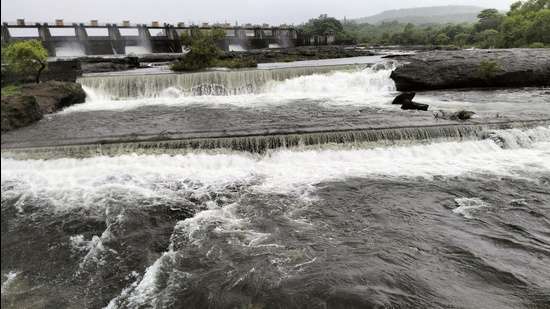
Pune, June 20, 2025 — Authorities have increased the discharge from Pune’s Khadakwasla Dam to 8,734 cusecs on Thursday due to sustained heavy rainfall in the catchment areas, raising concerns about rising water levels in downstream regions. The decision comes as part of a precautionary measure to manage the dam’s inflow capacity and avoid overflow risks.
The Irrigation Department confirmed that due to consistent rains in the Khadakwasla, Panshet, Varasgaon, and Temghar dam catchment areas over the past few days, water levels have steadily risen. As a result, two sluice gates of the Khadakwasla Dam were opened around 6:00 AM on Thursday to regulate the increasing inflow.
“Considering the current inflow and weather forecasts, the release of 8,734 cusecs was necessary to maintain the dam’s safety,” said a senior official from the Pune Irrigation Circle. The release is expected to affect areas along the Mutha river, including downstream regions such as Sinhagad Road, Deccan, Erandwane, and Shivane. Residents living along riverbanks have been advised to remain alert.
The India Meteorological Department (IMD) has issued a yellow alert for Pune, predicting moderate to heavy rainfall in isolated parts of the district over the next 48 hours. IMD officials noted that the monsoon has become active in central Maharashtra, contributing to the rapid rise in dam levels across the region.
As of Thursday morning, the Khadakwasla Dam was reported to be at over 65% live storage, a significant jump compared to the same period last year. Other dams in the Pune region — including Panshet, Varasgaon, and Temghar — have also reported increasing water levels, though none have reached critical thresholds yet.
Municipal and disaster management authorities are monitoring the situation closely. The Pune Municipal Corporation (PMC) has urged citizens to avoid venturing near riverbanks and low-lying areas. Temporary warning signs have been erected in vulnerable zones, and disaster response teams are on standby for emergency deployment.
Environmental experts have emphasized the importance of coordinated dam management during the monsoon, citing the 2019 incident when abrupt discharge from multiple dams led to urban flooding in parts of Pune.
“Controlled and early release of water is a necessary step to avoid sudden surges that can be more damaging,” said Dr. Sandeep Joshi, a water resources expert based in Pune. “However, the public must also stay informed and follow updates from official channels.”
Local authorities have also assured that there is no immediate threat of flooding, but continued rainfall and dam inflow will be assessed on an hourly basis. Residents can track updates via the PMC’s official social media channels and the irrigation department’s alerts.

