June 25:
In a landmark move aimed at promoting scientific learning among tribal youth, the Union Government has announced plans to establish 100 space laboratories in tribal schools across the country. The initiative, being undertaken jointly by the Ministry of Tribal Affairs and the Indian Space Research Organisation (ISRO), is part of the government’s larger push to integrate advanced STEM (Science, Technology, Engineering, and Mathematics) education into underserved regions.
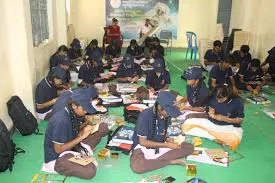
The space labs will be installed in Eklavya Model Residential Schools (EMRS), which cater exclusively to tribal students. These labs will be equipped with satellite models, telescopes, space science kits, and other interactive tools to provide hands-on learning experiences. The goal is to ignite interest in space science and innovation among tribal students and encourage them to pursue careers in scientific research and technology.
According to officials, this initiative is aligned with the National Education Policy (NEP) 2020, which emphasizes experiential and inquiry-based learning. The government believes that introducing space science at the school level can help bridge educational disparities and create new opportunities for marginalised communities.
“The idea is to take space science beyond textbooks and make it accessible to students in remote areas. With these labs, students can understand complex concepts through practical exposure, fostering creativity and innovation,” said a senior official from the Ministry of Tribal Affairs.
The first phase of implementation will focus on states with large tribal populations, including Odisha, Madhya Pradesh, Chhattisgarh, Jharkhand, Maharashtra, and Gujarat. Each selected EMRS will receive technical support and training from ISRO scientists to ensure effective integration of the lab into the school curriculum.
Experts have welcomed the move, stating that it will play a crucial role in building scientific awareness and aspirations among tribal youth. “Access to modern scientific tools can transform the way students perceive learning, especially in remote areas where exposure to such disciplines is limited,” said Dr. R. Suresh, a senior scientist at ISRO.
The project will be funded through a combination of central government allocations and Corporate Social Responsibility (CSR) contributions from public sector undertakings under the Ministry of Tribal Affairs. Special training sessions for teachers and lab coordinators are also being planned to ensure the labs are used efficiently.
The government is also planning to organize regional and national-level science competitions to identify and nurture talent emerging from these schools.
With this initiative, the government aims not only to democratize access to quality education but also to strengthen India’s position as a global leader in space science by involving future generations from all walks of life.