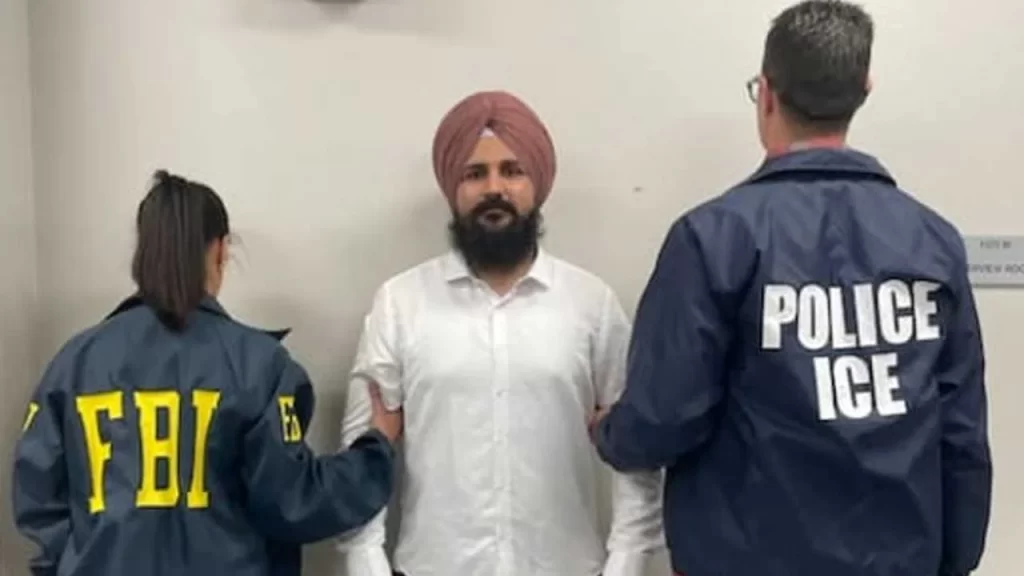
7 July, 2025-Khalistani terrorist Harpreet Singh, alias Happy Passia, who has been linked to a series of 16 bomb blasts across Punjab, is being brought back to India from the United States after months of diplomatic and legal negotiations. His extradition marks a significant development in India’s counter-terrorism efforts and is expected to lead to crucial breakthroughs in ongoing investigations into pro-Khalistan networks operating both domestically and abroad.
Harpreet Singh was arrested in the United States in April 2025 following a Red Corner Notice issued by Interpol at the request of Indian authorities. Singh had been absconding for years and is considered a key figure in reviving the Khalistan movement through acts of violence aimed at destabilizing public security and inciting communal unrest in Punjab.
The Central Bureau of Investigation (CBI) and the National Investigation Agency (NIA), which have been coordinating closely with U.S. agencies, confirmed the extradition approval late Sunday night. He is expected to land in India within the next few days, where a high-level security protocol has been established to take him into custody and initiate formal interrogation procedures.
Officials say Harpreet Singh masterminded a coordinated series of blasts between 2020 and 2023, targeting public spaces, religious gatherings, and law enforcement convoys. While the attacks caused widespread panic, timely responses by local police and intelligence agencies helped avert mass casualties. Still, at least 12 people lost their lives, and dozens were injured in the incidents attributed to his network.
According to sources within the NIA, Singh is believed to have operated under the umbrella of foreign-based pro-Khalistani groups and maintained active contact with other wanted terrorists, including Gurpatwant Singh Pannun, head of the banned outfit Sikhs for Justice (SFJ). Investigators are hopeful that Singh’s interrogation will shed light on funding channels, sleeper cells, and cross-border support networks that have continued to pose a threat to India’s internal security.
The extradition also reflects growing cooperation between India and the United States on counter-terrorism matters. Government sources said the Ministry of External Affairs (MEA) had been pursuing the matter at the highest levels, emphasizing Singh’s involvement in acts of terror rather than political activism.
Reacting to the news, security experts noted that the return of a high-profile Khalistani terrorist like Harpreet Singh would strengthen India’s stance against secessionist elements using foreign soil to orchestrate violence. They emphasized the need for sustained intelligence-sharing, vigilant monitoring of diaspora groups, and global action against digital propaganda promoting extremism.
The Punjab Police have already reopened several case files connected to the blasts and are expected to submit supplementary charge sheets once Singh is interrogated. Meanwhile, victims’ families have expressed cautious optimism, hoping that justice will finally be served after years of uncertainty.
Harpreet Singh’s extradition is being seen as a victory for India’s anti-terror operations and a warning to other fugitives who continue to evade justice while orchestrating threats from abroad. As the investigation resumes with renewed intensity, the case could become a turning point in India’s broader efforts to dismantle transnational terror networks with Khalistani links.