
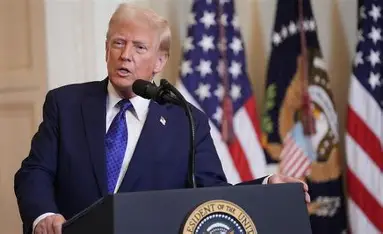
Former U.S. President Donald Trump has sparked international debate after vowing to impose a 10% tariff on nations that align themselves with the BRICS alliance, which he described as “anti-American.” The statement was made during a campaign rally in Florida, where Trump positioned the growing bloc as a threat to U.S. economic leadership and security.
BRICS—an acronym for Brazil, Russia, India, China, and South Africa—has been gaining momentum as more nations express interest in joining its ranks. The group aims to represent emerging markets and challenge the West’s dominance over global financial systems. Recent developments, including discussions around a common currency and expanded economic cooperation, have further intensified Western concerns.
In his speech, Trump warned, “Countries that choose to stand with this group, which opposes American values and interests, will face consequences. I’ll introduce a 10% tariff on their goods if they want access to our markets.”
The proposed tariff could significantly alter U.S. trade dynamics, especially with countries like India and Brazil—nations that are both part of BRICS and maintain strong ties with Washington. Trump’s stance signals a return to aggressive trade policies, reminiscent of his earlier confrontations with China during his presidency.
Economic analysts are cautioning against the implications of such a move. Dr. Sarah Holden of the Center for Global Economic Policy noted, “Penalizing BRICS-aligned countries could escalate tensions and disrupt supply chains, especially when the global economy is still recovering from recent shocks.”
The BRICS group has been increasingly vocal about reducing reliance on the U.S. dollar and developing alternative financial systems. These goals, according to Trump and many in his political base, represent a direct challenge to American global influence.
Trump’s statements also reflect a broader campaign strategy focused on protectionism and nationalism. As the 2024 U.S. elections approach, his messaging aims to rally support by prioritizing American economic interests over multilateral diplomacy.
International reactions to Trump’s warning have been mixed. China dismissed the comments as “politically motivated,” while Brazil and India have yet to issue formal responses. South Africa reiterated its commitment to building a balanced global economy through diversified partnerships.

