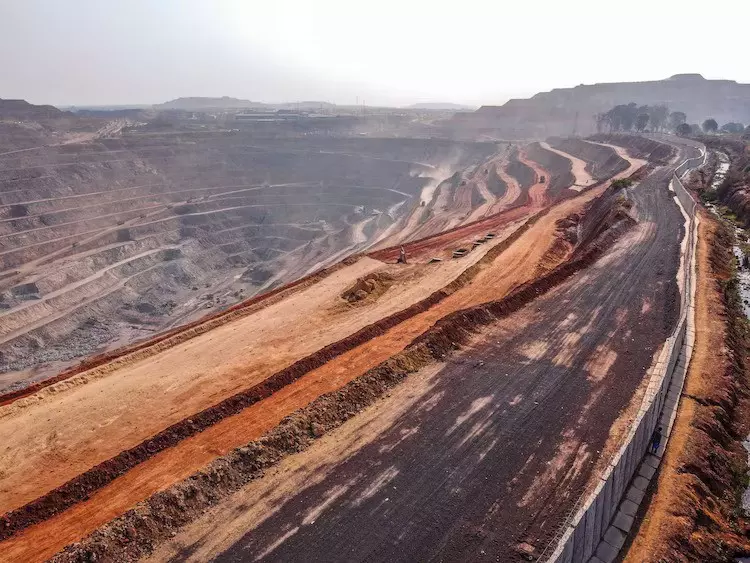
7 July, 2025-India has dispatched a team of government geologists to Zambia to explore the country’s vast copper and cobalt reserves, marking a significant step in strengthening its critical mineral supply chains. The move comes amid growing global demand for strategic minerals essential to electric vehicles, renewable energy, and advanced technology manufacturing.
The Geological Survey of India (GSI), under the Ministry of Mines, confirmed that the team will work in collaboration with Zambia’s Ministry of Mines and Mineral Development. The objective is to conduct resource mapping, sampling, and technical assessments in key mineral-rich regions across Zambia.
Copper and cobalt are vital for India’s clean energy and battery production sectors, but domestic reserves remain insufficient to meet rising demand. The exploration mission is part of a broader bilateral framework signed earlier this year, which aims to enhance cooperation in mining and mineral development between the two countries.
Officials stated that this initiative is aligned with India’s updated Critical Minerals Policy, which emphasizes overseas mineral acquisition and long-term supply security. “This exploration is a step toward ensuring India’s resource security for emerging technologies. It will help diversify our supply sources and reduce reliance on traditional partners,” a senior official from the Ministry of Mines said.
Zambia is among the world’s leading producers of copper and also possesses significant cobalt reserves, making it a strategically important partner for India. The presence of Indian geologists is expected to lead to future joint ventures, investment in mining infrastructure, and the establishment of long-term mineral supply agreements.
The move is also seen as mutually beneficial. While India seeks to bolster its strategic reserves, Zambia could gain from technological cooperation, employment generation, and capacity building in its mining sector.
This is not the first time India has explored overseas mineral partnerships. In recent years, the government has initiated collaborations with countries like Australia, Argentina, and Chile as part of its mission to secure access to key minerals. However, the Zambia project is considered one of the most promising, given the country’s proven mineral wealth and stable mining environment.
The Ministry of Mines is also planning to establish a dedicated agency to manage overseas mineral assets and facilitate international exploration projects. This mission to Zambia is expected to serve as a model for future expeditions in Africa and beyond.
India’s dependence on imported critical minerals is projected to rise sharply by 2030 due to expanding clean energy and mobility sectors. Securing copper and cobalt supplies is crucial for the success of the National Electric Mobility Mission and related initiatives under the Make in India campaign.
With this move, India is not only enhancing its energy transition capabilities but also reinforcing its position in the global critical minerals landscape. The results of the geological survey in Zambia are expected to be submitted later this year, following which the two countries may proceed with commercial agreements.