
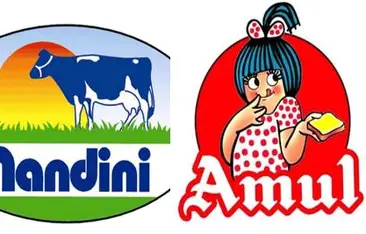
The decades-old rivalry between dairy giants Amul and Nandini has once again surged into the spotlight in Karnataka, this time with a distinctly political edge. As elections approach and sentiments run high, the competition between the Gujarat-based Amul and the Karnataka Milk Federation’s (KMF) Nandini brand has become more than just a market tussle—it’s now a symbol of regional identity, political agendas, and economic priorities.
The controversy was reignited when Amul announced plans to expand its operations in Karnataka, particularly targeting urban centers like Bengaluru with online milk delivery services. This move sparked concerns among locals and political leaders about the potential impact on Nandini, a beloved home-grown brand that commands deep loyalty in the state.
Amul, managed by the Gujarat Cooperative Milk Marketing Federation (GCMMF), has long been a national dairy powerhouse. Meanwhile, Nandini, under the KMF, is a pillar of Karnataka’s dairy economy, supporting over 26 lakh farmers and enjoying a strong rural and urban presence. The idea of Amul entering this space triggered backlash, with critics arguing that the expansion could marginalize local producers and weaken Karnataka’s dairy ecosystem.
Political parties have seized the issue. The opposition Congress accused the BJP-led central government of promoting Amul at the expense of Nandini, claiming this is part of a broader attempt to undermine Karnataka’s cooperative structures. Chief Minister Siddaramaiah and Deputy CM D.K. Shivakumar have openly defended Nandini, asserting that the state does not need Amul’s intervention.
The BJP, on the other hand, has dismissed the criticism as “needless fear-mongering.” Party leaders argue that competition will improve quality and pricing for consumers, and deny any intention of sidelining the local brand. Union Home Minister Amit Shah’s previous remarks encouraging “Amul and Nandini to work together” have also been revisited and debated.
At the heart of the issue lies a larger debate about federalism, regional pride, and the role of cooperative movements in a liberalizing economy. Nandini has symbolized self-sufficiency and grassroots empowerment in Karnataka, and any perceived threat to its dominance is seen as more than just economic—it’s emotional and political.
Consumer groups and dairy unions have also weighed in, with many urging the government to ensure that Nandini receives adequate protection from monopolistic competition. Farmers affiliated with KMF have raised concerns about pricing parity and market access if Amul aggressively expands.

