Introduction:
In a significant escalation of Middle Eastern hostilities, an Iranian missile struck one of Israel’s main hospitals, causing extensive structural damage and raising international alarm. The missile attack, confirmed by both Israeli defense sources and international observers, targeted the Sheba Medical Center near Tel Aviv, one of the largest and most critical healthcare facilities in the region.
Body:
According to initial reports, the missile strike occurred in the early hours of Thursday, triggering air raid sirens across central Israel. Emergency response teams were immediately dispatched to Sheba Medical Center, where substantial damage was reported to the hospital’s emergency and diagnostic wings. While the exact number of casualties remains unconfirmed, hospital authorities stated that several patients and medical staff sustained injuries, and multiple critical care units had to be evacuated.
The Israel Defense Forces (IDF) responded swiftly, intercepting a second missile mid-air, preventing further destruction. Preliminary investigations by the IDF suggest the missile was launched from Iranian-backed forces operating in Syria, though Tehran has yet to officially claim responsibility. This strike marks one of the most direct and alarming attacks on civilian infrastructure in the ongoing Iran-Israel proxy conflict.
The incident has sparked widespread condemnation. Israeli Prime Minister Benjamin Netanyahu called the attack “a heinous violation of international law and a direct assault on humanity.” He vowed a “decisive and proportionate response,” raising fears of an imminent retaliatory strike. The United Nations Secretary-General António Guterres urged immediate de-escalation, emphasizing that “hospitals must never be targets in armed conflict.”
Geopolitical analysts warn that the strike signals a dangerous shift in tactics, with civilian infrastructure now being openly targeted. “This is no longer shadow warfare,” said Dr. Lior Weissman, a senior analyst at the Israeli Institute for Strategic Studies. “Iran is crossing new red lines, and this could redefine the rules of engagement in the region.”
The international community, including the United States and European Union, has urged restraint. U.S. Secretary of State Antony Blinken condemned the attack, calling it “an unacceptable escalation that endangers innocent lives.” He reaffirmed America’s commitment to Israel’s security and hinted at renewed diplomatic efforts to prevent broader conflict.
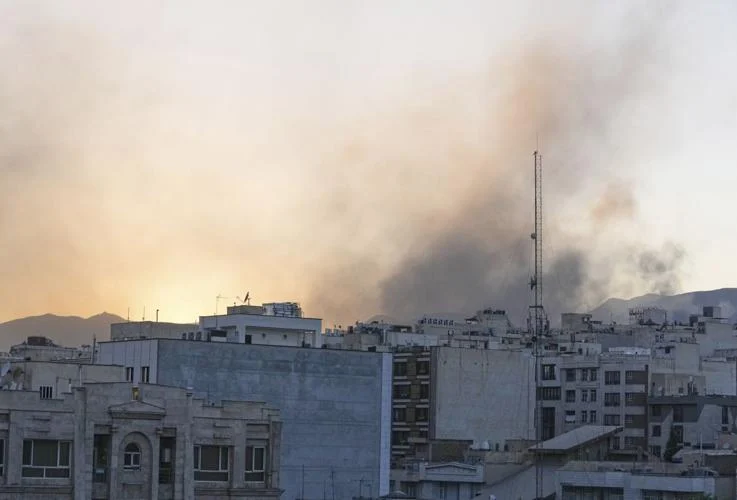
Social media platforms were flooded with images and videos from inside the hospital, showing smoke, shattered glass, and medical personnel scrambling to evacuate patients. Hashtags such as #ShebaUnderAttack, #IranMissileStrike, and #IsraelIranTensions began trending globally, fueling public outcry and intensifying pressure on world leaders to intervene diplomatically.
Conclusion:
The missile strike on Sheba Medical Center marks a troubling turning point in the Iran-Israel conflict, threatening to plunge the region into deeper turmoil. With global powers closely watching the developments, the next steps taken by both Tehran and Tel Aviv could determine whether diplomacy prevails—or if the Middle East descends further into violence. For now, the world holds its breath, hoping that international mediation can prevent further civilian suffering and a broader regional war.