Introduction:
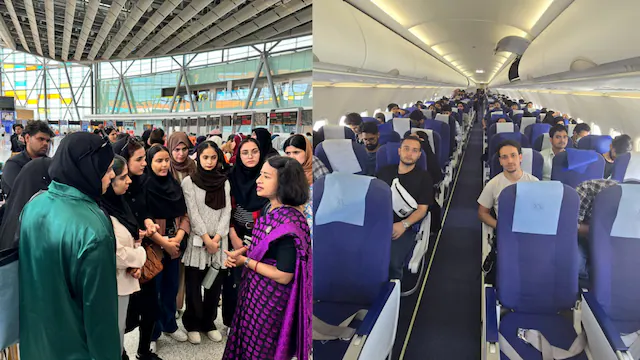
In a swift and strategic response to the escalating unrest in Iran, the Government of India has launched Operation Sindhu, a high-priority evacuation mission aimed at bringing back Indian nationals stranded in the conflict-ridden region. As geopolitical tensions flare and security conditions deteriorate, the Ministry of External Affairs (MEA) has coordinated closely with the Indian Armed Forces and diplomatic missions to execute the operation with precision and urgency.
Body:
Amid rising regional instability and mounting concerns over the safety of foreign nationals in Iran, India has prioritized the safety of its citizens through a carefully planned extraction mission. Operation Sindhu, named after the historic Sindhu (Indus) River that symbolizes India’s civilizational ties with the region, is being carried out in coordination with the Indian Navy and Air Force.
According to MEA sources, more than 2,000 Indian citizens — including students, professionals, and pilgrims — have registered for evacuation. The Indian Embassy in Tehran has established 24/7 helplines and emergency support systems to streamline communication and verify evacuee identities. Special flights, both military and commercial, are being arranged, and the Indian Navy has deployed ships near the Strait of Hormuz as a precautionary measure to support maritime evacuation if required.
External Affairs Minister Dr. S. Jaishankar, in a press briefing on Wednesday, emphasized the government’s commitment to ensuring the safety of every Indian abroad. “India has a long-standing tradition of protecting its citizens in times of global crises. Operation Sindhu reflects our strategic capability, diplomatic coordination, and humanitarian commitment,” he stated.
Security analysts believe that Iran’s internal turbulence, combined with its deteriorating diplomatic relations with several countries in the West, has increased the vulnerability of foreign nationals. India, therefore, acted preemptively to avoid a repetition of past incidents where civilians were caught in the crossfire of regional hostilities.
This evacuation effort follows a series of successful rescue missions by India in recent years, including Operation Ganga in Ukraine, Operation Kaveri in Sudan, and Vande Bharat during the COVID-19 pandemic. These operations have showcased India’s evolving role as a responsible global power capable of large-scale humanitarian missions under pressure.
The government has also warned Indian nationals to avoid non-essential travel to Iran until further notice and is actively monitoring the evolving geopolitical landscape. Indian embassies in neighboring countries have been placed on high alert to coordinate possible contingencies.
Conclusion:
Operation Sindhu reinforces India’s unwavering commitment to the safety and dignity of its citizens, no matter where they are. As the crisis in Iran continues to unfold, the world watches how regional powers, including India, respond to protect human lives in a volatile environment. With its latest mission, India has once again demonstrated the value of proactive diplomacy, military readiness, and a deep sense of national responsibility.