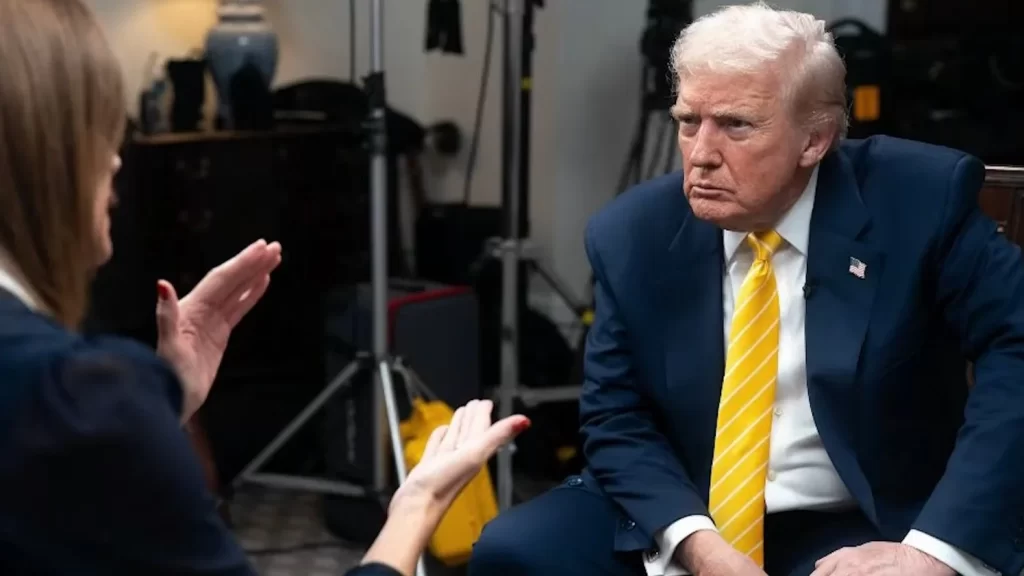
In a dramatic escalation of tensions between a former U.S. president and Britain’s most influential media institution, the BBC has issued a personal apology to Donald Trump after an edited segment of his January 6, 2021 speech created a misleading impression of incitement. Trump has publicly stated that he intends to raise the matter with UK Prime Minister Keir Starmer, calling the incident “very embarrassing” for the United Kingdom. He has also signalled plans for a lawsuit seeking damages that could reach up to $5 billion, potentially triggering one of the most consequential media-legal battles in recent history.
The controversy stems from a documentary broadcast on the BBC’s flagship investigative programme, Panorama. The segment featured a version of Trump’s Jan. 6 speech that combined remarks made nearly an hour apart, unintentionally giving the impression that Trump urged supporters to “fight like hell” in direct connection with the unrest at the U.S. Capitol. Following internal reviews and public criticism, the BBC acknowledged that the edit constituted an “error of judgment” and failed to reflect the original sequence of Trump’s remarks.
BBC Chair Samir Shah issued a personal letter of apology to Trump, stating that the organisation regretted the misrepresentation. However, while the BBC accepted responsibility for the misleading edit, it rejected the notion that it had defamed Trump or owed compensation. According to the broadcaster, the programme did not meet the legal threshold for defamation, and any claims of financial liability were unfounded.
The fallout has extended far beyond editorial corrections. Two high-ranking BBC executives — Director-General Tim Davie and News Chief Executive Deborah Turness — have resigned amid mounting pressure over governance failures and perceived political bias. Their departures underscore the severity of the crisis confronting the BBC at a moment when it is already under scrutiny regarding its funding model, impartiality, and public trust.
The scandal has raised several pressing questions for the broadcaster:
- Legal Liability: Trump’s team has hinted at seeking damages between $1 billion and $5 billion, though the BBC maintains that such claims lack legal merit.
- Editorial Integrity: The incident exposes the risks inherent in editing political speeches, where even minor alterations can dramatically distort context and meaning.
- Governance and Accountability: The resignations of senior executives highlight concerns about internal oversight and the effectiveness of editorial safeguards.
- Diplomatic Considerations: Trump’s remarks about raising the issue directly with the UK government have added an unusual geopolitical dimension to what began as a media controversy.
Timeline of Key Events
| Date | Event | Significance |
|---|---|---|
| Jan 6 2021 | Trump delivers speech before the U.S. Capitol unrest | Original source material for the controversy |
| Oct 28 2024 | BBC airs Panorama episode featuring the misleading edit | Triggers eventual public scrutiny |
| Nov 2025 | Internal memo leaks; senior BBC leaders resign; apology is issued | Crisis escalates within the broadcaster |
| Nov 2025 | Trump states intention to sue; plans to discuss issue with UK PM | Legal and diplomatic stakes intensify |
The BBC’s apology to Donald Trump has unleashed a complex storm of legal threats, leadership upheaval, and questions about the broadcaster’s editorial credibility. For Trump, the development offers an opportunity to challenge what he views as long-standing media misrepresentation. For the BBC, it marks a pivotal moment in its struggle to maintain public trust and demonstrate institutional accountability. As investigations continue and potential litigation looms, the controversy is poised to shape future debates on media standards, political communication, and the responsibilities of publicly funded broadcasters in a volatile information landscape.