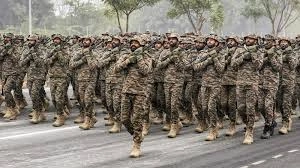
The modern battlefield is developing quicker than many analysts expected. The days when a military’s might was judged in the size of artillery or the number of tanks on the ground are long gone. Today, a conflict’s fate is decided on the capacity to manage the “tactical edge”, the narrow and unpredictable line where technology intersects with human decision-making. India has taken notice of this transition, and the recent establishment of the Bhairav Battalion is the most apparent example of a force that is no longer just playing catch up, but actively rebuilding for the reality of 2026 and beyond.
These additional battalions are not simply another addition to an already huge armed force. They represent a radical departure from doctrine. The Indian Army is transitioning away from a reactionary, heavy formation defence to one that’s all about agility, continual monitoring and, most notably, the infusion of drone technology at the infantry level. But what does a ‘fight tonight’ unit really entail in the modern Indian context?
Closing the Gap in Modern Combat
To comprehend the Bhairav Battalion’s importance, one needs to go into the Indian Army’s conventional structure. There was a clear distinction for decades between regular infantry and elite Para Special Forces. Infantry battalions occupied the ground while Special Forces carried out surgical, high-risk missions. But the gap between the two allowed for hybrid threats, confrontations that are not quite full-blown wars but far more violent than border skirmishes.
To fill this need Bhairav Battalions were raised. They are lean, highly mobile and meant for rapid deployment over diverse, tough terrain, from the high-altitude peaks of Ladakh to the parched plains of Rajasthan. These soldiers are in small, self-contained teams, so they don’t have to wait for heavy logistical backup to make vital decisions. They are smart.
Imagine a team capable of not only calling for an air strike, but deploying, flying and directing their own precision-strike drones to take down a target in real time. It’s an enormous stride forward in decentralization. The Army has already educated over one lakh drone operators across the army and the Bhairav units are more or less the tip of this huge tech-driven spear. Have you ever imagined what battle might be like if every unit on the front lines had the monitoring capabilities once reserved for high-level command centers?
A Step in the Direction of Lasting Deterrence
The importance of these battalions is not in their fighting ability, but in their power to alter the calculus of our adversaries. In the old days border security was standing at a post and waiting for anything to happen. The ongoing drive to modernise, including creating these new battalions and forming Integrated Battle Groups (IBGs), is a step forward in persistent deterrence.
Instead of waiting for an adversary to attack, these units allow the Army to “see” better and respond faster. They are being deployed in key regions along the Line of Control and the Line of Actual Control under corps and division-level formations. This means that no matter where a threat happens to arise there is a dedicated, specialized unit trained to deal with it without having to pull resources away from main infantry lines.
Some of the key aspects of this new way of working are:
A quick attack to gain a tactical advantage before an enemy can assemble his forces.
Deep integration of unmanned aircraft systems (UAS) provides real-time battlefield awareness.
Independent, self-sustaining strike teams that prize speed and data-driven decision-making.
Seamless integration with traditional forces, serving as a force multiplier, not a substitute.
The integration is crucial. Look at the construction of “Rudra” brigades, integrated forces that include troops, tanks, artillery and drones. That sort of thing hints that the military is not simply grafting new technology on to old ways. They’re revamping the structure itself to make sure all these moving pieces can actually talk to each other.
The Human Factor in the Age of Technology
It’s easy to get caught in the discussion of drones, networked battlefields and AI-enabled targeting. But at its heart, the Bhairav Battalion is a human endeavour. It’s a change of thinking, not simply a change of equipment, that will make the switch to this new brand of combat. The challenge is finding the right mix between training soldiers to be comfortable with the latest surveillance technology and keeping the grit for classic ground fighting.
This is where the ” human-like ” part of these improvements comes in . A machine can detect a target, but it takes a trained operator to understand the intricacy of the surroundings, the purpose of the enemy and the tactical timing necessary to engage. The Army’s drone training push isn’t just about technical certification, but about instilling a digital-first ethos into the infantry.
Some may question whether this dependence on technology makes the force too fragile. What if the data link fails? The brilliance of the present training concept for these battalions is that they are being built to operate even when the ‘tech’ side of the fight is challenged. They are built to be tough, able to flip from high-tech accuracy to old-fashioned soldiering at a moment’s notice.
Gazing Into the Future
The adjustments we’re witnessing in 2026 didn’t happen in a day. They are the outcome of lessons acquired from world conflicts and our own experience with borders. The Indian Army is evolving into a more networked, data-dependent force, making it more agile than foes it may encounter.
The next step in this modernization will likely be to further embed these units in a bigger tri-service structure. As the Army continues to experiment with new structures, the biggest difficulty won’t simply be procuring the hardware — it will be sustaining this pace of innovation. It is a huge task to keep the 25 planned battalions running efficiently and at the same time to improve the capabilities of the regular infantry and armoured corps.
The Bhairav Battalion is in many respects the ideal metaphor for where the Indian Armed Forces are headed. They are nimble. They are deadly. They are unashamedly modern. It will be interesting to see how these units perform in field exercises and how they impact the security posture on our borders as we work through the rest of the year. These improvements in a country facing the complexity of modern, fast-paced conflict are not just about keeping up – they are about setting a new norm for defense in an unpredictable environment. Is this the game-changing shift that finally wins the tactical advantage or merely the beginning of a much longer evolution? Time will tell. But for now, the military looks as ready as it has in a long time.
Bhairav Battalion: How India is Changing the Face of Fast-Paced Warfare