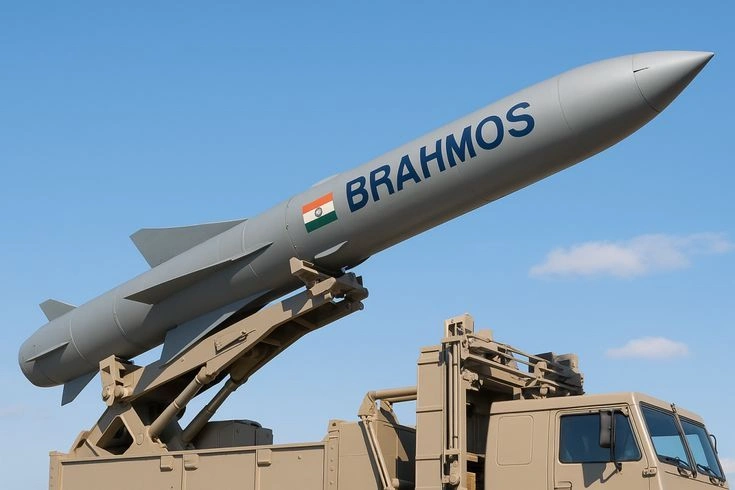
India’s move to explore BrahMos missile exports to Vietnam is more than a weapons deal; it is a clear sign that New Delhi wants to turn defence manufacturing into a serious tool of foreign policy. The timing matters too, because the potential sale comes as India’s defence exports are rising, Southeast Asia is rearming, and Vietnam is looking for stronger maritime deterrence in an increasingly tense Indo-Pacific.
A deal with strategic weight
The BrahMos export story has been building for months, but Vietnam has become the most closely watched part of the conversation. Reports in late 2025 said India was nearing export agreements with Vietnam and Indonesia worth over ₹4,000 crore, with Russia’s consent seen as essential because BrahMos is a joint Indo-Russian system. By May 2026, Reuters reported that Vietnam could discuss a BrahMos purchase during President To Lam’s visit to New Delhi, keeping the issue squarely in the spotlight.
This is not a routine sale. BrahMos is one of India’s most recognisable defence platforms, and its export to Vietnam would underline that India is no longer just buying advanced weapons from abroad — it is also selling them. For a country that spent years trying to reduce dependence on foreign arms, that shift is politically and strategically important.
Why Vietnam wants BrahMos
Vietnam’s interest is easy to understand. It has a long coastline, major offshore interests, and continuing pressure in the South China Sea, where maritime disputes have made coastal defence a top priority. Reports around the possible deal suggest Vietnam is looking at shore-based BrahMos batteries, training, logistics support, and an initial missile package — a combination that would strengthen its ability to defend key coastal areas.
The BrahMos is attractive because it is fast, difficult to intercept and designed for precision strike missions. The system’s sea-skimming profile and supersonic speed give it a strong deterrent value, especially for nations that want to raise the cost of any hostile naval move without building an expensive large-scale fleet. That is the kind of capability that changes planning, not just procurement.
India’s export momentum
The Vietnam talks are happening at a moment when India’s defence export push is gathering pace. The Philippines was the first country to buy BrahMos under a 2022 deal worth about $375 million, and it has already received multiple batches of the system. Meanwhile, Indonesia inked a deal to purchase BrahMos from India in March 2026, showing that the missile is now attracting more than a single buyer.
This wider export momentum matters because it shows that BrahMos is becoming a reference point for Indian defence diplomacy. The more India can deliver complex systems abroad, the more credible it becomes as a defence supplier. And credibility is a major currency in the Indo-Pacific, where many countries are looking for partners that can provide equipment, training, maintenance, and long-term support.
Russia’s role in the background
Because BrahMos was jointly developed with Russia, Moscow’s approval is not just a technical formality. Reports in December 2025 said Russia had indicated it had no objection to sales to Vietnam and Indonesia, which cleared an important diplomatic hurdle for India. A formal no-objection certificate was still awaited at that stage, but the political signal was clearly positive.
That arrangement is interesting for another reason: it shows how India is balancing multiple relationships at once. It wants to deepen defence cooperation with Southeast Asian partners, keep production moving at home, and preserve the BrahMos collaboration with Russia. In a world where arms deals are often tied up in geopolitics, that is not an easy equation to manage.
What Vietnam gains
If the deal goes through, Vietnam would gain more than a missile battery. It would get a proven anti-ship and land-attack capability, along with training and support that could help build a more integrated coastal defence architecture. In practical terms, that could help Hanoi protect strategic maritime zones and improve deterrence in a region where signalling matters almost as much as firepower.
The scale of the package also appears significant. Some reports put the proposed deal at around ₹5,800 crore, making it one of Vietnam’s biggest defence purchases in recent years. That figure suggests Vietnam is not just testing the waters; it is considering a serious capability jump. Would that change the regional balance overnight? Probably not. But it would certainly add another layer of pressure to an already crowded security environment.
Why this matters for India
For India, the BrahMos-Vietnam story sits at the intersection of economics, strategy, and reputation. Defence exports are often discussed in terms of revenue, but the broader value is political. Each export strengthens India’s image as a reliable partner, supports domestic manufacturing, and helps push the broader Make in India defence story beyond slogans.
The timing is also useful for New Delhi. India has been trying to build stronger ties with ASEAN states while presenting itself as a stabilising power in the Indo-Pacific. A BrahMos sale to Vietnam would fit neatly into that approach because it mixes commercial gain with strategic alignment. It also sends a message that India is willing to support partners who want to harden their maritime defences without becoming overly dependent on a single great power.
The broader Southeast Asia picture
Vietnam would not be acting in isolation. The Philippines has already inducted BrahMos, and Indonesia has moved forward with its own agreement. Put together, these developments suggest a pattern: Southeast Asian states are looking for capable, credible deterrent systems that can be deployed relatively quickly and integrated into coastal defence plans.
That pattern matters because it could turn BrahMos into one of India’s most important strategic exports. If multiple countries in the region adopt the system, India gains both revenue and influence. It also gains a stronger voice in conversations about maritime security, supply chain resilience, and defence cooperation across the Indo-Pacific.
The road ahead
The real question now is whether the Vietnam talks turn into a signed contract. The political signals are encouraging, and the broader environment is favourable, but defence deals of this size still depend on timing, approvals, financing, and diplomatic comfort on all sides. Even so, the direction is clear: India is no longer thinking of BrahMos only as a frontline missile for its own forces. It is increasingly treating it as a strategic export platform.
If the deal is finalised, it will say something important about where India wants to go next. It wants to be a manufacturer, an exporter, and a security partner — all at the same time. That is a much bigger ambition than selling equipment. It is about shaping trust, influence, and deterrence in a region where all three now matter more than ever.
India’s BrahMos Push to Vietnam Signals a Bigger Shift in Defence Diplomacy