
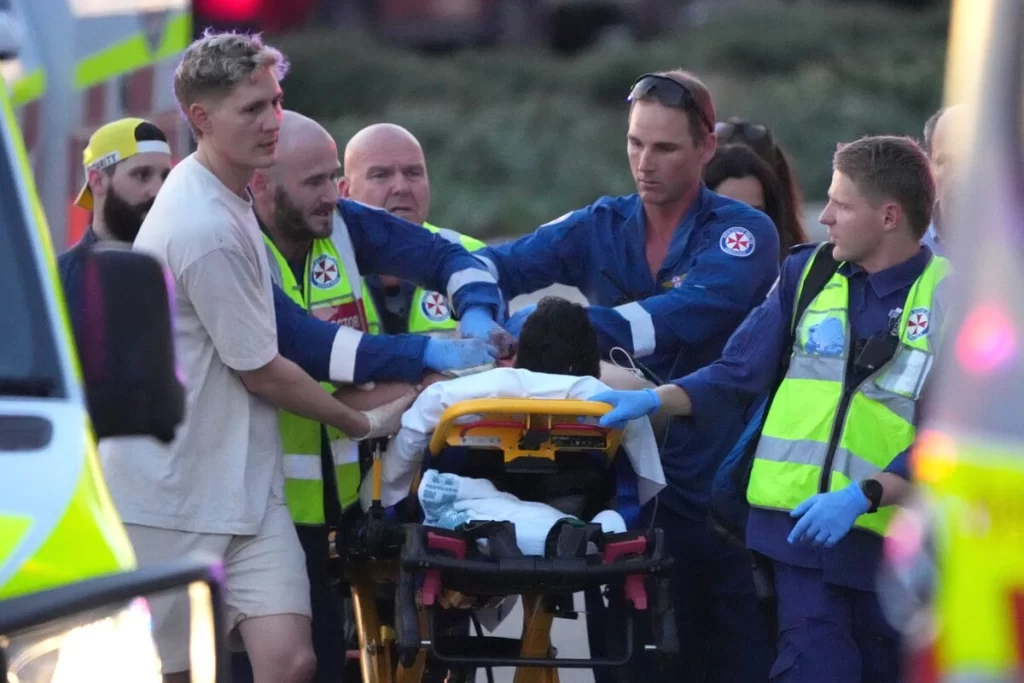
Sydney reels after deadly assault at Hanukkah celebration leaves 15 dead, prompts nationwide security overhaul
Australia is grappling with profound shock and grief following a devastating terror attack at Bondi Beach, Sydney, where at least 15 people were killed during a Hanukkah celebration on Sunday, December 14, 2025. The incident, now being described as one of the deadliest acts of terrorism in the country’s recent history, has ignited urgent debates around national security, immigration controls, identity verification, and extremist radicalization.
The attack unfolded during an evening religious gathering attended by families and members of the Jewish community at the iconic beachfront location. According to Australian authorities, the perpetrators opened fire indiscriminately, triggering chaos and panic among attendees before being neutralized by security forces.
Suspects Identified as Father-Son Duo
Local media identified the attackers as Sajid Akram and Naveed Akram, a father-son duo of Pakistani origin. Investigators revealed that the suspects had recently traveled to the Philippines using Indian passports, raising serious concerns about document fraud, cross-border movement, and intelligence lapses.
Preliminary findings indicate the attackers may have undergone military-style training and were allegedly inspired by extremist ideology, with officials probing possible international terror links. Authorities emphasized that the investigation remains ongoing, with multiple agencies coordinating to trace financial trails, digital communications, and overseas contacts.
Key Facts at a Glance
- Location: Bondi Beach, Sydney
- Date: Sunday, December 14, 2025
- Event Targeted: Hanukkah religious celebration
- Fatalities: 15 confirmed dead
- Suspects: Sajid Akram and Naveed Akram
- Investigation Focus: Terror financing, travel history, extremist networks
National and Global Implications
The Bondi Beach terror attack has intensified scrutiny of Australia’s counterterrorism framework. Political leaders across party lines have called for tighter gun regulations, enhanced surveillance, and stricter passport verification systems. The federal government has also ordered a comprehensive review of how foreign travel documents were obtained and used by the suspects.
Security analysts warn that the attack underscores the evolving nature of modern terrorism, where radicalized individuals exploit global mobility and identity loopholes to plan attacks far from their countries of origin. The targeting of a religious event has further amplified concerns about antisemitic terrorism and hate-driven violence.
Internationally, intelligence agencies are reportedly sharing information to determine whether the attackers were part of a broader extremist network. The case has reinforced calls for greater international cooperation in counterterrorism intelligence sharing, particularly across the Asia-Pacific region.
Community in Mourning
In Sydney, vigils were held across the city as thousands gathered to honor the victims. Religious leaders urged unity and resilience, emphasizing that fear must not overshadow social harmony. Mental health support services have been expanded for survivors and witnesses affected by the attack.

