
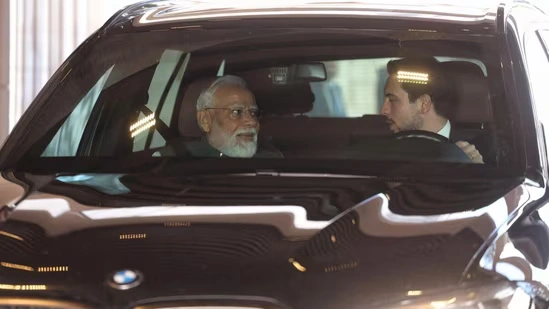
In a moment rich with diplomatic symbolism, Prime Minister Narendra Modi received an extraordinary gesture of personal respect during his landmark two-day official visit to Jordan, when Crown Prince Al Hussein bin Abdullah II personally drove him to the Jordan Museum in Amman. The rare protocol departure underscored the growing strategic partnership between India and Jordan and highlighted New Delhi’s expanding diplomatic footprint in the Middle East.
The image of the Jordanian Crown Prince personally escorting the Indian Prime Minister quickly became emblematic of the warmth and trust characterizing India–Jordan relations. Such gestures are uncommon in international diplomacy and are typically reserved for leaders with whom a host nation shares deep political confidence and long-term strategic alignment.
A Symbolic Yet Strategic Moment
Prime Minister Modi’s visit marked a significant milestone in bilateral relations, reflecting Jordan’s increasing importance in India’s Middle East policy. The Crown Prince’s personal involvement was widely interpreted as a signal of Jordan’s intent to elevate ties beyond traditional diplomacy into a more personal and strategic partnership.
Senior officials accompanying the Prime Minister described the moment as a “gesture of exceptional goodwill,” noting that it resonated strongly with India’s emphasis on people-centric diplomacy and mutual respect among global partners.
Key Areas of India–Jordan Cooperation
During the visit, both sides reaffirmed their commitment to expanding collaboration across multiple sectors. Discussions focused on enhancing economic engagement, cultural exchange, and regional stability amid a rapidly evolving geopolitical landscape.
Major focus areas highlighted during the visit included:
- Trade and investment cooperation, particularly in pharmaceuticals, textiles, and renewable energy
- Cultural and educational exchanges to strengthen people-to-people ties
- Counterterrorism and regional security coordination
- Collaboration in healthcare, digital infrastructure, and skill development
To enhance clarity, the following table outlines the strategic pillars of the India–Jordan partnership discussed during the visit:
| Strategic Pillar | Key Objectives |
|---|---|
| Economic Ties | Boost bilateral trade and joint ventures |
| Cultural Diplomacy | Promote heritage, tourism, and education |
| Security Cooperation | Strengthen counterterrorism coordination |
| Technology & Innovation | Expand digital and renewable energy initiatives |
Diplomatic Optics with Broader Implications
The Crown Prince’s gesture carried significance beyond bilateral relations. Analysts noted that it reinforced India’s stature as a trusted partner in the Arab world and highlighted Jordan’s role as a bridge between South Asia and the Middle East. For India, the visit aligned with its broader strategy of strengthening ties with moderate, stable partners in the region while promoting dialogue, development, and connectivity.
The visit also showcased Prime Minister Modi’s personal diplomacy, which has often played a pivotal role in elevating India’s global relationships through symbolic yet substantive engagement.

