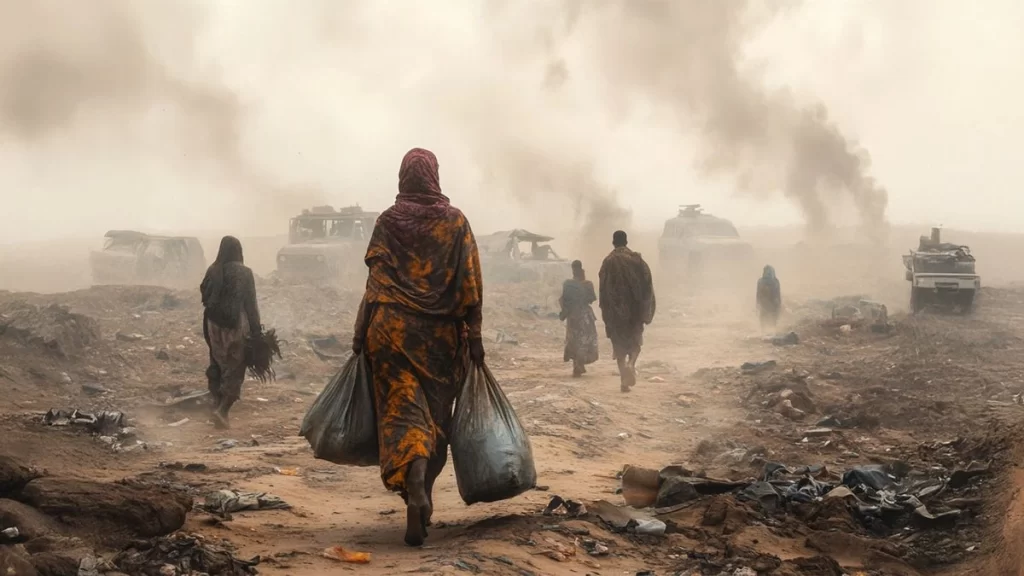
Last week, 29 people were killed in a grisly ambush on the desert fringe of Borno state, Nigeria. The Islamic State West Africa Province (ISWAP) fighters attacked a caravan of farmers and traders, transforming an ordinary trip into a nightmare sight. This attack is not simply a statistic, it is a grim reminder that Nigeria’s battle against jihadist insurgency is far from over eight years after the government declared victory over Boko Haram. Why is this West African nation a hot bed of such bloodshed while the world’s focus are typically elsewhere? As the death toll rises and local populations are gripped by dread, the episode raises harsh concerns about security failings and the delicate route to peace.
The Attack: A Brutal Ambush in the Heart of Borno
The attack took place in Ngala, a border town with Cameroon, on a sun-baked road used by residents hauling goods to marketplaces. Eyewitnesses said gunmen came out of the jungle on motorcycles and pick-up trucks and opened fire indiscriminately on a group of more than 50 persons in commercial vehicles. Most casualties were farmers returning from their fields, some carrying crops like as millet and sorghum, staples in this desert region beset by conflict and climate troubles.
Local authorities said 29 people died and numerous more were wounded and taken to a makeshift clinic. ISWAP soon claimed responsibility via its customary methods, praising the strike as retaliation against “apostate” forces. There were no fancy moves using bombs or drones; this was basic, brutal brutality at close range, taking advantage of Nigeria’s sprawling, sparsely policed borders. The extremists reportedly utilized AK-47s and rocket-propelled grenades, and quickly overwhelmed the poorly armed passengers.
Borno, the heartland of the insurgency since 2009, has seen its own tragedies. The conflict has killed more than 35,000 people and displaced more than 2 million people. But attacks like this one puncture the notion of progress. Last month, similar assaults in nearby Yobe state left many dead. What was so unique about this incident? ISWAP’s turn to economic disruption – starving villages to feed recruiting – hit civilians far from military bases.
ISWAP against Boko Haram: The Fractured Jihadi Landscape
You need to unpack the players to get the chaos. ISWAP split from Boko Haram in 2016 and pledged allegiance to the ISIS global caliphate. Boko Haram’s forte was suicide bombings and kidnappings, including the infamous abduction of the Chibok schoolgirls, while ISWAP plays a more sophisticated game. They have taxed fishermen around Lake Chad, ran shadow economies and even set up ‘government’ in isolated towns, handing people food to win hearts.
Key tactical differences:
ISWAP: 70 percent of attacks on military targets, technology like encrypted radios
Boko Haram: more indiscriminate, more IEDs, more hits on civilians.
Casualties: ISWAP Associated with 1,200 Deaths in 2025 Alone, Say Conflict Trackers.
This split in their ranks has prolonged the battle. While Nigeria’s military has degraded Boko Haram, ISWAP flourishes, feeding off guns from the fallout in Libya and disillusioned locals. Sources murmur of foreign fighters slipping in from the Sahel, where groups like JNIM (al-Qaeda offshoot) stir the pot.
The Nigerian military has operations like “Lake Sanity II” that last year dislodged insurgents from island camps. But holes remain. Soldiers typically complain of insufficient equipment, such as rusting trucks, and delayed pay, while corruption diverts money that is supposed to pay for boots on the ground.
Roots of Insurgency: Poverty, Corruption and Open Borders
Why does this fire burn? Nigeria is a toxic mix, if you scratch the surface. Borno’s poverty rate is 80 percent against the national 40 percent. Unemployed youth are a breeding ground for radicalisation. A herder without a job could swap his staff for an AK-47 after a militant’s pitch for purpose and cash.
Climate change is adding fuel. Lake Chad, once a lifeline for 30 million people, has dwindled 90% since the 1960s. Pastures are diminishing and herders and farmers are fighting over them – the perfect cover for militants. ISWAP uses this, pretending to be protectors against attacks by Fulani or government indifference.
And then there’s government. Nigeria spends billions on security, and still there are scandals. In 2024 a study found generals pocketing troops’ food. Locals ridicule President Bola Tinubu’s post-election promise to reform. “We vote for change but bullets don’t care about ballots,” a Ngala resident told reporters.
This connects to Africa’s jihadist belt around the world. ISIS franchises are spreading from Mali to Mozambique. Nigeria’s border with Chad and Cameroon – more than 1,000km of scrubland – allows arms and fighters to cross unchecked. As the U.S. and France have pulled out their own troops, they have also scaled back aid, leaving the Multinational Joint Task Force (made up of Nigeria, Niger, Chad and Cameroon) strained thin.
India, too, is watching intently. New Delhi has its own neighbourhood problems and a diaspora in Nigeria (nearly 50,000 Indians in oil and trade) and has enhanced counter-terror connections. Nigerian officials trained in drone surveillance in India last year – a reference to common threats from groups like Lashkar-e-Taiba.
The human cost: stories behind the numbers
Families are torn apart behind the 29 dead. Take Aisha, 28, a widow whose trader husband was one of those killed. Now she is looking after three children in a refugee camp, where starvation lurks like a shadow. “He went to sell groundnuts at the break of day. At midday they delivered his body wrapped in cloth,” she told a local interview.
Disease and misery stalk camps like Bakassi where 200,000 people have taken refuge. Aid groups say gender-based violence is increasing. Militant factions use rape as a weapon; ISWAP forces brutalize “marriages.” Children are not spared too. Thousands are recruited as young warriors, brainwashed in madrasas converted into dens of horror.
Economically it’s destruction. Borno fields stand idle, maize production down 60% since 2014. Protests against raised food costs in Maiduguri. The attack crippled the traders and shut off supply channels into urban centers.
Ever wonder how a single roadside strike may vibrate through the veins of a nation? It does here. Fewer products means hungry cities, angry voters, and more recruits for the cause.
Government Response: Promises, Raids and Mistrust
Tinubu quickly condemned the attack and ordered air strikes on ISWAP locations. The military said it had killed 15 insurgents and destroyed supply stockpiles. Borno-born Vice President Kashim Shettima met survivors, assuring recompense.
To many, though, the rhetoric is empty. Amnesty International has recorded extrajudicial executions by military, undermining trust. In 2025, a report counted 500 civilian deaths in Nigerian activities. Community policing initiatives are hampered by mutual suspicion.
Internationally, the UN Security Council called for prudence, and the African Union called for increased funding for the G5 Sahel mission. But donor fatigue sets in. Global aid to Nigeria fell 20% last year.
Regional Ripples: The Sahel Casts a Shadow over West Africa
It’s not Nigeria’s fight alone. ISWAP looks to expand into Niger and Burkina Faso, where coups have destabilised regimes. Lake Chad Basin Commission coordinates patrols, but politics gets in the way. The anglophone situation in Cameroon is a distraction, allowing terrorists freedom of movement.
150 people were killed in cross-border raids in Chad in 2025. The trend? Jihadists are turning hybrid, combining insurgency with banditry, taxing gold mines in the north west. Economically, they are supported by estimates of $20 million a year from Lake Chad fishing alone.
It’s a cautionary tale for India. Africa’s largest investor ($25 billion in FDI) was impacted by delays to oil flows and trade. Nigerian crude fuels Jamnagar refineries; uncertainty pushes up costs, felt from Mumbai to Delhi
Borno Carnage: ISWAP Attack Leaves 29 Dead, Exposing Nigeria’s Relentless Insurgency Struggle