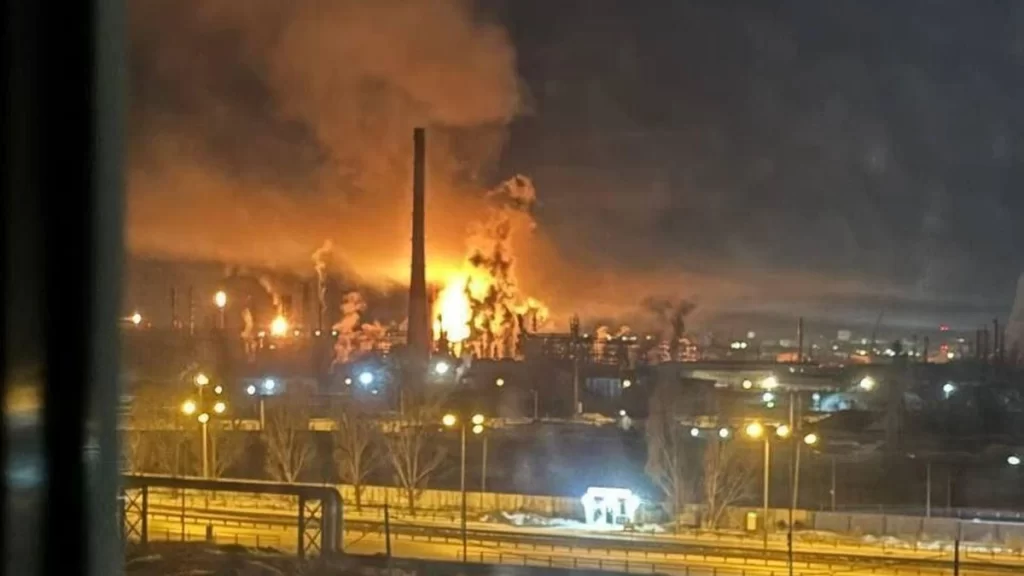
A new Ukrainian drone attack on Russia’s Tuapse oil refinery has opened a dangerous new chapter in the war, highlighting the rising significance of energy facilities in the conflict. The attack on the Rosneft-run Black Sea plant, reported on 19 April 2026, caused fire damage and rekindled concerns about the vulnerability of Russia’s fuel network to long-range drone warfare.
The importance of Tuapse
Tuapse is not simply another refinery on the map. It is part of a wider oil export network that moves refined products across southern Russia and into global markets, and is located in Krasnodar Krai on Russia’s Black Sea coast. The refinery, which processes about 240,000 barrels of petroleum a day and generates fuel oil and diesel, is strategically vital for domestic supplies and exports.
That’s why a strike there gets noticed well beyond the local fire brigades and emergency personnel. Disruption of a facility such as Tuapse can have knock on implications on shipping schedules, fuel supply and wider perceptions of Russia’s industrial resilience. And perception in combat is nearly as important as real damage.
The last strike occurred when
Russian officials reported Ukrainian drones struck the Tuapse Black Sea oil port, triggering a fire and killing at least one person. Hours after an initial fire at the plant was doused, Ukraine’s drone forces commander Robert Brovdi subsequently acknowledged the military struck the Rosneft-operated refinery again. That detail is important because it shows a campaign, not just a one-off raid.
The impact was also remarkable since it hit a place that has been repeatedly struck in recent months. The sustained nature of the attacks reflects a planned Ukrainian strategy to wear down Russia’s energy infrastructure, necessitating costly repairs and compromising the logistics that sustain the greater military effort.
Energy infrastructure as a battleground
This is not a trench war anymore, a war of missiles and artillery. It’s also a struggle for power stations, refineries, pipelines, storage tanks and export terminals. This tactic has been employed for years by Russia against Ukraine, hitting civilian energy facilities to take off electricity, water and heating systems. Ukraine has responded with a growing focus on Russian oil and petroleum assets.
That exchange has provided a second front on energy infrastructure. Each side is aiming to cripple the opposing side’s ability to fuel its economy, move supplies and maintain military logistics. In practical terms, this means that the fire at a refinery in Krasnodar Krai is not simply a local industrial tragedy, but part of a much bigger fight over endurance and leverage.
The larger picture
The Tuapse attack is part of a wider series of Ukrainian strikes against Russian refineries and export terminals. Previous reports said Ukrainian drones had already attacked the Tuapse oil terminal and refinery, triggering fires and brief shutdowns. Separate reports in late 2025 indicated the complex was attacked again, damaging the primary oil refining unit and deep processing equipment.
There is a definite rationale to that repetitive targeting. Refineries are expensive to fix, heavily connected to government revenues and difficult to replace. They are also easier to disrupt than to protect perfectly . Especially when drones come in waves , and can exploit holes in air defense coverage . But the true danger here is not if one refinery burns, but if recurrent strikes may slowly erode a country’s energy capability and export earnings?
Ukraine strikes oil facilities
Ukraine’s math is simple. Russia’s oil sector remains one of the clearest sources of funding for the Kremlin and one of the most crucial supporters of the war economy. Kyiv is targeting refineries, ports and storage infrastructure in an effort to increase expenses for Moscow and make it harder to supply fuel for the military, in a statement that Russian territory is not immune from the battle.
There is also a psychological aspect. Repeated strikes on industrial facilities put Russian authorities under pressure to show they can protect important assets, even when they clearly can’t close them off totally. That pressures the home front and also sends a signal to the outside world that Russia’s rear areas are not as safe as officials might want to claim.
What it means for Russia
Any particular drone strike may have different immediate effects. Sometimes the damage is no more than a fire or a temporary interruption of business. Sometimes exports are affected or there are brief shutdowns. But repeated attacks add up to a cumulative load, especially for a system that must continue refining petroleum, transferring products and keeping exports flowing under wartime conditions.
For Russia, it’s more than the price tag of fixing it. This is about the dependability of the entire fuel chain that supports civilian transportation, industrial production and military logistics. A brief shutdown at refineries like Tuapse, if it happens, can impact local petroleum flows and put further strain on already tight supply systems.
How the war is transforming
The assault on the Tuapse also demonstrates how warfare is changing. Drones are cheaper than missiles, and they can be produced in vast numbers. Their effectiveness against fixed industrial targets is growing. They can be launched in waves, employed to test fortifications and timed to take advantage of the confusion of the first impact. This makes them especially valuable in a long fight where both sides are trying to stretch the other side’s defenses and resources.
In this respect, the strike on Tuapse is not an isolated event. It is part of a lengthy campaign in which infrastructure itself has become both a weapon and a target. The border between battlefield and homeland is disappearing. The front is no longer just the place soldiers meet but where gasoline is refined, stored and supplied.
Regional stakes
From the position of Tuapse on the Black Sea, the attack assumes a broader strategic dimension. The port is linked to shipping routes and energy trade flows important for Russia’s southern economy and its broader export system. Disruptions there might disrupt not only refinery operations but loading, shipping and downstream distribution.
Neighbouring markets are concerned about stability. Repeated attacks on major Russian energy infrastructure create uncertainty surrounding supply chains and export reliability. Markets may absorb the shock in the short term, but repeated disruptions can slowly change trading patterns, insurance costs and logistical planning.
What to watch next
The big question now is if the strike on Tuapse is a one-day headline or a bigger phase of escalation. Reports available suggest otherwise. Ukraine has demonstrated that it can strike deeper inside Russian territory, while Russia has shown it is determined to proceed with its own campaign aimed at Ukraine’s energy infrastructure. That sets off a hazardous loop.
For now the Tuapse strike is another obvious indicator that energy infrastructure is no longer a background issue in the battle. It’s a key front where both sides are striving to define the terms of the fight.” And the war over energy will continue to run alongside the war on the front line as long as refineries, terminals and grids are vulnerable.
Ukraine hits Russia’s Tuapse refinery with drones, escalating energy war