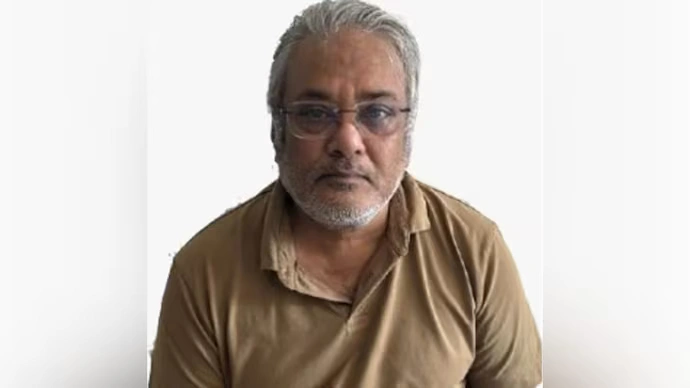
In a high‑stakes global chase that ended on an early‑morning tarmac at Delhi’s Indira Gandhi International Airport, one of Dawood Ibrahim’s longest‑standing narcotics lieutenants has been brought back to Indian soil. Mohammed Salim Dola, a 59‑year‑old Mumbai‑born drug kingpin and close aide of the fugitive underworld don, was deported from Istanbul, Turkey, early on April 28, 2026, and promptly taken into custody by the Narcotics Control Bureau and intelligence agencies for intensive questioning.
His return is being billed inside India’s security establishment as a “major breakthrough” in the fight against the D‑Company’s global narcotics network—one that has allegedly funneled synthetic drugs, cocaine and heroin worth several thousand crores of rupees into the country over the past decade. For India’s anti‑drug and counter‑underworld machinery, it raises a central question: can this capture finally crack open the offshore architecture that has long shielded Dawood Ibrahim’s operations from ground‑level probes?
From Mumbai’s Streets to an Interpol Red Notice
Salim Dola first emerged as a named figure in Indian police dockets years ago, linked to multiple cases under the Narcotic Drugs and Psychotropic Substances (NDPS) Act. According to information shared by the Ministry of Home Affairs, Dola became the subject of an Interpol Red Notice in March 2024, issued at India’s request, after he began living abroad while around‑the‑clock mobile surveillance and human‑intelligence networks failed to track him down within the country.
By then, he was no longer just a mid‑level operator but allegedly a key manager of the D‑Company’s international drug supply chain. Security sources describe him as one of the “overseas controllers” who coordinated shipments, money flows and encrypted communications between the group’s bases in the Gulf and Europe and drug‑dependent networks inside India. With an Interpol alert out, any country intercepting him could legally detain and, ultimately, deport or extradite him back to India—and that’s exactly what happened in Istanbul.
The Istanbul Capture and “Operation Global‑Hunt”
Reports from Turkish media and Indian security channels describe a high‑pressure takedown: a team of narcotic‑investigation officers descended on a residential or commercial address in Istanbul, seized mobile devices, communication equipment and cash, and took Dola into custody. From that point, bilateral legal cooperation mechanisms kicked in; Indian authorities invoked the Red Notice and requested his deportation under what the NCB has now referred to as “Operation Global‑Hunt,” a broader push to track and bring back fugitive drug traffickers linked to terror‑financed crime networks.
Deportation to Delhi and NCB Custody
After days of legal processing in Turkey, Dola was handed over to Indian representatives and flown to Delhi on a special aircraft early on April 28. He touched down at the international airport in the early hours, bypassing public immigration counters and media‑lined corridors, and was immediately taken into custody by officials from the NCB and other intelligence outfits.
At the time of writing, he is being interrogated at an undisclosed location in the national capital, with multiple agencies coordinating the questioning. Officials say the initial focus is on his role in specific narcotics trafficking cases filed by the Mumbai Police, as well as his alleged involvement in money laundering circuits and offshore finance networks that feed into the D‑Company’s activities.
The NCB plans to soon hand him over to the Mumbai Police for further custodial proceedings, where he will face charges under the NDPS Act, possible terror‑finance links, and conspiracy‑related offences. Given his age and the length of his alleged criminal career, the case is likely to become a test of how long‑running, cross‑border narcotics conspiracies can be stitched together from fragmented electronic and human evidence.
Why Dola Matters in the D‑Company Structure
For many outside India’s law‑enforcement circles, Dawood Ibrahim’s name evokes the 1990s underworld and the 1993 Mumbai blasts alone. But senior investigators and prosecutors argue that the D‑Company’s most enduring—and profitable—business today is drugs, not contract killings. They describe Dola as one of the “back‑office commanders” who ensured narcotics shipments moved from source countries to transit hubs and then into India’s coastal and urban markets.
Estimates circulating within the NCB and Mumbai Police suggest that the narcotics network under Dola’s alleged oversight could be generating revenues in excess of ₹5,000 crore annually, making it one of the largest organised‑drug syndicates operating from outside India. If even a fraction of that figure is substantiated in court, the financial‑intelligence angle could open up new avenues: tracking offshore accounts, shell companies, and legitimate‑looking businesses that have been used to launder illicit money.
This also raises a quiet but critical question: if Dola was so deeply embedded in this global setup, how much of his knowledge is still encoded in encrypted channels, burner phones and offshore operatives who may not yet know he has been brought back?
Impact on India’s Anti‑Drug and Counter‑Underworld Strategy
The deportation of Salim Dola comes at a moment when India’s narcotics and underworld‑investigation apparatus is trying to recalibrate its strategy. In recent years, the NCB has intensified digital‑footprint analysis, coordinated takedowns with Gulf countries, and stepped up propaganda campaigns around the dangers of synthetic drugs and “party‑drugs” on college campuses and nightlife hubs. Bringing back a high‑value, internationally‑linked figure like Dola is expected to feed directly into these efforts.
Officials say they hope Dola’s interrogation will yield:
Names and aliases of other overseas operatives, including financiers, logistics handlers and encrypted‑communication technicians.
Details of how narcotics are mixed with legitimate cargo, routed through third‑country ports, and then broken down into smaller consignments for domestic distribution.
Evidence that can help tighten financial‑intelligence cases and confiscate assets under the Prevention of Money Laundering Act.
At a broader level, the case is also being framed as a political‑symbolic message: Home Minister Amit Shah has publicly stated that “no place is safe” for India’s drug kingpins, signalling that international cooperation and extradition‑style operations will be prioritised over purely domestic raids. For Indian law‑enforcement agencies, that means doubling down on Interpol channels, bilateral intelligence sharing, and fast‑track legal processes in foreign jurisdictions.
India’s Broader War on Organised Drug Crime
Dola’s arrest and deportation sit within a larger pattern of India’s battle against organised narcotics operations. In the past year alone, the NCB and state police have mounted multiple high‑profile interdictions, including seizures of methamphetamine labs, inter‑state drug‑distribution networks and online‑marketplace drug‑sales operations. The NCB has also launched internal initiatives such as “Operation Wipe” to specifically target online platforms and social‑media‑based drug peddling, which have surged post‑pandemic.
Yet despite these successes, India’s drug-control strategy continues to be a patchwork, experts say. Enforcement tends to be concentrated in major cities and along the coast, while mid-tier districts and smaller towns see less visible raids and less robust provisions for rehabilitation. There is also limited public‑data transparency around how many accused in cases like Dola’s are actually convicted, and how many of the assets being pursued are successfully forfeited.
In this context, the Dola case could either become a template for a more integrated, intelligence‑driven approach—or another chapter in the perennial “cat‑and‑mouse” game between investigators and underworld networks that simply adapt to new communication channels and routes.
What Comes Next for Salim Dola—and for India’s Courts
As Salim Dola sits in custody, the immediate legal road ahead is clear in outline, though thorny in detail. The NCB and Mumbai Police will work to compile a composite chargesheet, consolidating multiple NDPS cases, any financial‑crime dockets, and possibly sections of terror‑related or criminal‑conspiracy statutes. Given his age and health profile—which, though not fully disclosed, is being watched by court‑linked medical authorities—defence lawyers may seek regular bail or at least medical concessions, even as the state pushes for stringent conditions.
From a prosecutorial standpoint, the challenge will be to move beyond the “big name” value of Dola and build evidence that can withstand cross‑examination and appellate scrutiny. That means not just relying on confession‑style statements, but also presenting electronic trails, financial‑flow analysis, witness accounts from lower‑level operators, and expert testimony on how such networks operate.
For the Indian public, the case may also raise a quieter, more uncomfortable question: how many other “Dola‑like” figures still operate in the shadows of India’s drug‑and‑underworld landscape, and what will it take to turn diplomatic pressure into durable legal outcomes?
Dawood Ibrahim’s Drug Lord Aide Salim Dola Brought Back to India in Major Anti‑Narcotics Operation