
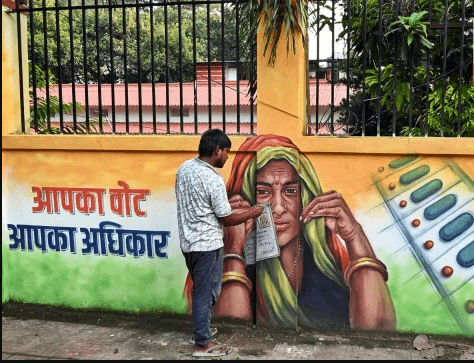
Bihar stands at a crossroads. Ahead of the 2025 assembly elections, the Nitish Kumar government has rolled out a series of substantial pre-poll sops targeting youth, women, and migrant labourers. While these measures are designed to sway voters and demonstrate governance responsiveness, experts are now asking: can Bihar, with its significant development deficits, afford such generous welfare announcements without compromising long-term economic growth, job creation, and investment?
Key Developments & Cost of Pre-Poll Sops
Recent state announcements include unemployment allowances of ₹1,000 per month for graduates and Class-12 pass outs without jobs; large subsidies under the Mukhyamantri Mahila Rojgar Yojana; free electricity for millions; and enhanced pensions for social security scheme beneficiaries.
These welfare promises, if fully implemented, are expected to increase state expenditure by roughly ₹40,000 crore — a steep figure given Bihar’s annual revenue is estimated at about ₹56,000 crore, and its Budget for 2025-26 stands at around ₹3.2 lakh crore.
Economic Context: Capacity, Challenges, and Needs
Bihar’s economy faces serious structural constraints:
- Low worker-population ratio (WPR): Bihar has among the lowest WPR in India, meaning that a smaller fraction of its working-age population is formally employed.
- High dependency ratio: A high share of dependents (children, elderly) increases fiscal burdens and shrinks per capita capacity for investment.
- Low per capita income: Bihar’s per capita income remains significantly below national averages, reinforcing the urgency of job creation and investment to lift incomes.
To address these, the government has set ambitious targets: over the next five years, one crore youth are promised employment or employment opportunities. Skill development is being boosted through initiatives like the Jananayak Karpuri Thakur Skill University.
Trade-Offs and Risks
While welfare sops may deliver immediate relief, there are trade-offs that raise critical economic concerns:
- Fiscal strain: Committing to recurring and large-scale subsidies constrains the capacity to fund infrastructure, health, and education — areas crucial for attracting private investment.
- Sustainability: Many pre-poll promises have non-recurring components. The real test lies in continued funding, implementation quality, and integration with economic growth plans.
- Investment climate concerns: Investors look for stable policies, good infrastructure, and predictable returns. Heavy reliance on welfare without complementary structural reforms in land, liquidity, and labour markets may dampen investor confidence.
- Opportunity cost: Every rupee directed toward free power, cash grants, or allowances is a rupee less for roads, energy supply, and connectivity — all essential for large-scale industry and private sector employment generation.
Conclusion
Bihar’s current pre-poll sops reflect both political necessity and societal need. They address genuine issues — unemployment, gender inequality, and rural distress. Yet, the state’s economy cannot depend solely on short-term welfare. For Bihar to achieve sustainable growth, it must balance electoral generosity with policies that foster industrial investment, private sector job growth, infrastructure development, and skill training. Only then can Bihar afford both the sops of today and the prosperity of tomorrow.

