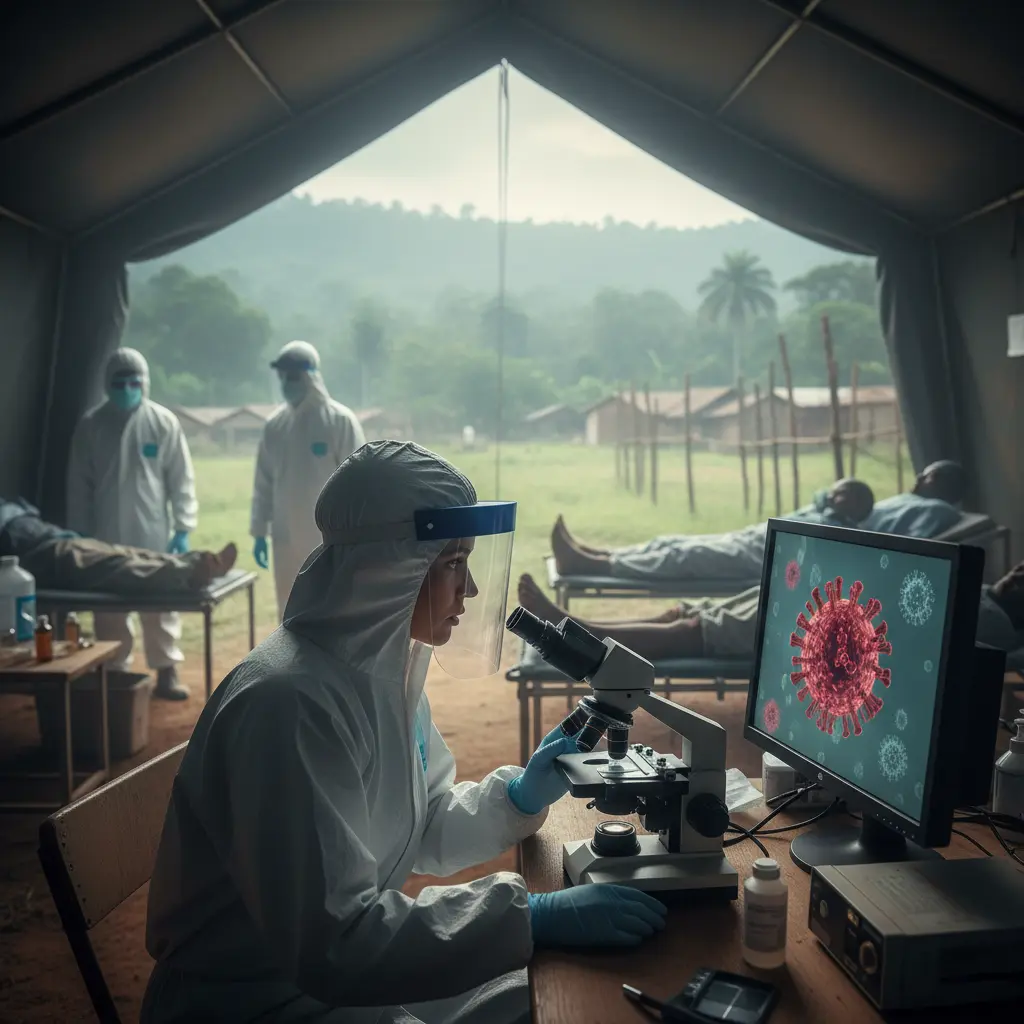
Nearly three months after it was first detected, the Ebola outbreak DRC and Uganda are battling shows no real sign of slowing down. The World Health Organization continues to closely monitor what has become the fastest-growing Ebola epidemic on record, driven by the Bundibugyo virus strain — a lesser-known but no less dangerous relative of the more familiar Zaire ebolavirus.
How the Outbreak Started
The first signals came in late April and early May, when WHO was alerted to a high-mortality outbreak of unexplained illness in Mongbwalu Health Zone, in DRC’s Ituri Province. Deaths among health workers were an early warning sign that something serious was unfolding. Lab analysis at Kinshasa’s biomedical research institute soon confirmed the culprit: Bundibugyo virus disease, a species of Ebola first identified in Uganda back in 2007. On May 15, the Democratic Republic of Congo officially declared its 17th Ebola outbreak, just five months after its previous one had ended. Uganda confirmed its own outbreak the same day, after a Congolese man who had travelled to Kampala died from the virus.
Two days later, on May 17, the WHO Director-General declared the situation a public health emergency of international concern — the organization’s highest level of alarm, reserved for events considered a serious, unusual, and internationally significant health threat.
Why Bundibugyo Virus Is Especially Difficult
Unlike the Zaire strain behind most past Ebola outbreaks, Bundibugyo virus has no licensed vaccine and no specific approved treatment. That’s a major complication, since the existing Ebola vaccines and therapeutics that have proven effective elsewhere were developed and certified for a different Ebola species entirely. Health teams are largely left relying on supportive care — fluids, oxygen, treating complications as they arise — along with early detection, strict infection control, and contact tracing to slow transmission. Past Bundibugyo outbreaks have carried case fatality rates ranging from roughly 30% to 50%, underscoring just how serious a diagnosis can be without dedicated countermeasures.
There is a glimmer of hope on the research side. Some studies involving primates suggest that Ervebo, the vaccine approved for Zaire ebolavirus, may offer partial protection against Bundibugyo virus, and WHO has been exploring whether it could play a role in the response even without full certification for this strain. Clinical trials are also now underway to identify the first treatments specifically effective against Bundibugyo virus disease.
Spread Across Provinces, Including Kinshasa and Goma
What has made this Africa disease control effort especially challenging is the geographic reach of the outbreak. Cases quickly spread beyond Ituri Province into North Kivu, South Kivu, Haut-Uele and Tshopo. A case was reported in Goma, a North Kivu city currently under the control of an armed rebel group, after a woman infected with Ebola travelled there from Ituri — a troubling development given the security challenges already complicating access to the area. An early case in Kinshasa, the capital, raised alarm as well, though on further testing it turned out to be negative.
As of the most recent update, covering data through July 27, DRC has reported a total of 3,360 confirmed cases and 1,487 related deaths, with 733 patients currently hospitalized in isolation. Nearly 600 people have recovered. Contact tracing teams are following up with close to 79% of identified case contacts across the affected provinces — a labor-intensive but critical piece of containing further spread.
A Perfect Storm of Complications
Part of what’s made this outbreak so hard to control comes down to context. The affected regions of eastern DRC are already dealing with an active humanitarian crisis and ongoing armed conflict, both of which severely limit healthcare access and make safe movement for response teams difficult. High population density, cross-border trade, and constant movement of people between health zones only add to the risk of further spread. Health officials have acknowledged that the true scale of the outbreak is likely higher than confirmed numbers suggest, simply because detection and reporting remain so difficult in conflict-affected areas.
What Comes Next
WHO says it continues to scale up support for both the DRC and Ugandan governments — strengthening surveillance systems, boosting clinical care capacity, ramping up supply delivery, and investing heavily in community engagement, which health officials consistently describe as the single most important factor in bringing an outbreak like this under control. Cross-border preparedness with neighboring countries remains another key focus, given how easily infected individuals can move across the region.
For now, this remains very much an active global health alert, not a resolved one. With no dedicated vaccine, an active conflict zone complicating the response, and case numbers still climbing, health authorities are bracing for a long and difficult fight — one that will likely stay on the world’s radar for months to come.