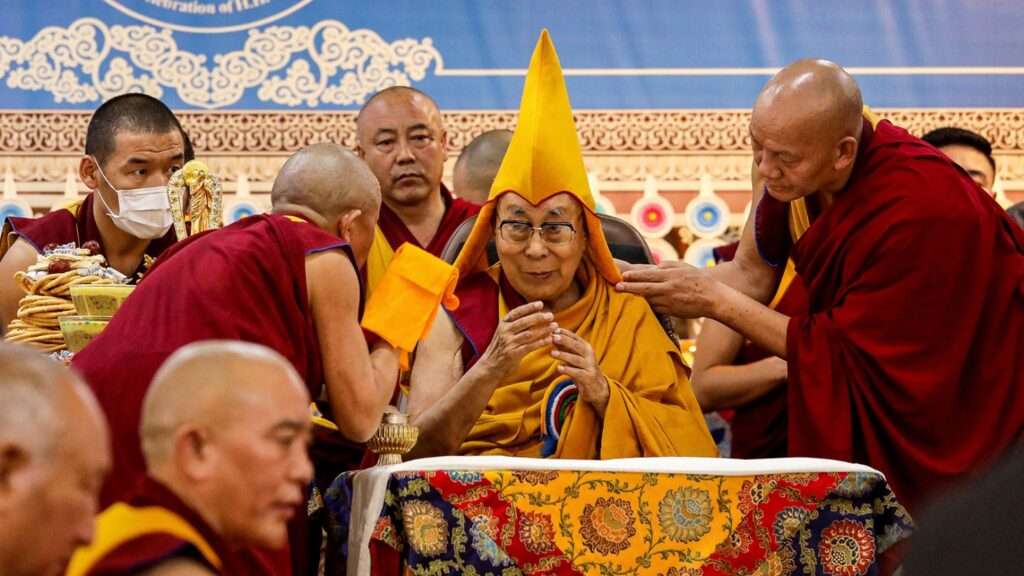
2 July, 2025-China has reiterated that the reincarnation of the Dalai Lama must be approved by the central government, asserting that the process is subject to Chinese laws and historical precedent. The statement comes shortly after the 14th Dalai Lama, Tenzin Gyatso, indicated that he would identify his successor before his death.
During a recent public address, the Dalai Lama, who has lived in exile in India since 1959, confirmed that there would be a successor and suggested he may choose to name the reincarnation himself to avoid political interference. His remarks have reignited a long-standing dispute between Tibetan spiritual traditions and Beijing’s policies on religious affairs.
Responding to the Dalai Lama’s comments, Chinese Foreign Ministry spokesperson Mao Ning stated that the reincarnation of the Dalai Lama is not solely a religious matter. “The reincarnation of living Buddhas in Tibetan Buddhism must follow Chinese laws and regulations,” she said. She cited a 2007 order from China’s State Administration for Religious Affairs, which mandates that all reincarnations of Tibetan Buddhist figures receive official government approval.
China’s position underscores its continued efforts to assert control over Tibetan religious institutions and leadership. Beijing has repeatedly emphasized that the central government holds the ultimate authority in the selection process of high-ranking lamas, including the Dalai Lama. Officials have expressed concern that any independent selection could be used to promote separatism or challenge Chinese sovereignty over Tibet.
The Tibetan community in exile and international human rights groups have strongly opposed Beijing’s stance. Many regard the requirement for government approval as a violation of religious freedom and an attempt to politicize a deeply spiritual process. Tibetan leaders argue that only the Dalai Lama himself has the moral and religious authority to determine his reincarnation.
Analysts suggest that China’s insistence on approving the next Dalai Lama is part of a broader strategy to influence Tibetan Buddhism and diminish the influence of the current Dalai Lama, who remains a powerful symbol of Tibetan identity and autonomy.
As the current Dalai Lama ages, the question of his succession is gaining urgency. While no formal process has yet begun, both China and the Tibetan community are positioning themselves for a significant power struggle that could shape the future of Tibetan Buddhism for decades.
The issue continues to draw international attention, with several governments and rights organizations urging China to respect the religious freedom of Tibetan Buddhists. Meanwhile, the Dalai Lama has maintained that the final decision on his reincarnation will be guided by spiritual principles and the wishes of the Tibetan people.